
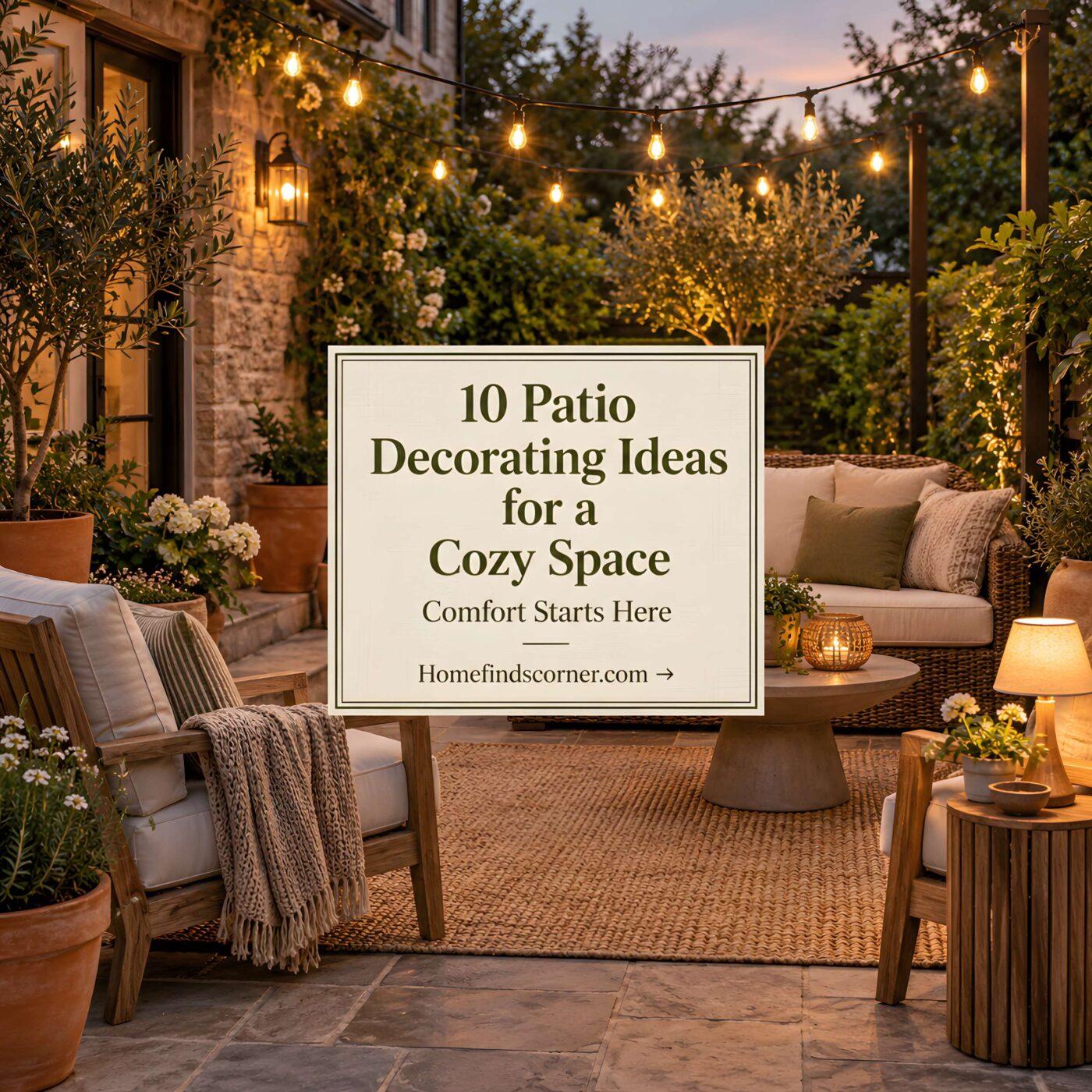
Creating a Cozy Space with Patio Decorating Ideas
A patio can have beautiful furniture and still feel like somewhere you pass through. Often, the missing pieces are small: a chair angled toward the conversation, somewhere to put your mug, or light that makes you want to stay outside after dinner.
To make a patio cozy, begin with comfortable seating, define the sitting area, and add gentle lighting. Build on that foundation with weather-appropriate textiles, plants, shade, and a little privacy. Repeat a few colors and materials so the space feels connected, and leave clear routes between the furniture and the house.

These patio decorating ideas suit different styles, from a relaxed cottage courtyard to a simple modern terrace. Choose the details that match how you spend time outside, whether that means reading alone, sharing breakfast, or hosting a few friends.
1. Arrange Seating Around Conversation
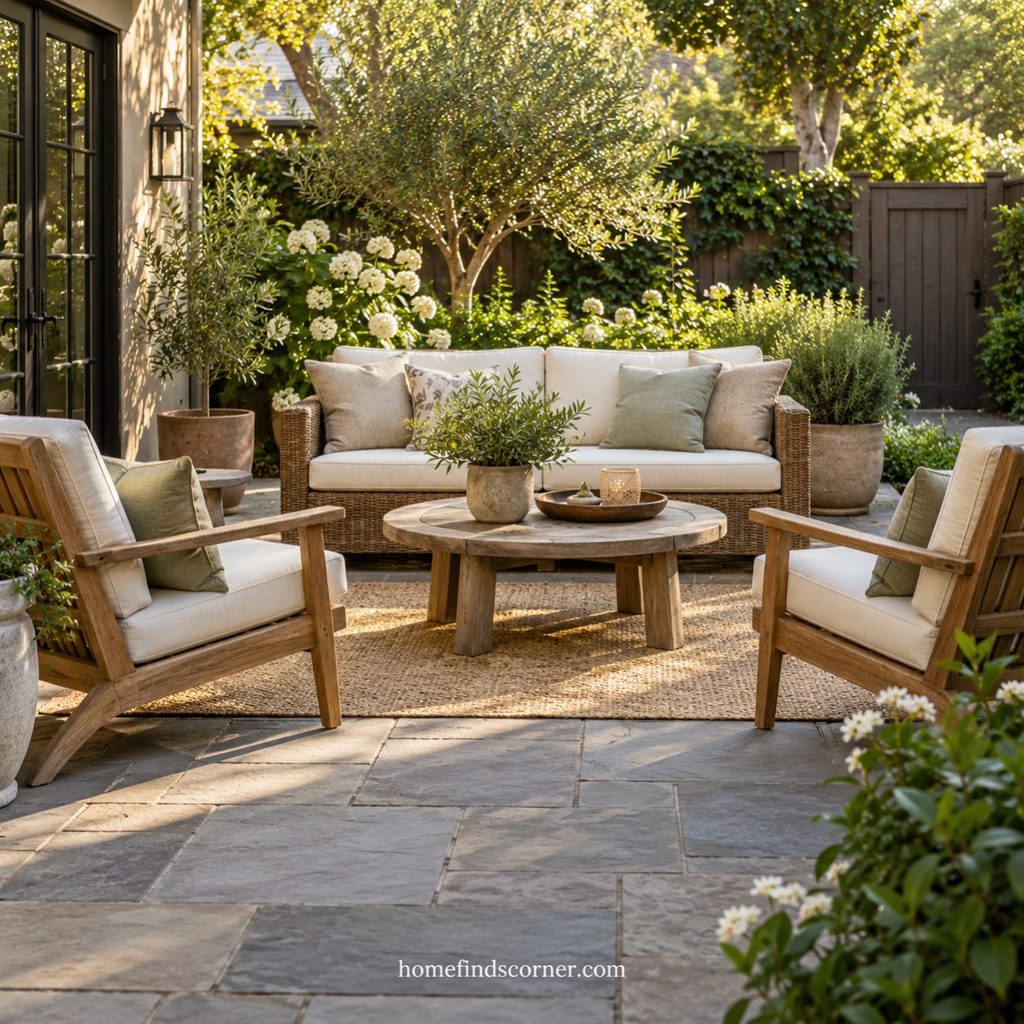
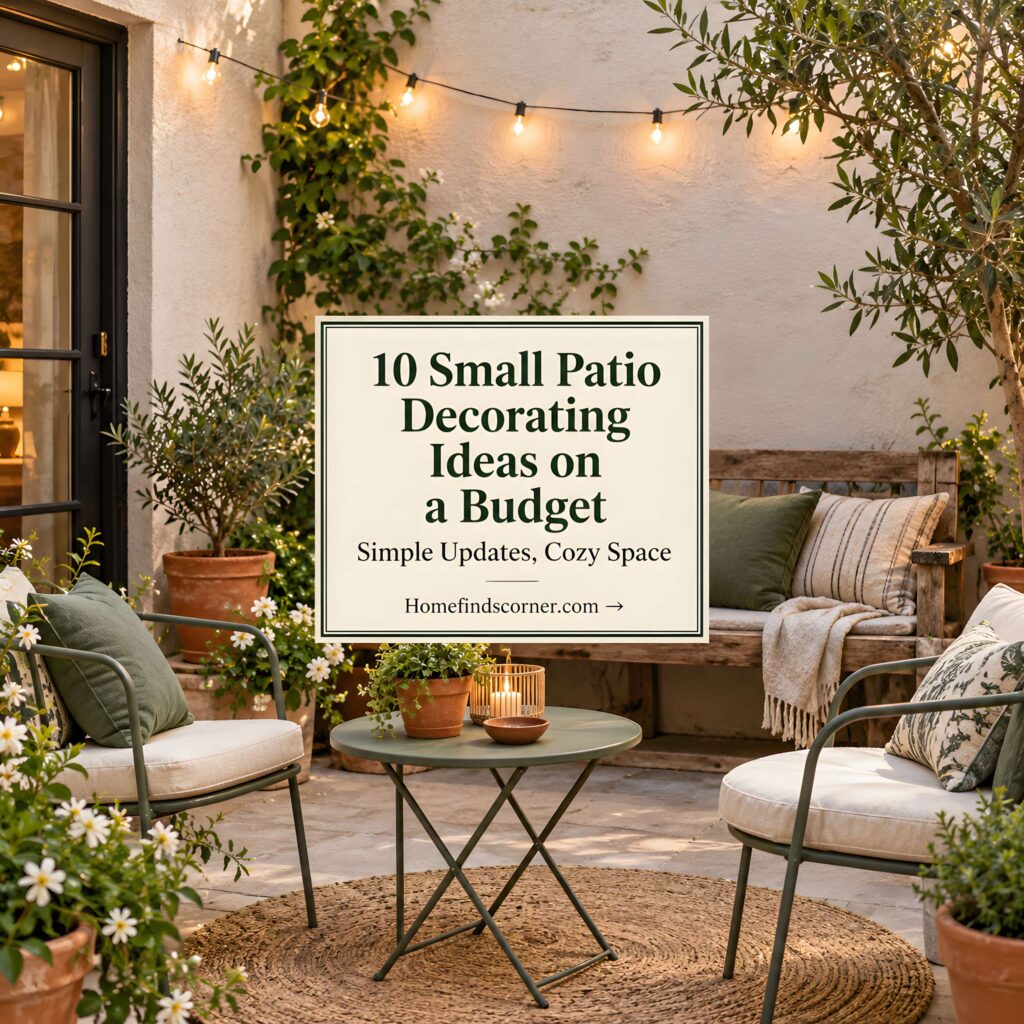
Start with the way you want to use the patio. Two people having coffee need a different arrangement from a family that gathers outside every evening. Decide on the main activity before choosing extra furniture.
For a conversational setup, turn two chairs toward each other with a small table between them. If you have a sofa, angle a chair toward one end instead of lining every seat along the perimeter. That slight turn makes the group feel more connected.
Leave a clear route between the door, seating, and garden. Test the arrangement with chairs pulled out and someone carrying a tray. A layout that looks balanced in a photograph can feel awkward when you walk through it.
Try this: Move your existing furniture before buying anything. One chair and a side table in a pleasant corner may become the seat you use most.
2. Define the Sitting Area With an Outdoor Rug
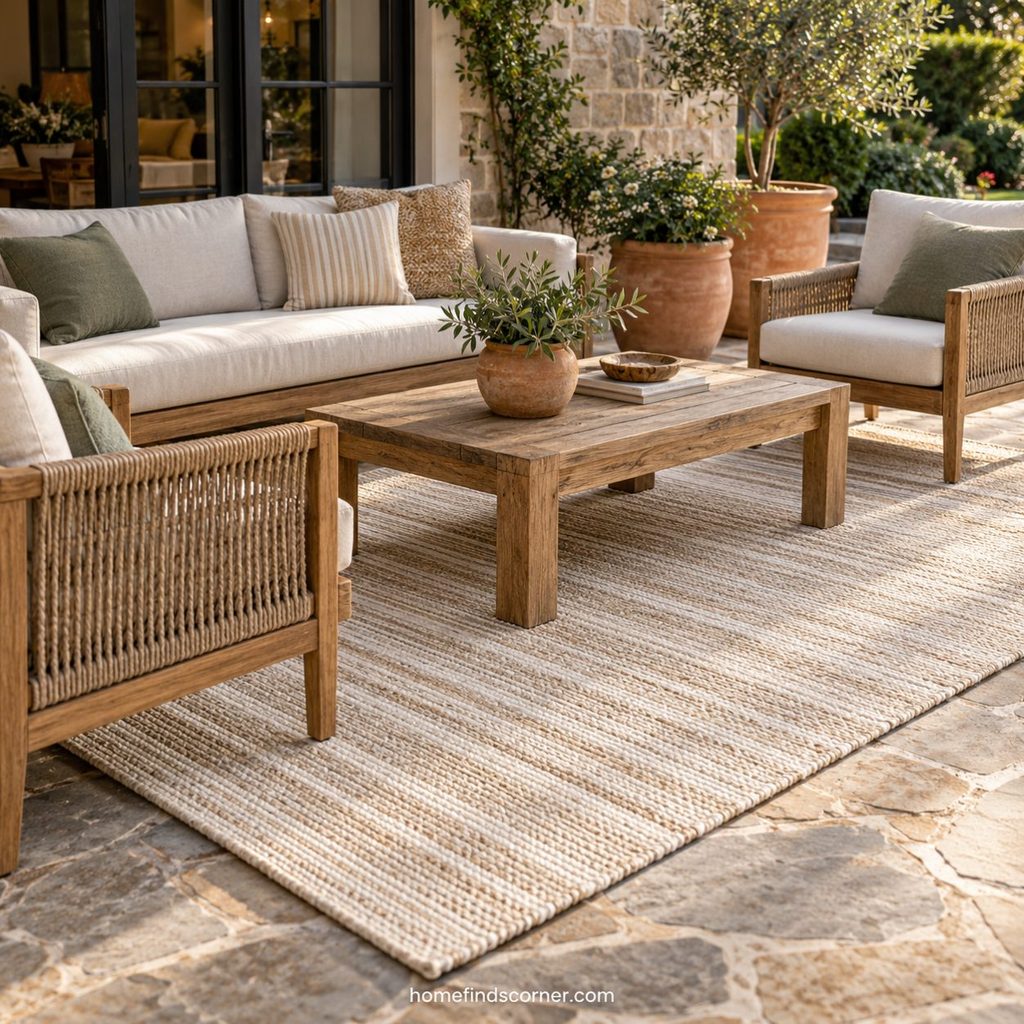
An outdoor rug gives furniture a shared base, especially on a broad stretch of concrete or pavers. It also introduces pattern without needing lots of small decorations.
Measure the whole seating group before choosing a size. A useful starting point is to place at least the front legs of the main seats on the rug. This connects the pieces visually; a tiny rug floating beneath a coffee table can make them seem disconnected.
Choose a rug labeled for outdoor use and check its care instructions and suitability for your surface. An exposed patio needs a different maintenance routine from a covered porch. Lift the rug periodically to clean underneath and let the surface dry.
A muted stripe works well with plain cushions. If your cushions already have a busy print, a quiet woven pattern gives your eye somewhere to rest.
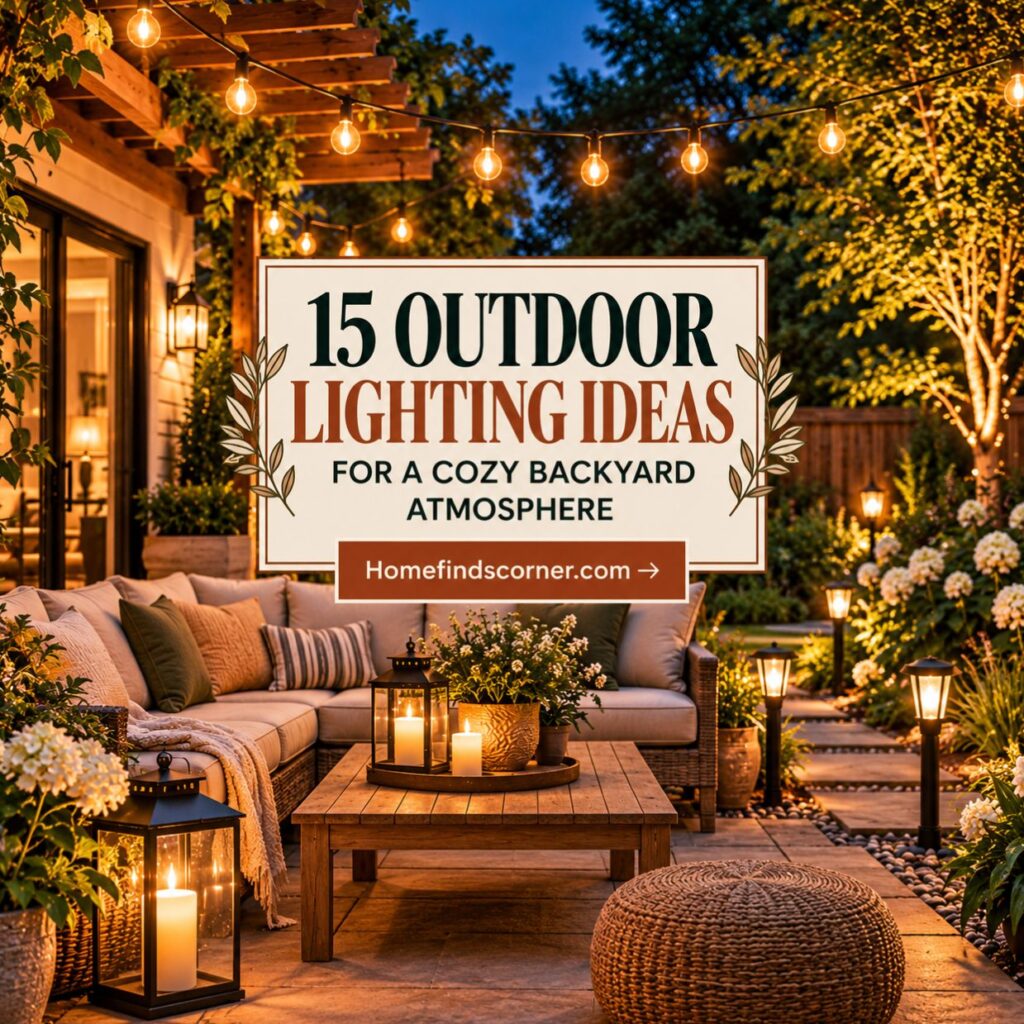
3. Layer Gentle Lighting
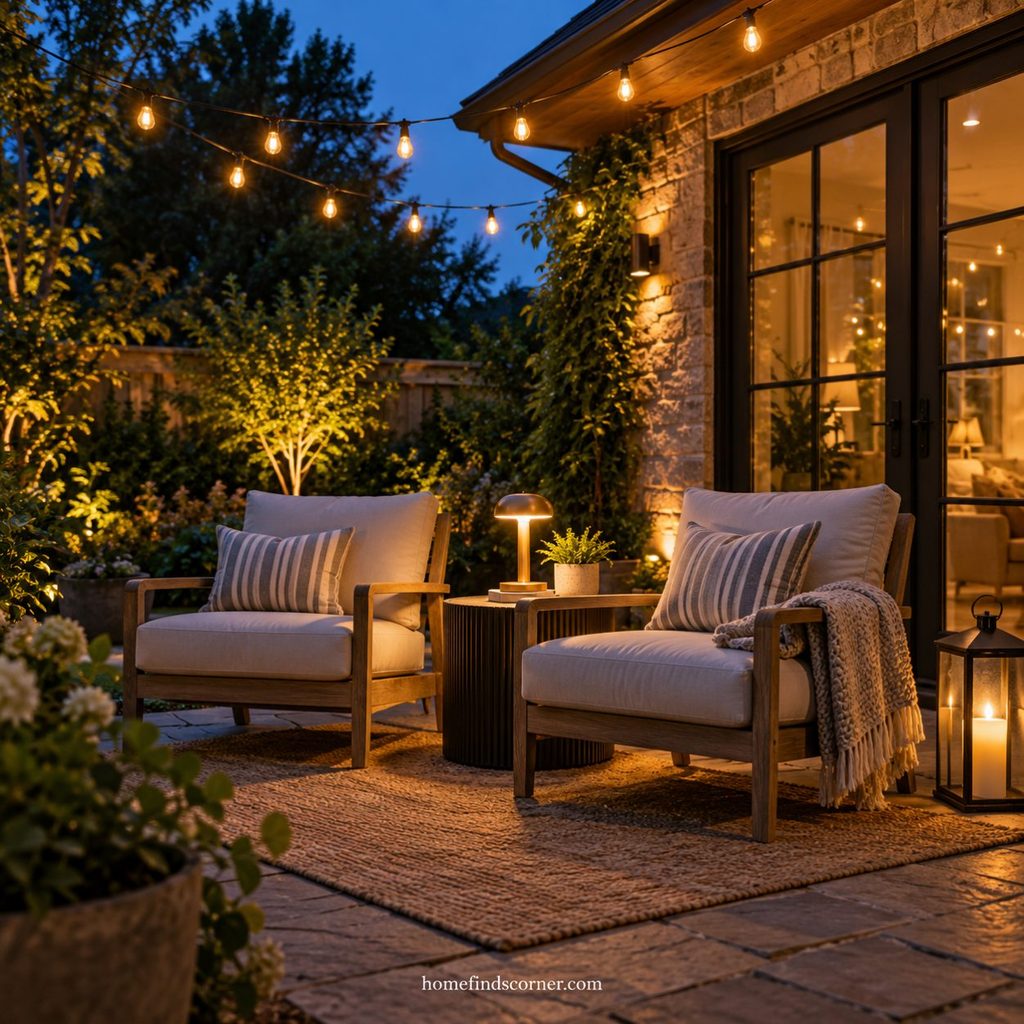
Evening atmosphere usually improves when light comes from more than one place. Combine an overhead source with a lower light near the seating instead of relying entirely on a bright wall fixture.
String lights can frame a sitting area, while a rechargeable outdoor table lamp makes a corner feel intimate. A lantern with a battery-operated candle adds another small pool of light. Choose a warm-white appearance if you prefer a soft evening setting.
Use lights and accessories rated for their location, following the manufacturer’s installation instructions. Keep cords away from walking routes and position lamps so they illuminate the space without shining directly into seated eyes or neighboring windows.
Try this: Sit outside after dark before adding more lights. Notice where you need visibility and where the existing light already feels comfortable. You may need only one well-placed lamp.
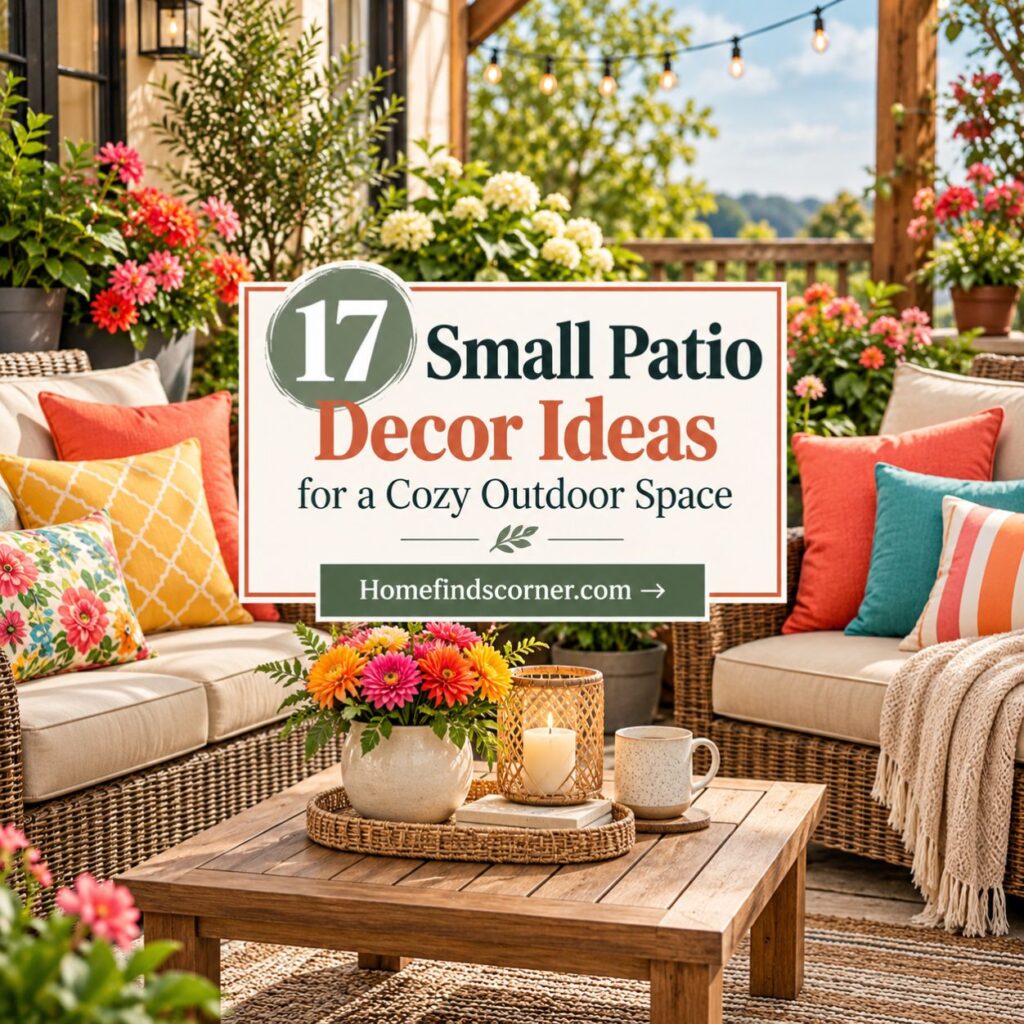
4. Add Comfortable, Easy-to-Store Textiles
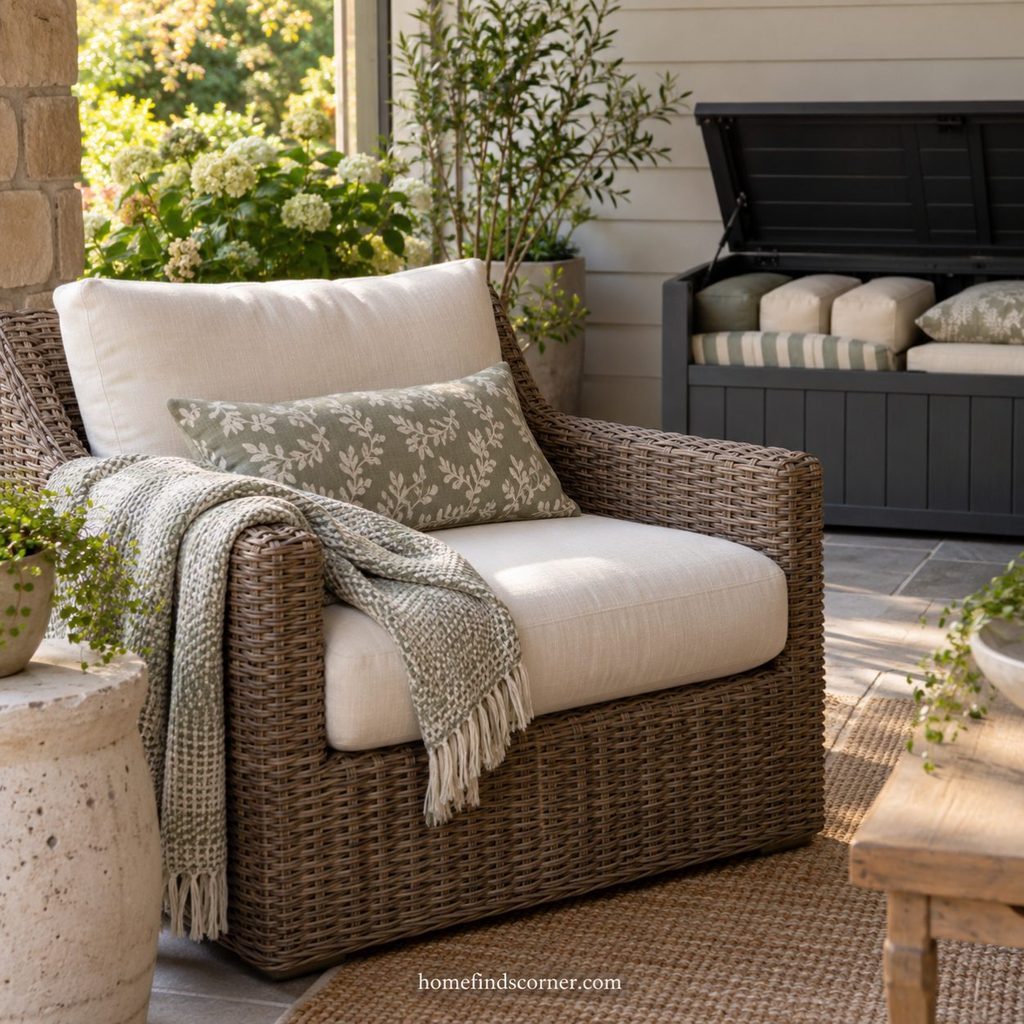
Cushions make a seat look welcoming, but comfort depends on how they fit. A deep chair may benefit from a supportive back cushion; a narrow dining chair may need only a slim seat pad.
Mix textures rather than filling every seat with pillows. Pair a solid outdoor cushion with one patterned lumbar pillow, then bring out a throw when you need it. Leave enough room for someone to sit without moving a pile of accessories.
Check fabric and filling care instructions. Water-resistant covers do not necessarily mean the whole cushion can stay soaked or remain outside year-round. Give wet pieces time to dry fully before storing them.
A weather-resistant storage bench or nearby indoor cupboard makes this routine easier. Keeping textiles close to the patio means you are more likely to use them on an ordinary evening.
5. Repeat a Simple Color Palette
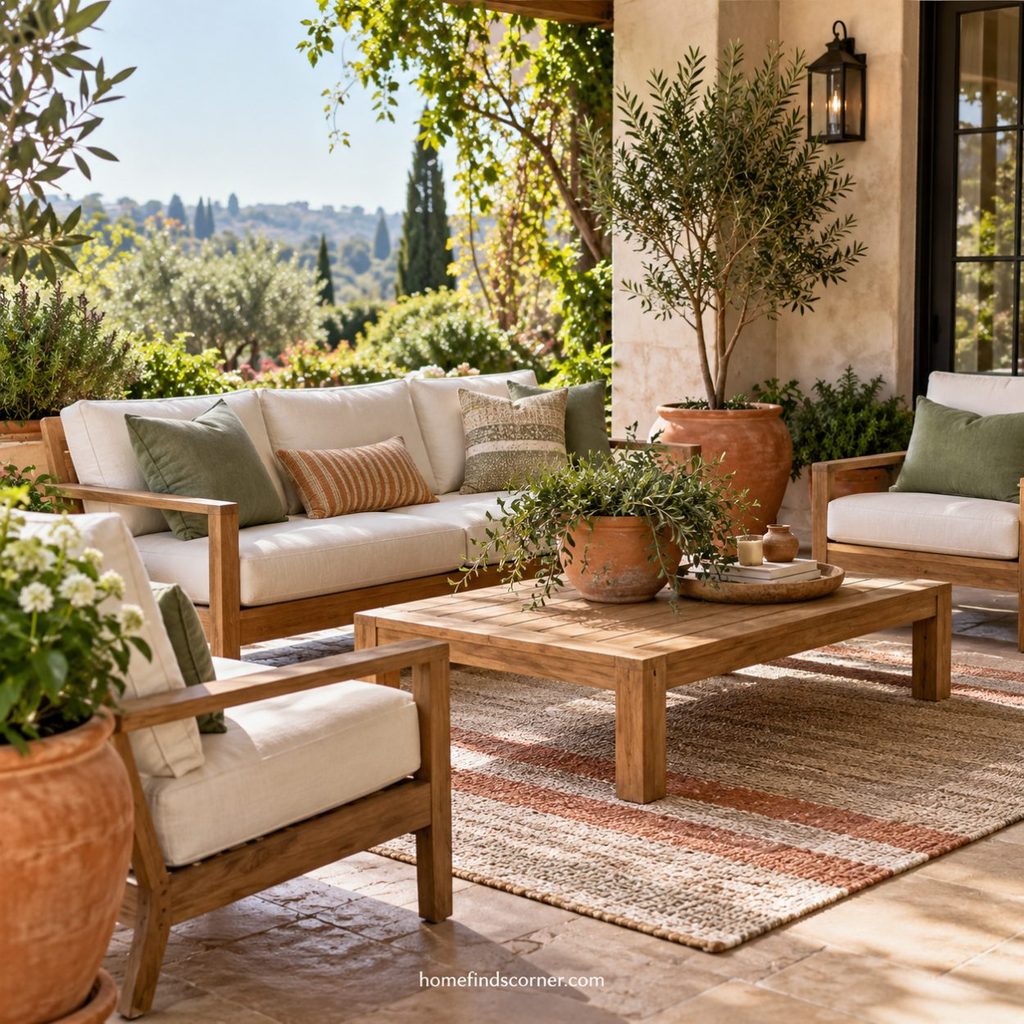
A small palette helps mismatched furniture feel intentional. Start with the colors already present in the paving, walls, and largest furniture pieces, then add one or two accents.
For a soft, earthy look, combine warm white, muted green, and terracotta. For a coastal direction, try sand, faded blue, and natural wood. A modern patio might use charcoal furniture with cream cushions and one rust-colored accent.
Repeat an accent in a few places: a cushion, a planter, and a detail in the rug. The shades do not have to match exactly. Similar undertones usually feel more relaxed than a collection of perfectly identical accessories.
Before replacing usable furniture, see whether simpler textiles can connect what you own. A consistent cushion color can make different chairs feel like part of the same outdoor room.
6. Group Plants at Different Heights
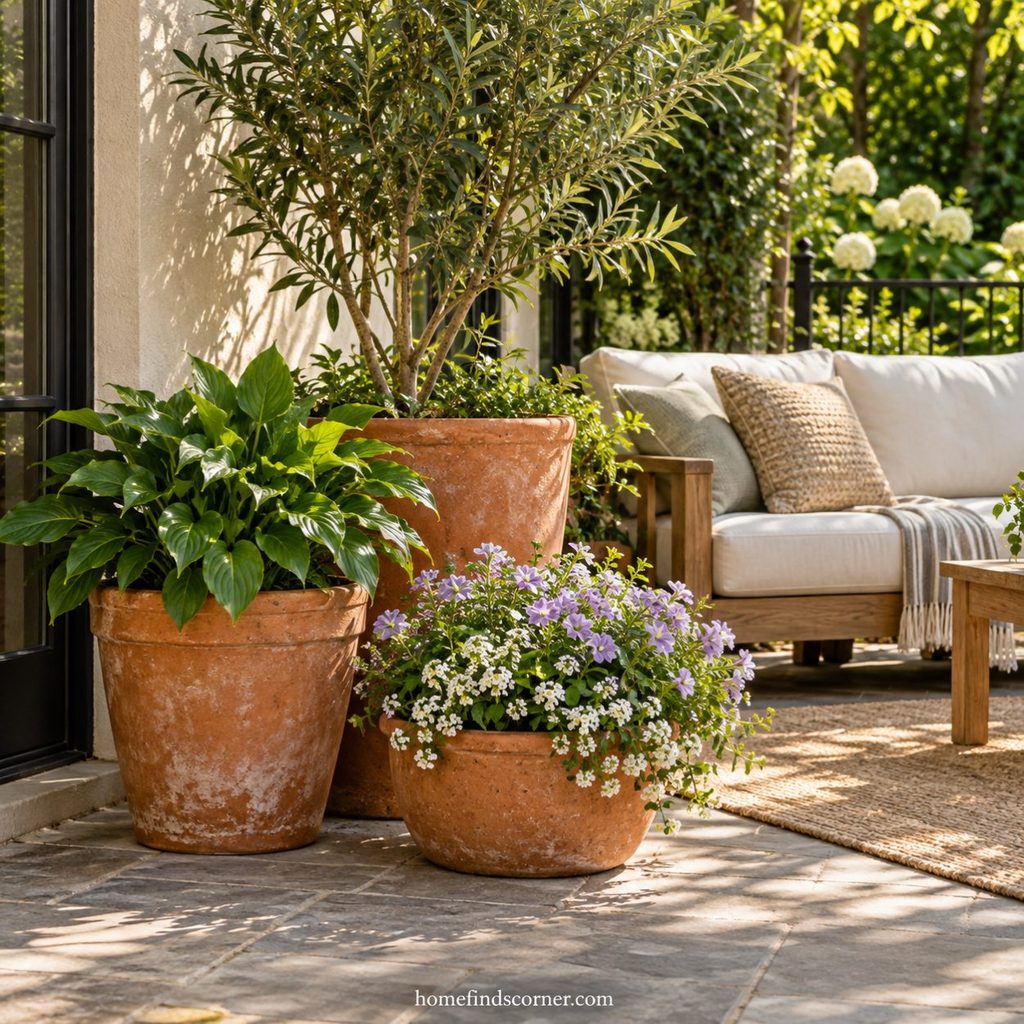
Plants soften the edges of paving, walls, and furniture. Rather than scattering individual pots everywhere, gather them into a few groups where they can make a stronger impression.
Try a taller plant behind a medium pot and a lower planter. Keep the tallest greenery beside or behind the seating so it frames the view without blocking conversation. Repeat a pot material, such as terracotta or a matte neutral finish, to connect the group.
Choose plants for the sunlight, wind, and climate your patio actually receives. Observe the area at different times of day before shopping. A sheltered corner and an exposed edge may need different plants.
For conventional containers, drainage matters. University of Maryland Extension notes that adding gravel beneath potting mix does not improve drainage.[1] Use containers with suitable drainage and potting media rather than trying to solve the problem with a layer of stones.
7. Add Privacy Beside Your Favorite Seat
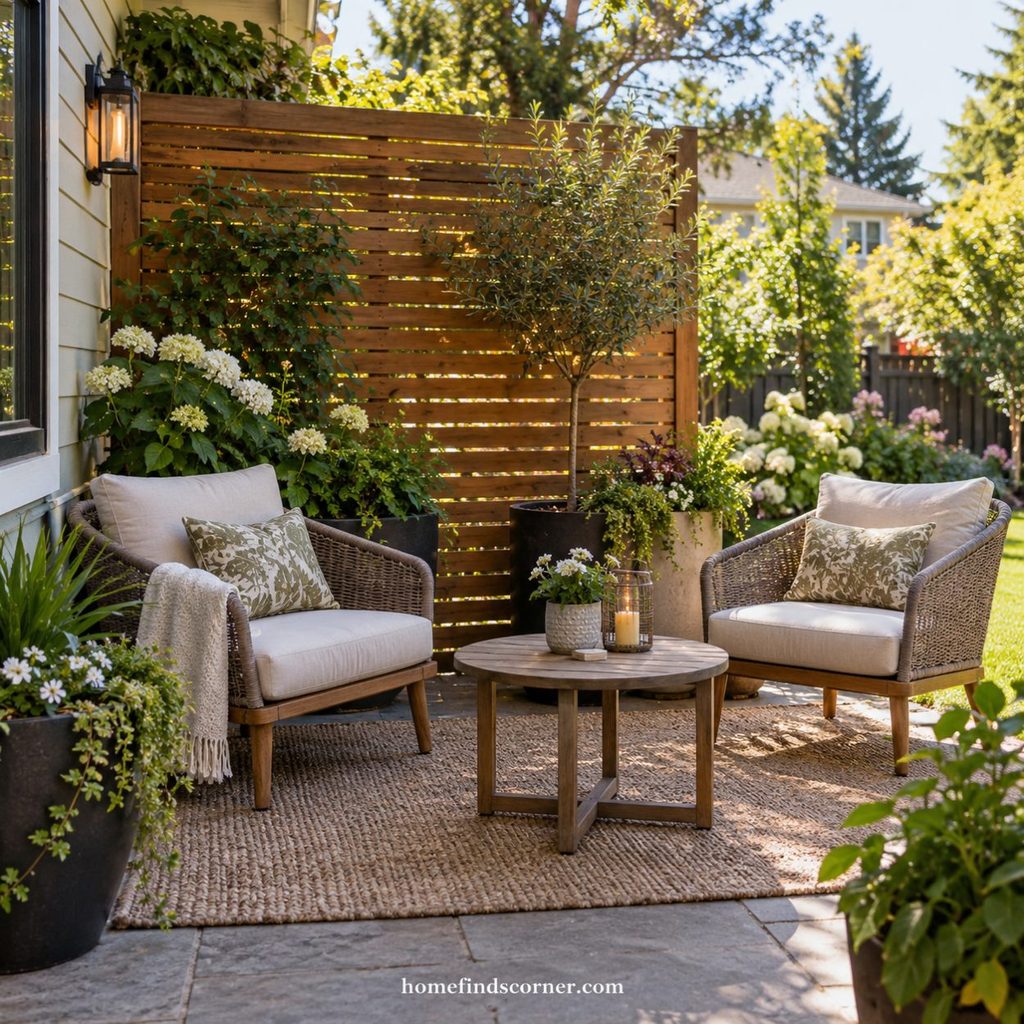
You do not always need to screen the entire patio to feel more comfortable. Start by identifying the view that makes your main seat feel exposed.
A freestanding screen behind a bench, a trellis beside two chairs, or a carefully placed planter group may provide enough enclosure. Keep another side visually open if you enjoy the garden view. Partial screening can feel welcoming without making the patio seem boxed in.
Outdoor curtains suit some covered patios, especially when you want softer edges. Choose fabric intended for the conditions and secure it so it does not whip around in the wind. Check rental rules before attaching anything to a building.
Consider the screen from inside the house, too. A privacy panel should improve the outdoor seat without unnecessarily blocking daylight or the view from a nearby window.
8. Style Around Comfortable Shade
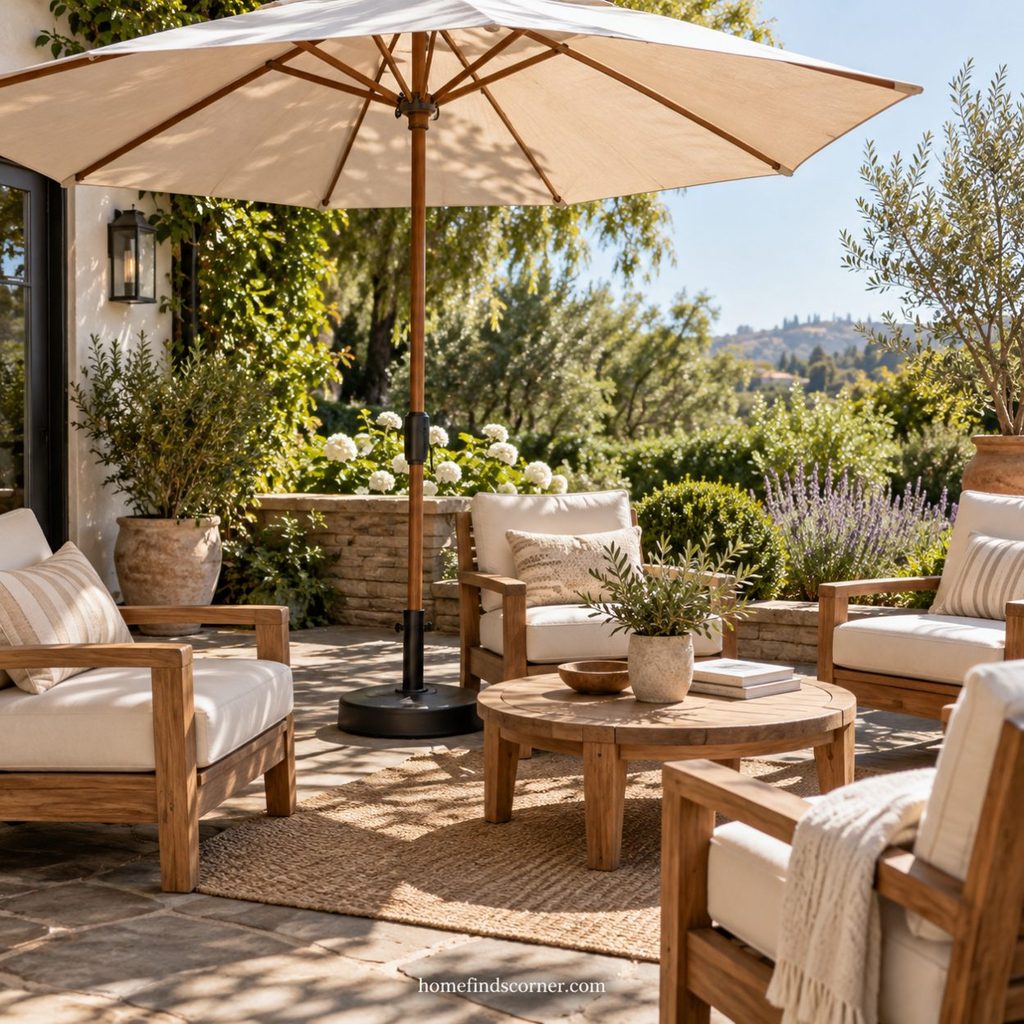
A patio that feels pleasant at sunset may be uncomfortable in the afternoon. Shade makes a sitting area more useful during the hours you want to spend there.
An umbrella is a flexible starting point. Choose its position around the seat and the sun’s direction, rather than centering it automatically over the paving. A pale canopy can create a light, quiet backdrop; a striped canopy can become the main decorative feature.
Check the umbrella manufacturer’s requirements for base weight, clearance, and wind precautions. A decorative planter is not a substitute for an appropriate base. Close the canopy when conditions require it.
For an existing pergola or covered patio, repeat its wood tone or metal finish in a table or planter. That connection helps the overhead structure feel integrated with the furniture below.
9. Keep a Useful Table Within Reach
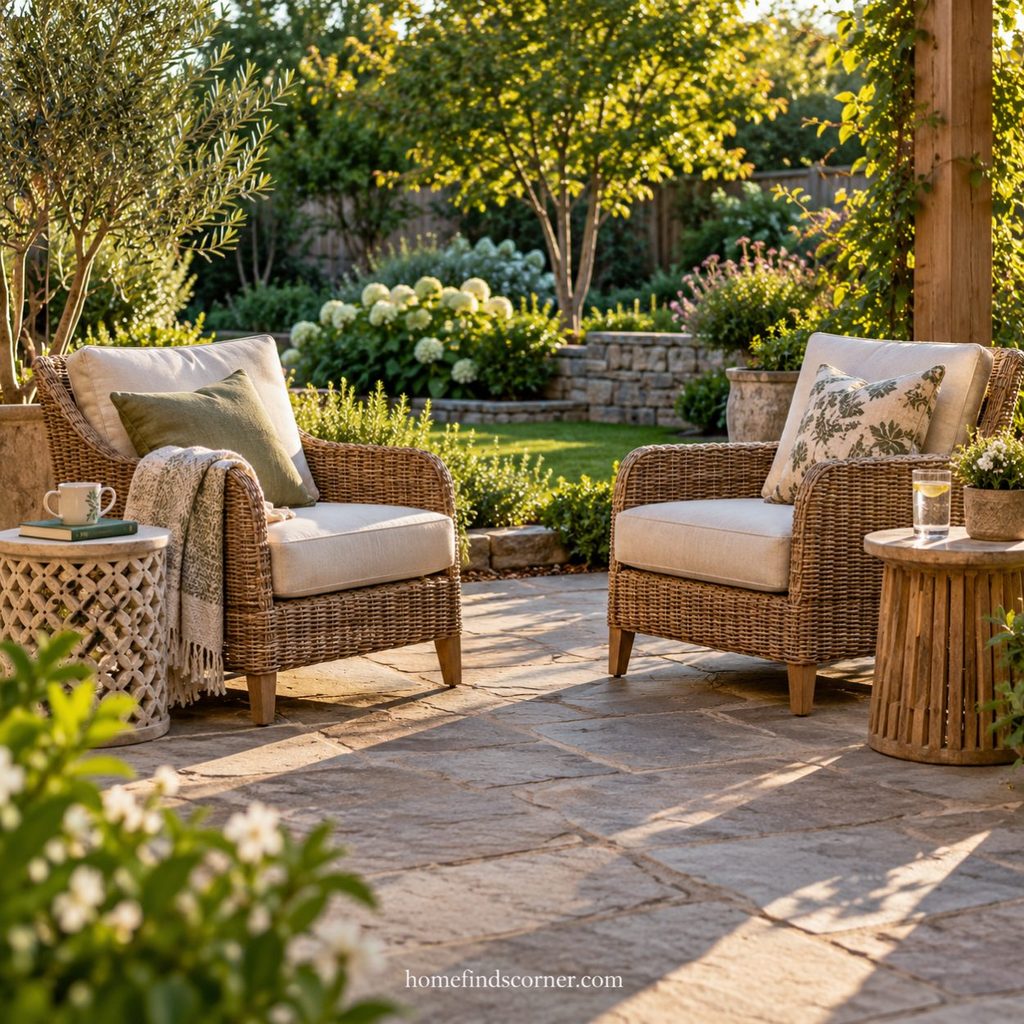
A cozy patio needs to work when you are actually using it. If putting down a drink means leaning across another person, the arrangement needs a small adjustment.
Use a narrow side table beside a lounge chair or a compact coffee table inside a seating group. Nesting tables offer flexibility when guests arrive. A garden stool can provide a useful surface if its top is stable and the manufacturer allows that use.
Keep everyday styling simple: perhaps a small plant and enough empty space for a book or glasses. A tray can gather loose items, but it should not occupy the entire usable surface.
Choose tables that are easy to move when cleaning. In a multipurpose patio, lightweight pieces also let you switch from quiet reading to a casual gathering without rearranging everything.
10. Choose One Personal Focal Point
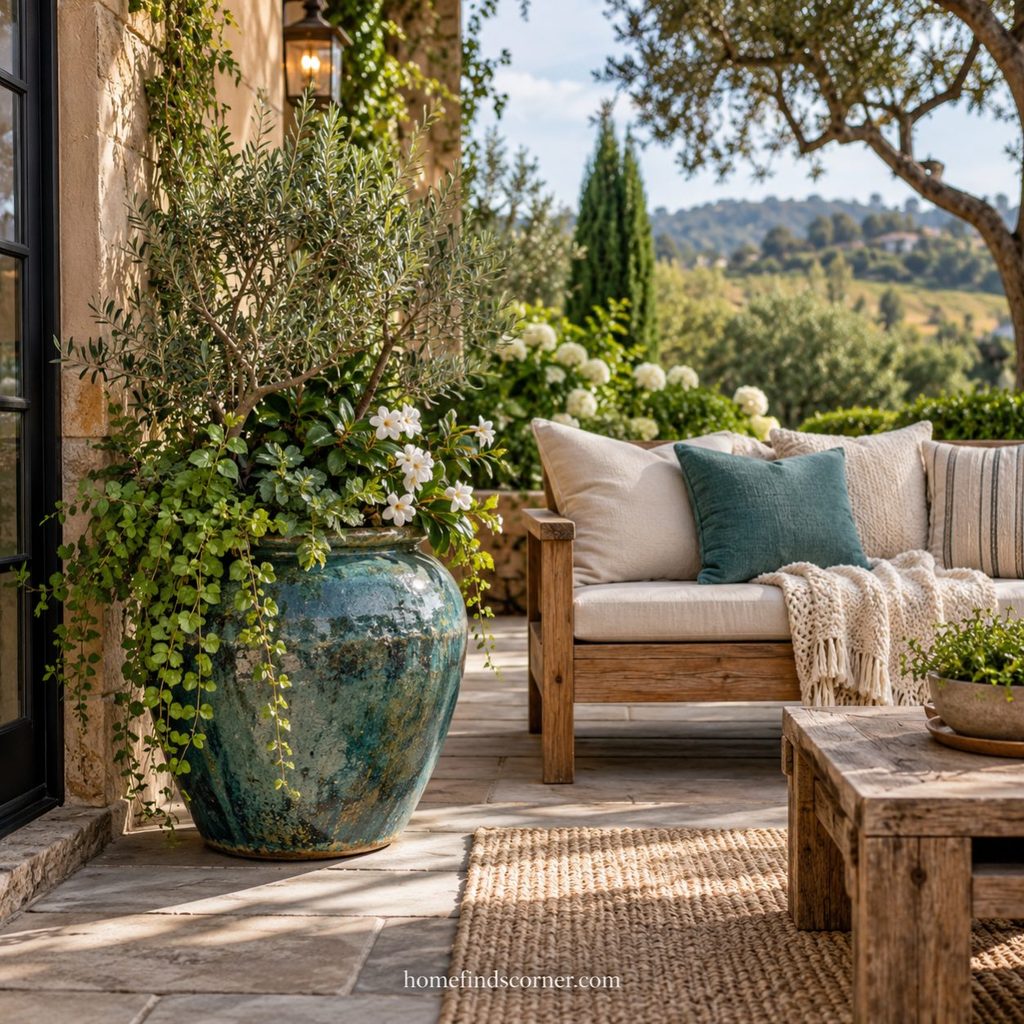
The final layer should give the patio a sense of character. Choose one detail you enjoy looking at instead of filling every empty patch with decor.
It might be a distinctive planter, an outdoor-rated wall piece, a patterned cushion you build the palette around, or a vintage table suitable for the conditions. Place it where it is visible from the main seat or from the door.
Let surrounding pieces support that feature. If a colorful planter is the focal point, repeat one of its colors in a cushion and keep the rest quieter. If the garden view is beautiful, frame it with seating and greenery.
Live with the arrangement for a few days before adding more. The best finishing touch may be an empty tabletop, a clearer walkway, or a chair turned toward the evening sky.
Bring Your Cozy Patio Together
Start with the part of the patio you already enjoy: the sunny morning corner, the garden view, or the sheltered spot beside the house. Make that place comfortable, then build outward with lighting, greenery, and useful surfaces.
You do not need to use all ten patio decorating ideas at once. Try one layout change and one comfort upgrade, spend time outside, and let your next choice respond to what the space needs.
Frequently Asked Questions
What should I add first to make a patio cozy?
Start with a comfortable seat and a reachable surface for a drink. Then improve evening lighting. These changes support actual use; rugs, plants, and accessories can follow once the layout feels right.
Can a patio feel cozy without an outdoor rug?
Yes. Arrange furniture into a clear group, repeat a few colors, and use plants or lighting to define the edges. A rug is optional, especially where it would interfere with drainage or require more upkeep than you want.
What works best for a rental patio?
Freestanding planters, movable furniture, outdoor rugs, and rechargeable lamps are useful starting points. Check the lease before installing hooks, curtains, screens, or anything attached to exterior walls or fences.
How do I keep patio decor from looking cluttered?
Choose fewer, more useful pieces. Group plants, limit the color palette, and leave some surfaces empty. Remove accessories that make it harder to sit, walk, clean, or put down a cup.
Should patio cushions stay outside overnight?
That depends on their materials, exposure, and care instructions. Store them dry when rain, dew, or extended damp conditions are likely to leave them wet. Covered seating can still receive wind-driven rain.
How can I make the patio feel connected to my home?
Repeat one or two indoor colors or materials outside, using outdoor-appropriate versions. A similar cushion shade, wood tone, or metal finish can create continuity without matching every piece of furniture.
Continue exploring with our small patio decorating on a budget and cozy small patio styling guides.