


ℹ️ Affiliate Disclosure: This article contains affiliate links. We may earn a commission if you make a purchase through these links, at no additional cost to you.
How Closet Organization Ideas That Save Space Improve Everyday Storage
A cluttered closet can make even a spacious bedroom feel overwhelming. When clothes are squeezed onto hangers, shoes pile up on the floor, and accessories disappear behind stacks of sweaters, getting dressed becomes more stressful than it needs to be.
The good news? You don’t need a walk-in wardrobe or an expensive renovation to create a beautifully organized closet.

These 15 closet organization ideas that save space will help you maximize vertical storage, organize everyday essentials, and make even a tiny closet feel more functional. Whether you’re working with a small bedroom closet, a reach-in wardrobe, or a shared space, these practical solutions can make a noticeable difference.
1. Double Your Hanging Space With a Second Closet Rod
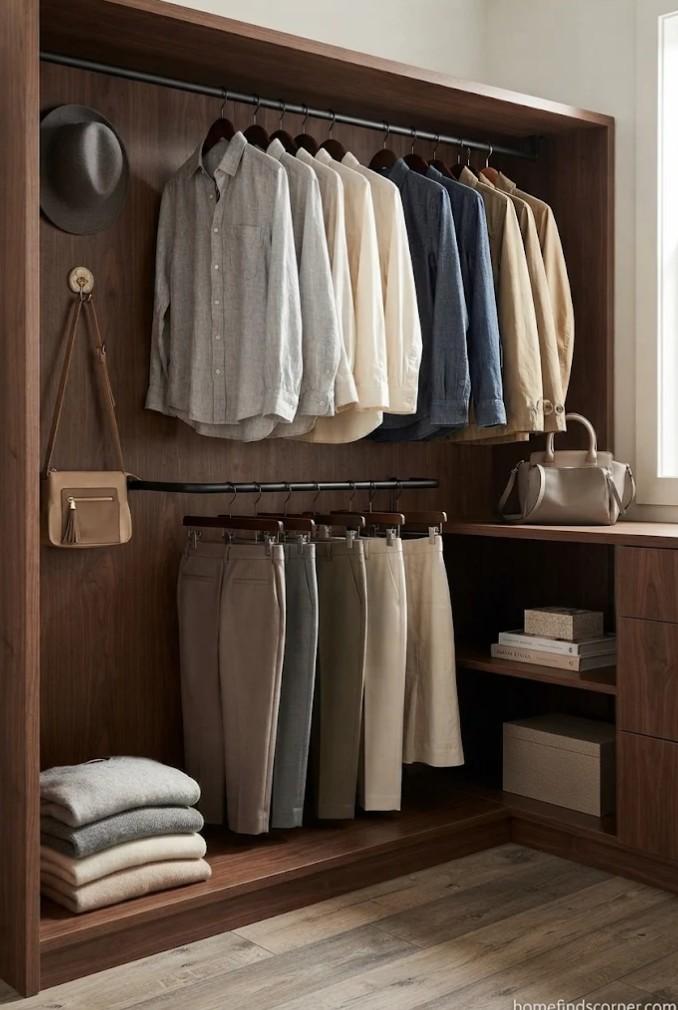
One of the simplest ways to maximize a small closet is to install a second hanging rod.
Most closets have a single rod positioned high above the floor, leaving valuable space underneath unused. Adding another rod creates two separate levels for shorter clothing items.
Use the upper rod for shirts, blouses, and jackets, while reserving the lower section for folded-over pants, skirts, and other shorter garments.
Space-saving tip: Adjustable double-hang closet rods are particularly useful for renters because some models attach to an existing rod without drilling.
2. Switch to Slim Velvet Hangers
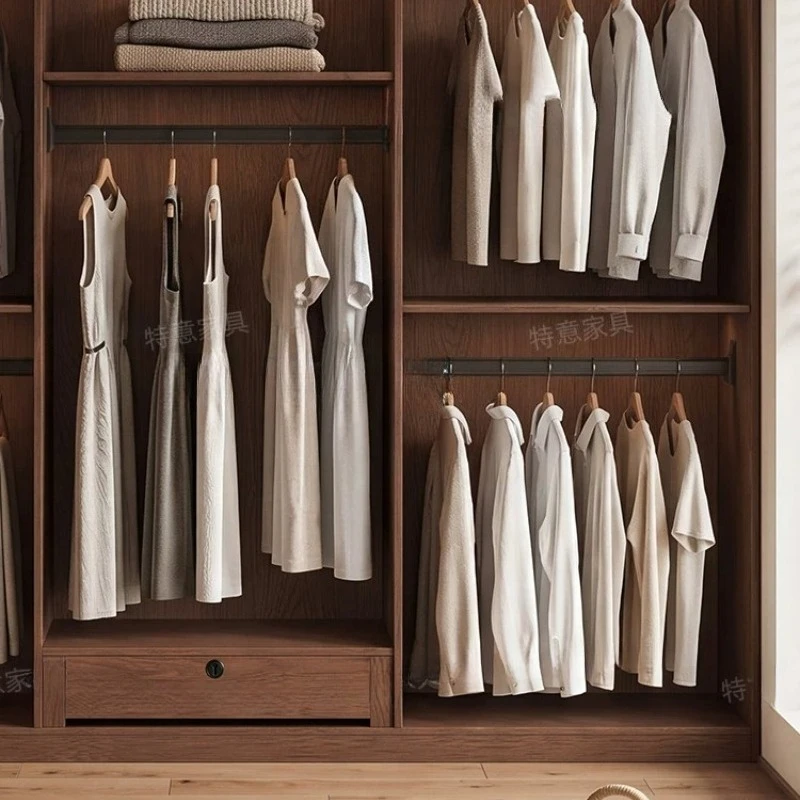
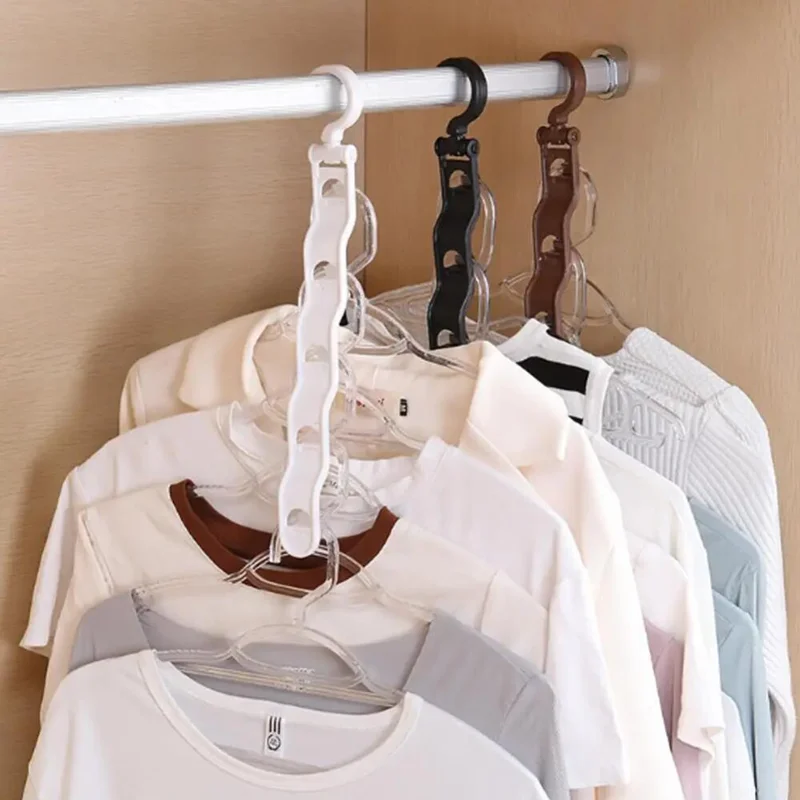
Bulky plastic and wooden hangers can take up more room than you realize.
Replacing them with slim velvet hangers allows you to fit more clothing along the same closet rod without making everything feel tightly packed.
Their soft, nonslip texture also helps keep delicate blouses, dresses, and lightweight tops from sliding onto the floor.
For a cohesive look, choose hangers in a single color, such as black, ivory, or soft beige.
Best for: Small bedroom closets, apartment wardrobes, and capsule wardrobes.
3. Install Adjustable Shelves Above Your Clothes
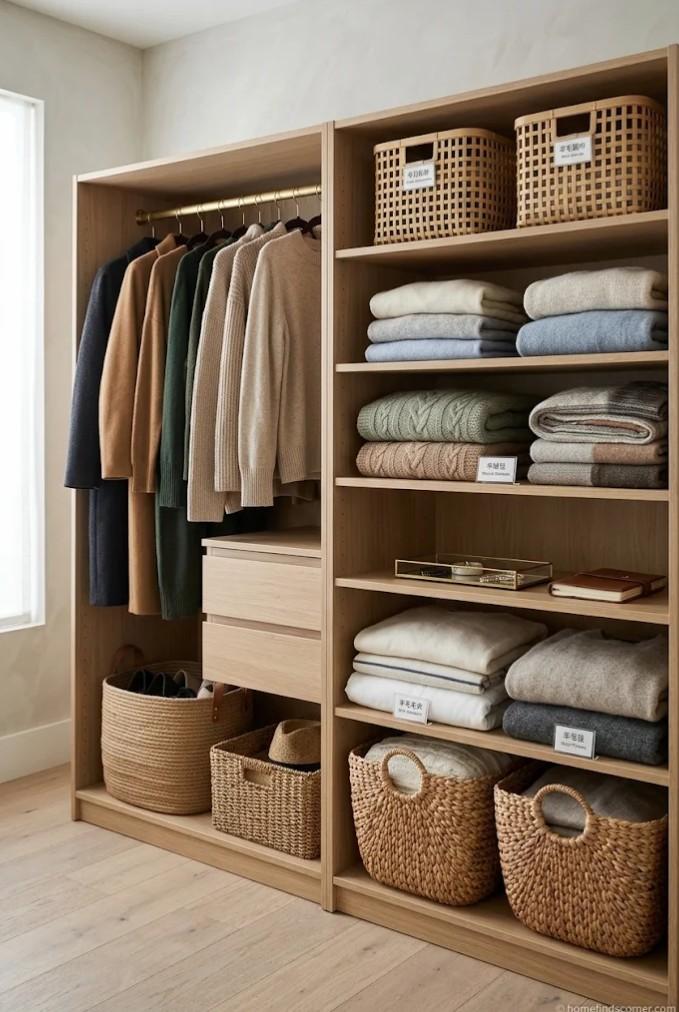
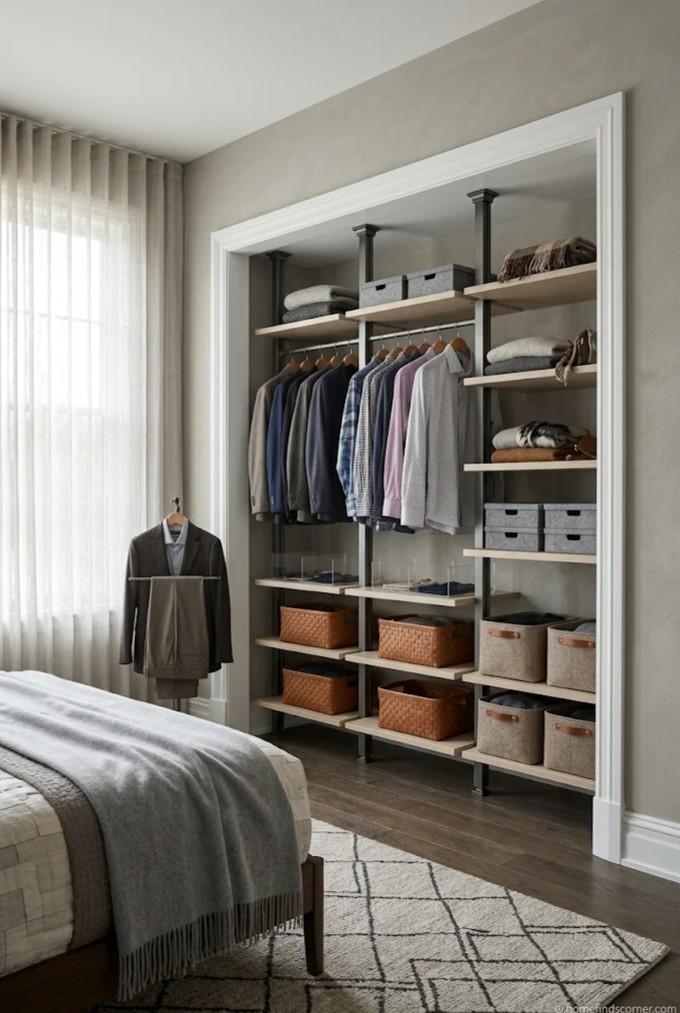
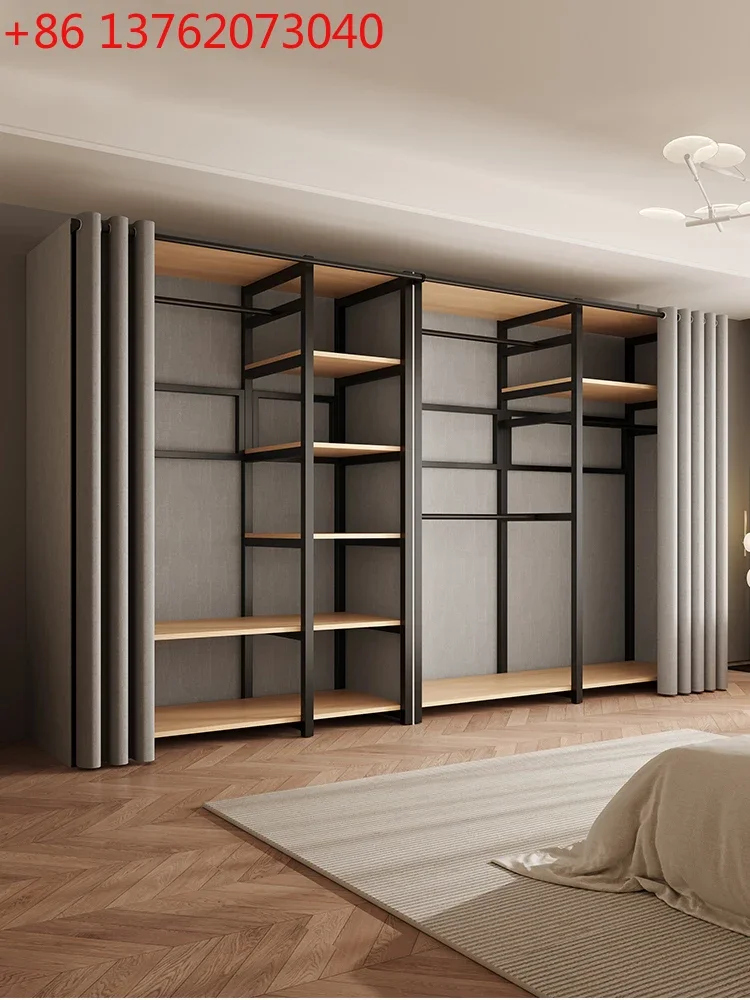
The area above your closet rod is often one of the most underused storage spots.
Installing adjustable shelving transforms this empty space into a practical home for folded sweaters, handbags, extra bedding, and seasonal clothing.
Unlike fixed shelves, adjustable systems can be repositioned as your storage needs change.
Place items you use frequently at eye level and store less-used belongings higher up.
Organization tip: Leave a little space between storage baskets so they’re easy to pull out without disturbing everything around them.
4. Use Clear Stackable Shoe Boxes
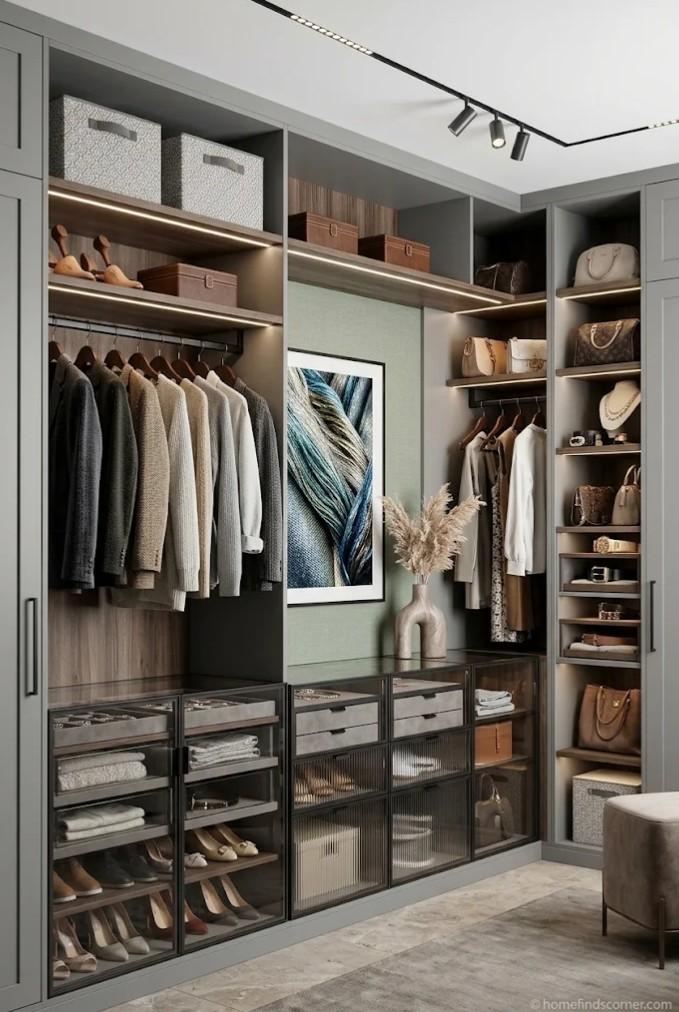
Shoes can quickly take over a closet floor, especially when multiple pairs are stacked on top of each other.
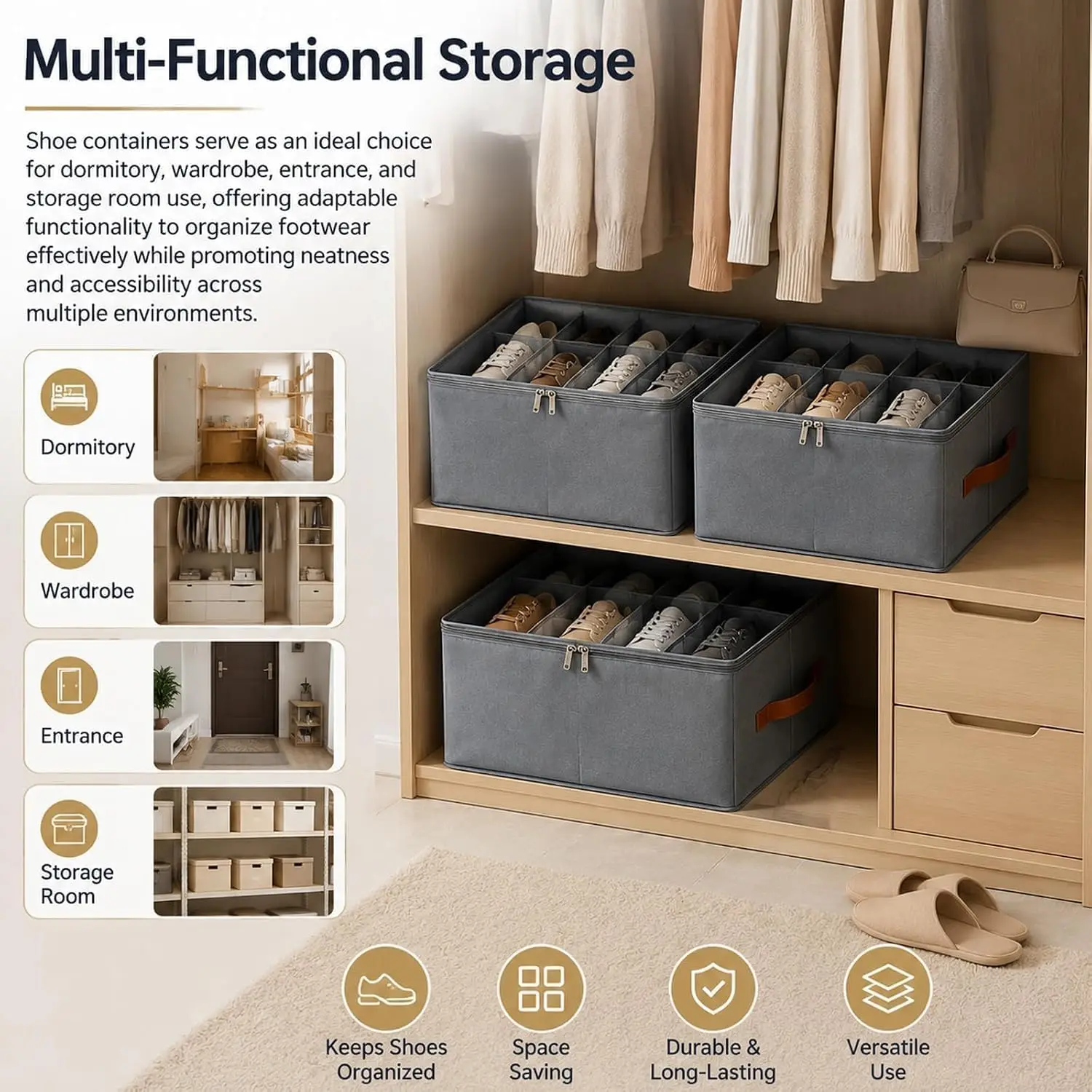
Clear stackable shoe boxes make it easier to store shoes vertically while keeping individual pairs visible and protected from dust.
Choose boxes with front-opening doors if you plan to stack them several rows high. This lets you access shoes without dismantling the entire stack.
For a streamlined appearance, use matching containers throughout the closet.
Space-saving tip: Measure your shoes and shelf depth before purchasing boxes, particularly for ankle boots or larger sneakers.
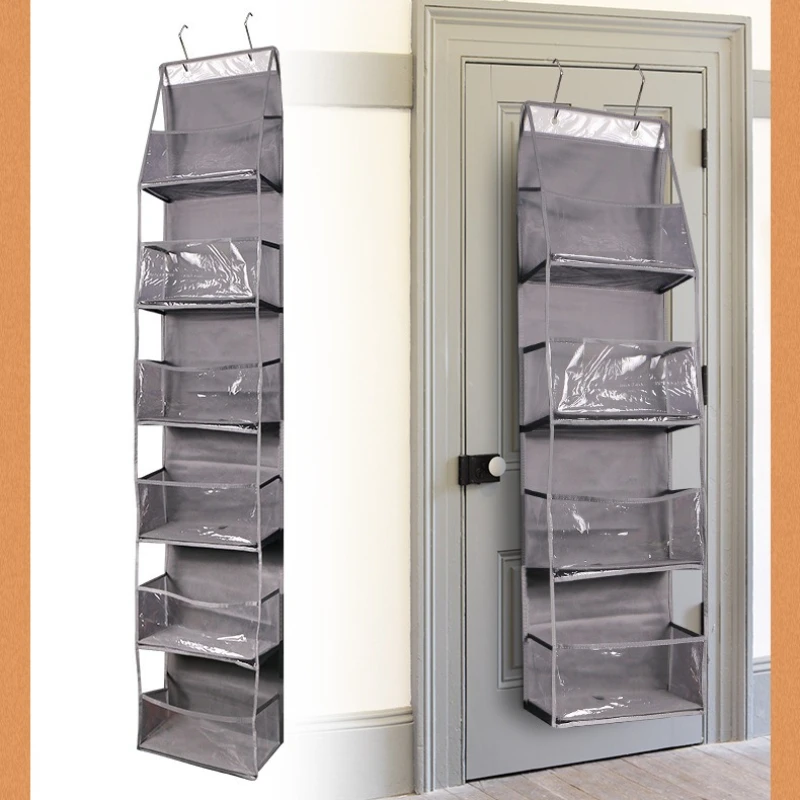
5. Add an Over-the-Door Closet Organizer
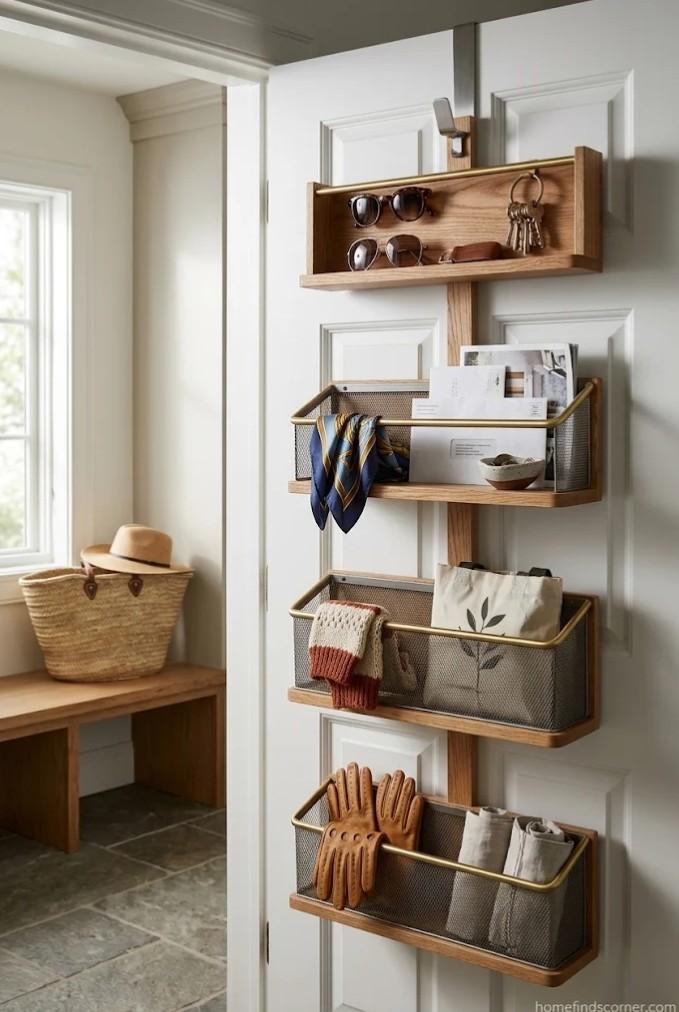
The back of your closet door offers valuable storage space that often goes completely unused.
An over-the-door organizer can hold accessories, belts, scarves, socks, small handbags, and other items that tend to clutter drawers.
Pocket organizers work especially well for lightweight accessories, while sturdy metal racks are better suited for larger items.
Choose an organizer that complements your closet’s color palette to maintain a clean, coordinated appearance.
Best for: Small closets with limited drawer space and rental apartments.
6. Organize Folded Clothes With Shelf Dividers
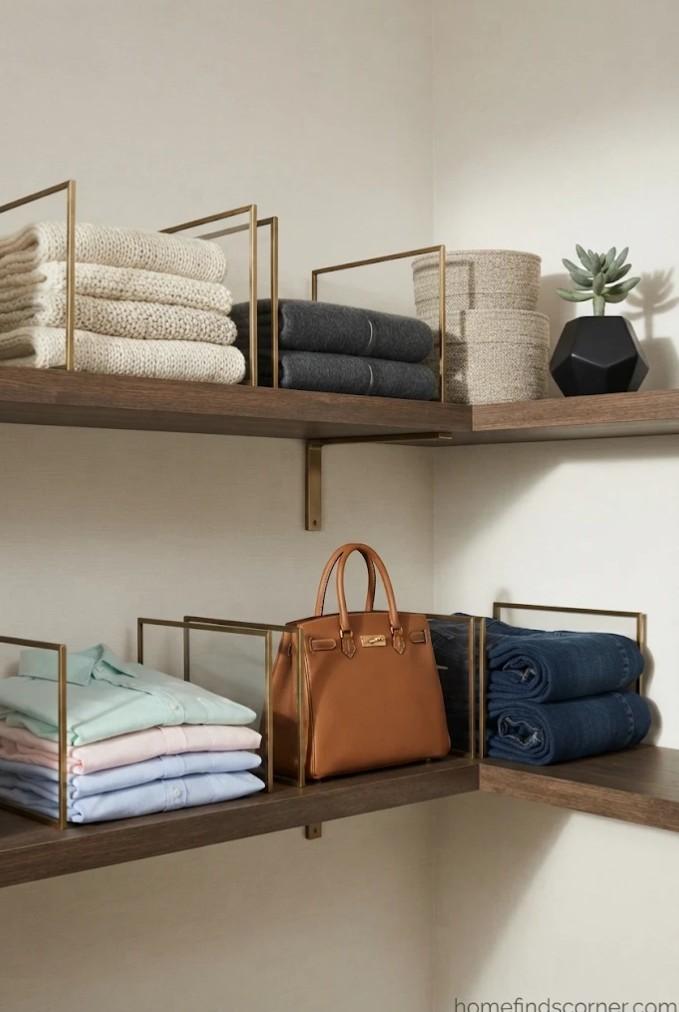
Stacks of sweaters and jeans may look neat initially, but they can quickly topple over when you remove something from the middle.
Shelf dividers keep folded clothing separated into manageable sections.
Transparent acrylic dividers create a clean, minimalist appearance, while metal dividers provide a slightly more structured look.
Try organizing clothes by category, such as sweaters, jeans, T-shirts, and workout clothes.
This simple closet organization idea makes your shelves easier to maintain without adding bulky containers.
7. Store Seasonal Clothing in Vacuum Storage Bags
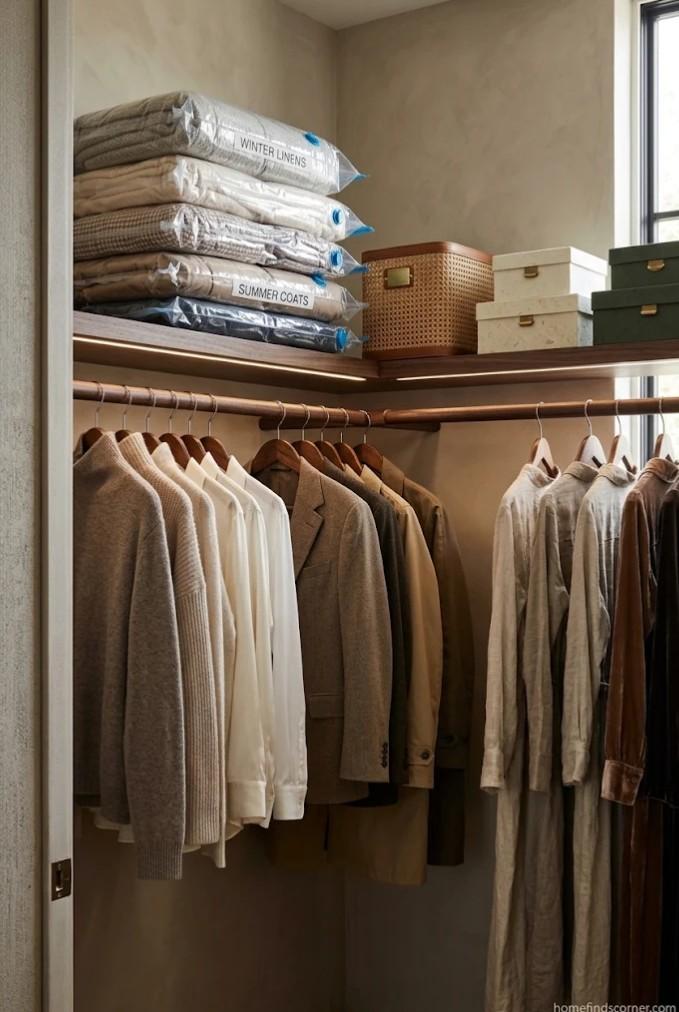
Seasonal clothing can occupy a surprising amount of valuable closet space.
Bulky sweaters, winter coats, and extra blankets are often unnecessary during warmer months.
Vacuum storage bags compress suitable textiles, allowing you to store them more compactly on upper shelves or beneath your bed.
Before packing anything away, make sure the clothing is completely clean and dry.
Avoid compressing delicate fabrics, structured garments, leather, or down-filled pieces for extended periods, as they may lose their shape or loft.
Space-saving tip: Label each bag by season so you can easily find your clothing when temperatures change.
8. Install Pull-Out Closet Baskets
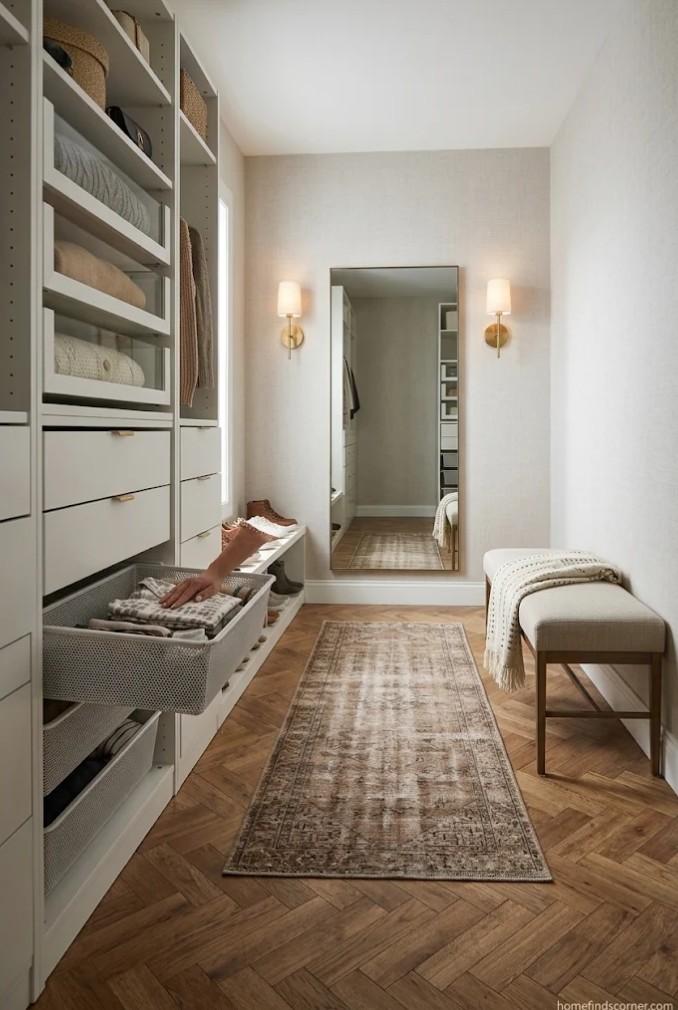
Deep closet shelves can make it difficult to reach items stored toward the back.
Pull-out baskets solve this problem by bringing the contents directly to you.
They’re especially practical for jeans, workout clothes, pajamas, and everyday accessories.
Wire baskets allow air to circulate and make it easier to see what’s inside, while solid-sided drawers create a more concealed appearance.
For an affordable alternative, use removable storage bins with handles on existing shelves.
9. Maximize Floor Space With a Tiered Shoe Rack
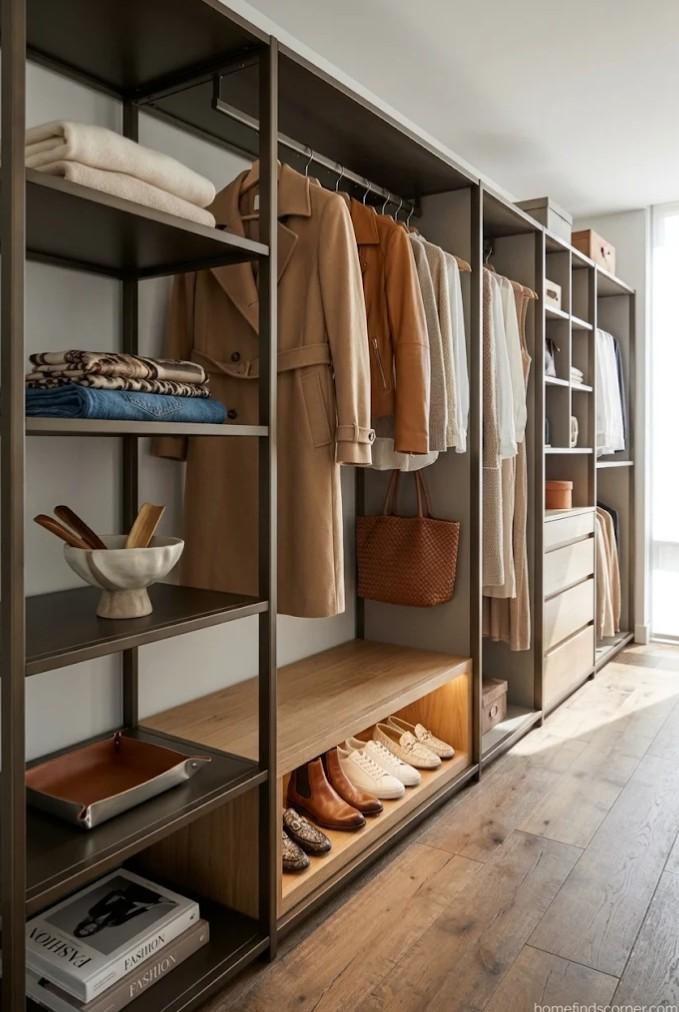
If your closet floor is covered with shoes, a tiered shoe rack can make a big difference.
Instead of arranging shoes in a single row, a multi-level rack takes advantage of vertical space beneath your hanging clothes.
Slim metal racks are ideal for modern interiors, while bamboo and natural wood options add warmth to a neutral closet.
For narrow spaces, consider an expandable shoe rack that adjusts to your available width.
Best for: Reach-in closets, small wardrobes, and shared bedroom storage.
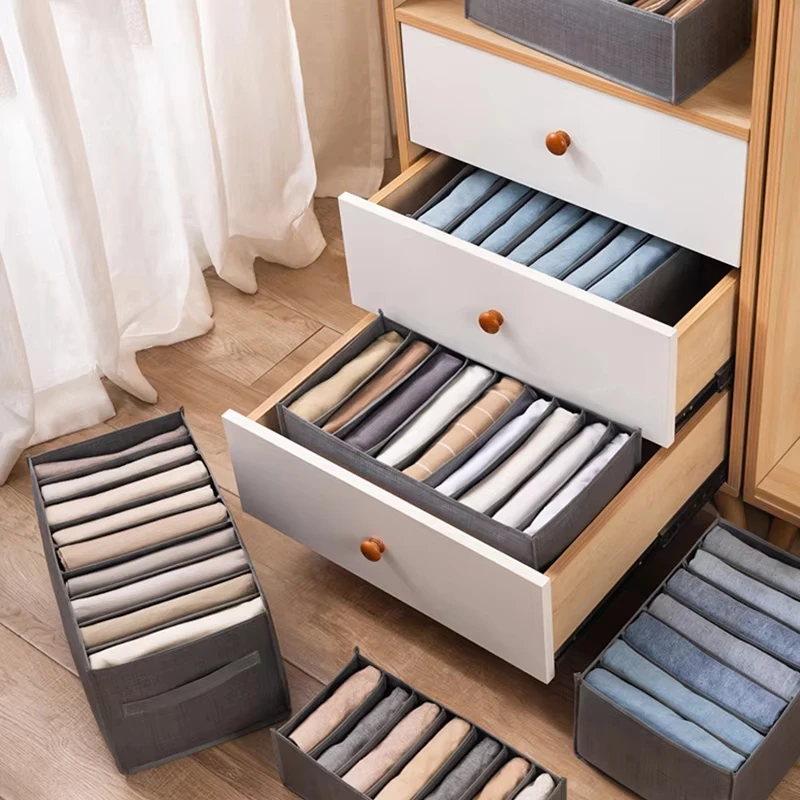
10. Use Drawer Organizers for Small Clothing Items
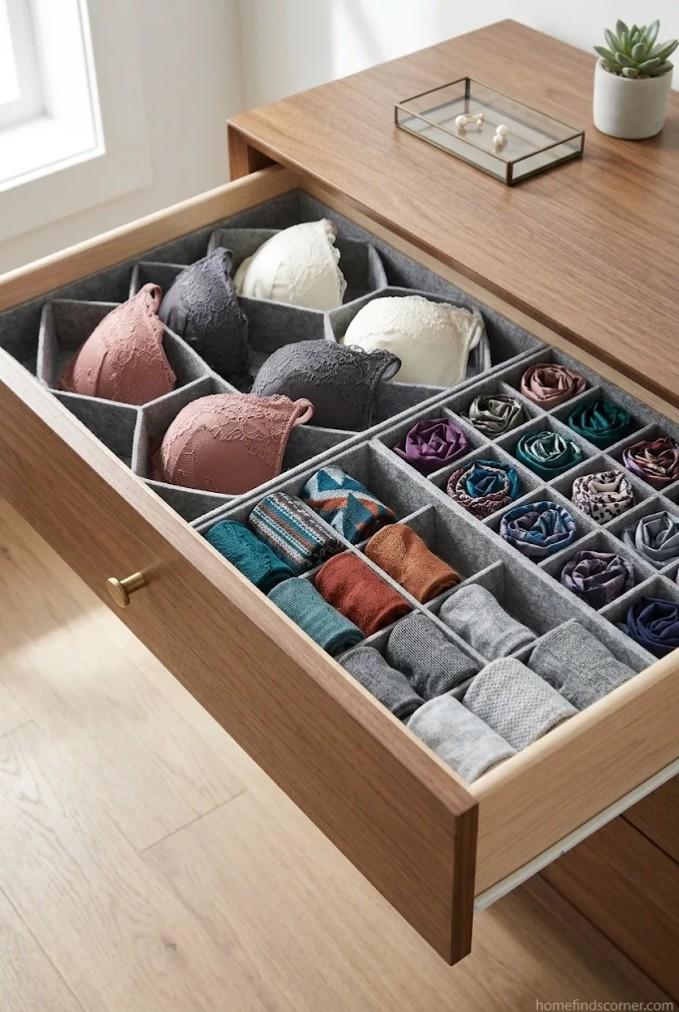
Small clothing items can easily become tangled and disorganized inside drawers.
Drawer organizers divide the space into individual compartments, making everything easier to find.
They’re particularly helpful for socks, underwear, scarves, ties, and other small essentials.
For maximum efficiency, fold items vertically rather than stacking them in deep piles.
This method allows you to see more of your clothing at once and prevents you from disturbing an entire drawer while searching for one item.

11. Add Hooks to Empty Closet Walls
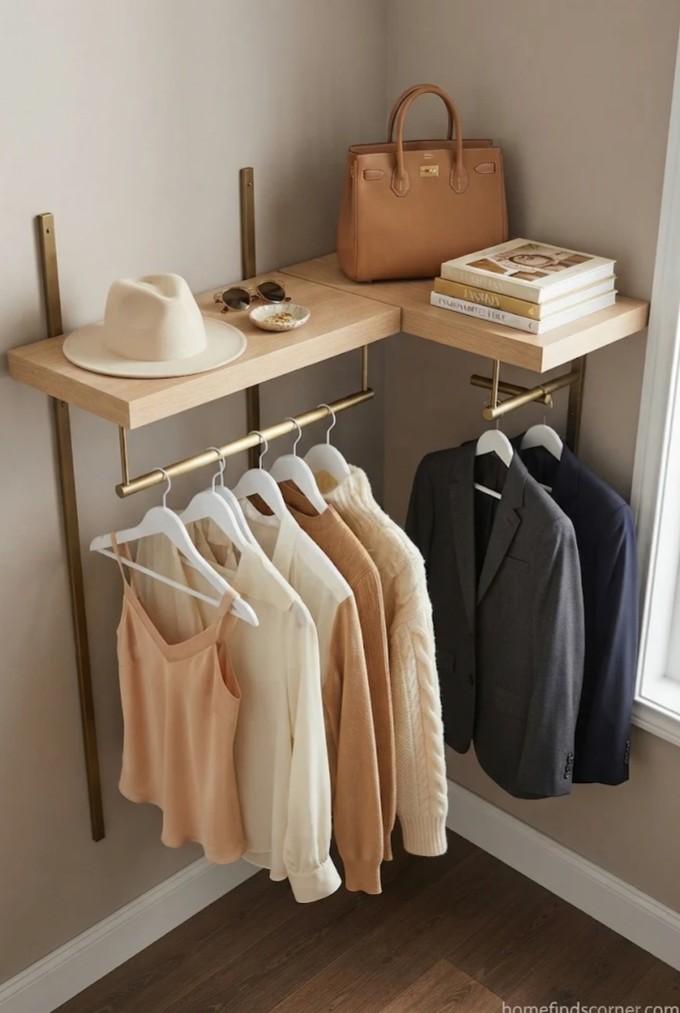
Even a narrow section of empty closet wall can become useful storage.
Wall-mounted hooks are perfect for accessories that don’t need a full shelf or drawer.
Use them to organize handbags, belts, hats, scarves, or frequently worn accessories.
For a renter-friendly solution, removable adhesive hooks may work for lightweight items when installed according to their weight limits.
Styling tip: Matching brass, matte black, or wooden hooks can make a basic closet feel more intentional and polished.
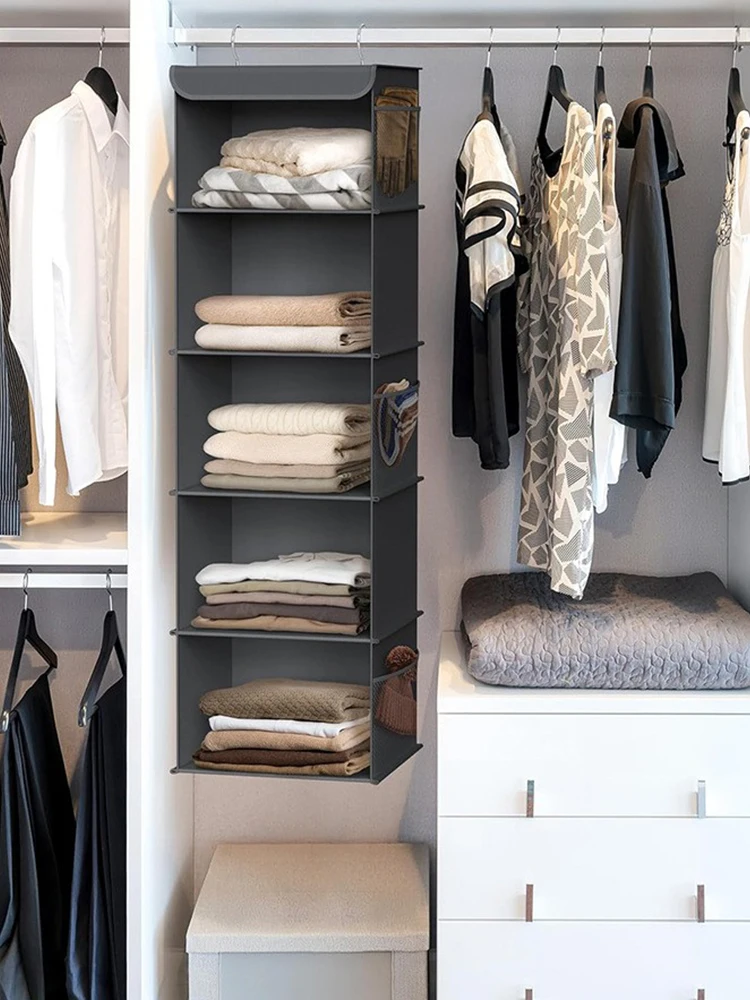
12. Try Hanging Closet Shelf Organizers
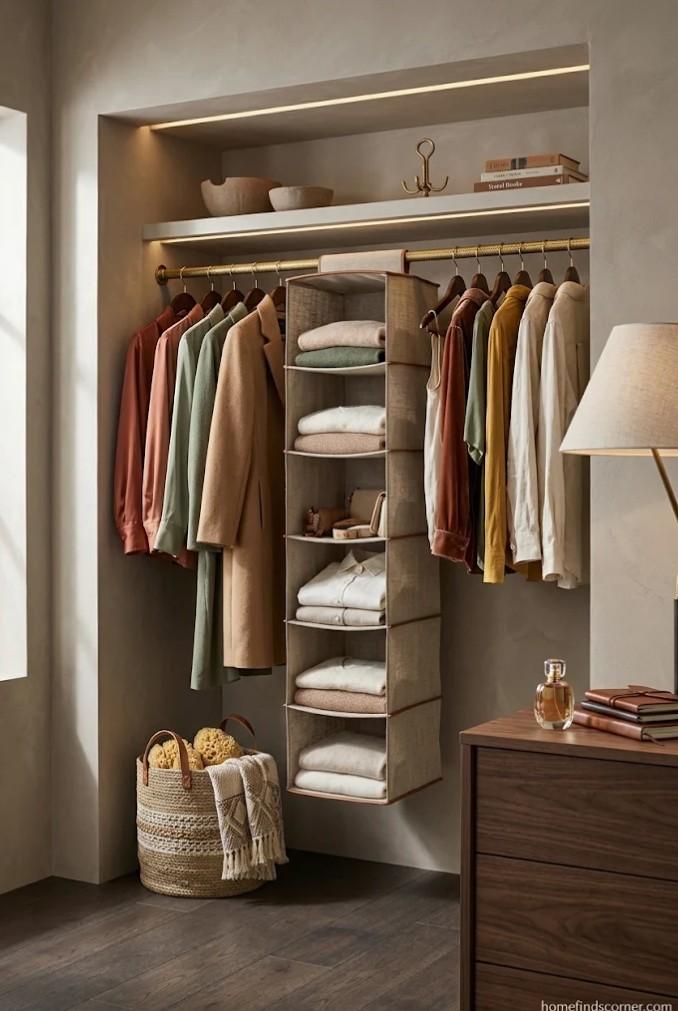
Not every closet has enough built-in shelving.
A hanging closet organizer creates instant vertical compartments using your existing clothing rod.
These fabric organizers are ideal for folded T-shirts, lightweight sweaters, jeans, and accessories.
Many models also include side pockets or removable drawers for smaller items.
Choose a narrow organizer if hanging space is limited, and avoid overloading it with heavy clothing.
Best for: Rental homes, dorm rooms, and closets without built-in shelves.
13. Create a Dedicated Handbag Storage Area
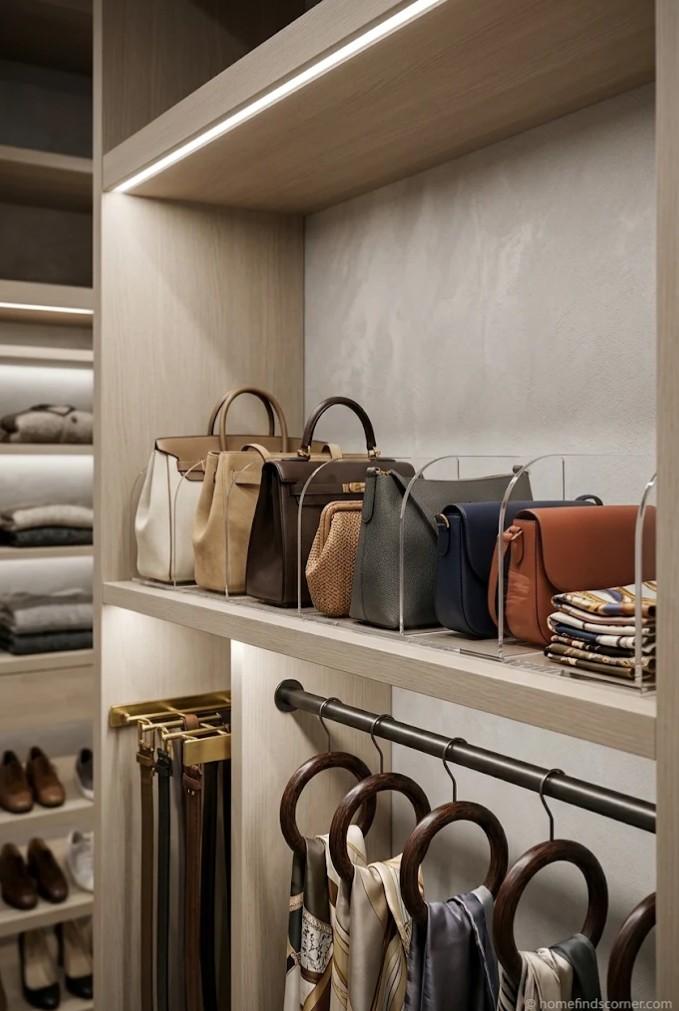
Handbags can consume valuable closet space when they’re piled together or scattered across shelves.
Creating a dedicated handbag section keeps your collection organized and helps bags maintain their shape.
Use shelf dividers to separate structured bags or place smaller handbags inside individual fabric storage bins.
For handbags with delicate handles, storing them upright on a shelf is often better than hanging them for long periods.
Keep your most frequently used bags at an accessible height and reserve upper shelves for occasional pieces.
14. Add Motion-Sensor LED Closet Lighting
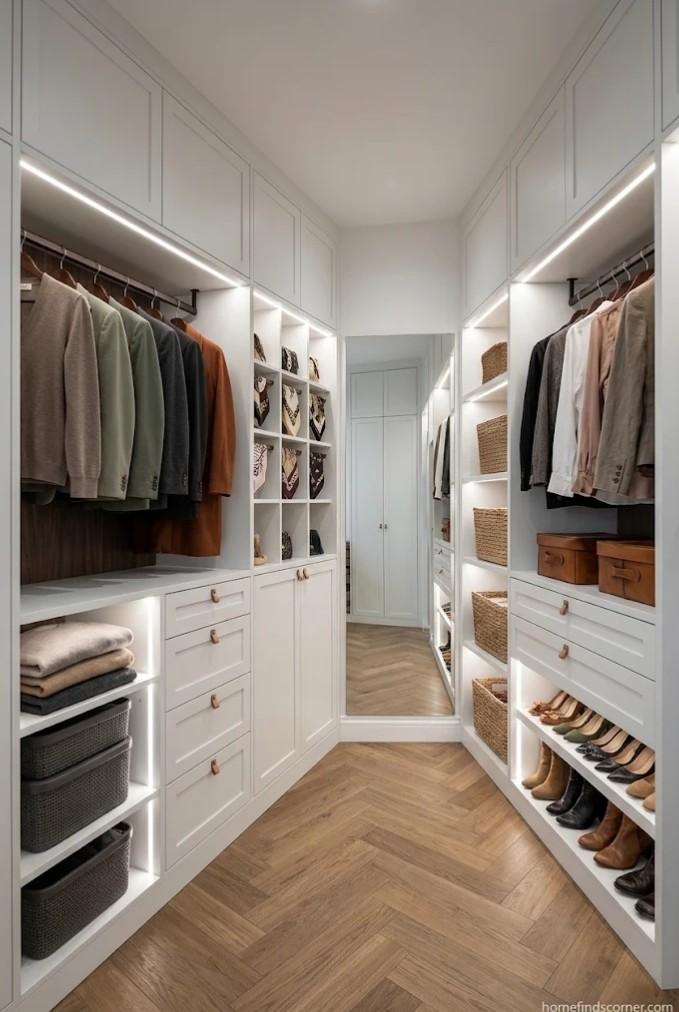
Good lighting won’t physically increase your closet’s storage capacity, but it can make every shelf and corner easier to use.
Dark closets often hide clothing and accessories, leading to forgotten items and unnecessary clutter.
Battery-operated or rechargeable motion-sensor LED lights can illuminate shelves, hanging areas, and deep corners without complicated electrical work.
Warm white lighting creates a cozy, boutique-inspired appearance, while neutral white lighting makes clothing colors easier to distinguish.
Choose lights intended for closet use and follow the manufacturer’s installation and safety instructions.

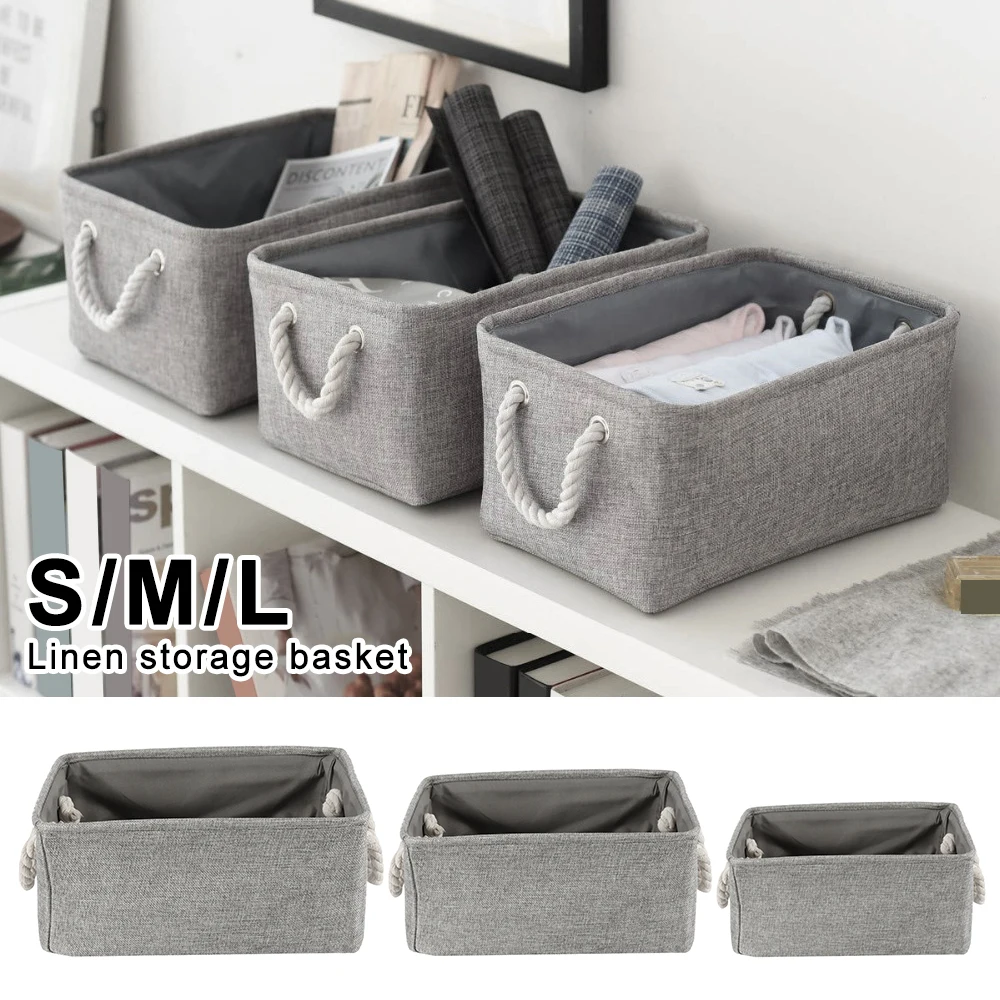
15. Use Labeled Storage Bins for a Clutter-Free Finish
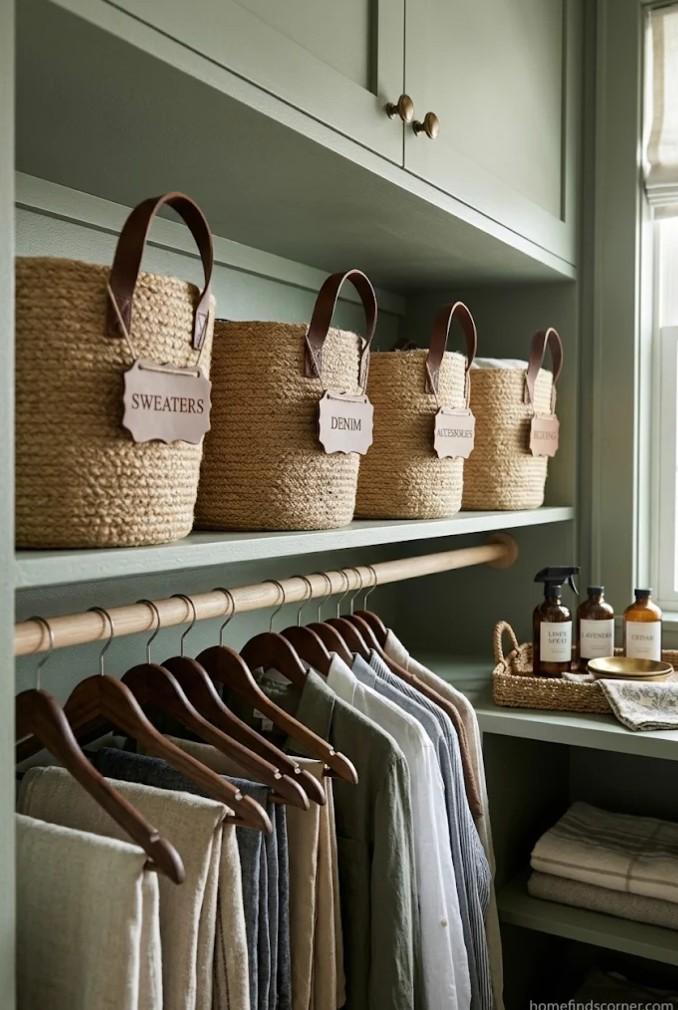
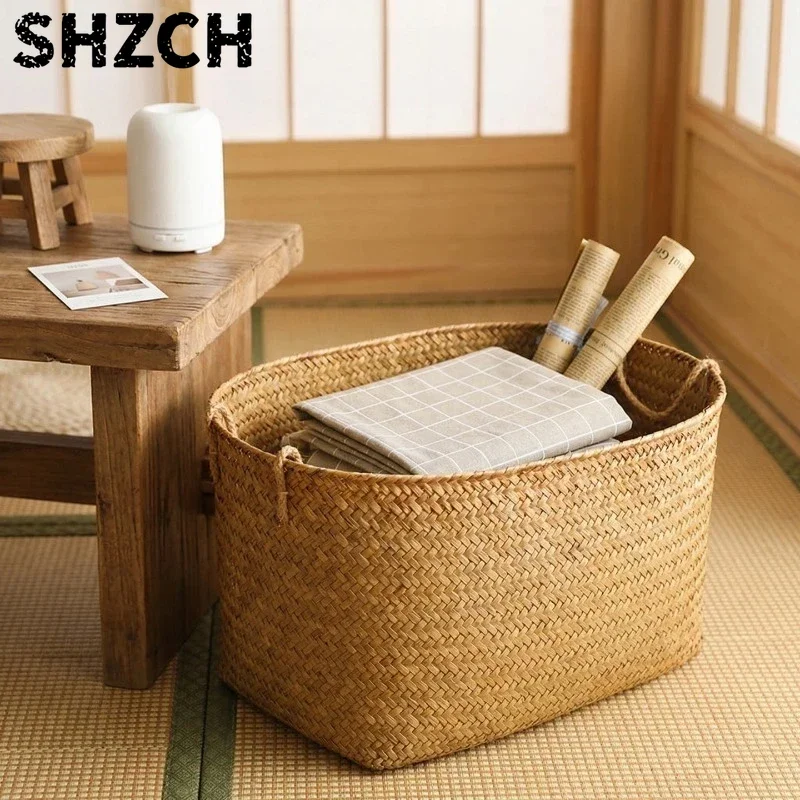
Matching storage bins are one of the easiest ways to create a visually organized closet.
They’re useful for accessories, seasonal items, workout gear, and clothing that doesn’t need to be hung.
Choose bins that fit your shelves comfortably, leaving enough room to remove them without difficulty.
Simple labels help everyone in the household know exactly where items belong.
For a timeless look, try neutral linen, woven baskets, or white containers with understated labels.
Organization tip: Keep categories specific enough to be useful. Labels such as “Winter Accessories” or “Workout Clothes” are more practical than a generic “Miscellaneous” bin.
How to Organize a Small Closet Step by Step
Before purchasing storage products, spend some time evaluating what you already own.
Your Closet Organization Checklist
- Remove everything and clean the closet.
- Sort clothing into keep, donate, and repair piles.
- Measure shelves, rod space, and closet depth.
- Group clothing by category and frequency of use.
- Choose organizers that fit the available space.
- Put everyday essentials within easy reach.
- Label bins and review the system seasonally.
Remember that a functional closet doesn’t need to look perfectly styled every day. The goal is to create a storage system that works with your daily habits and is easy to maintain.
Best Closet Organizers for Different Storage Problems
| Storage problem | Recommended solution |
|---|---|
| Not enough hanging room | Double closet rod, slim hangers |
| Too many shoes | Tiered rack, stackable boxes |
| Limited shelf space | Hanging shelves, adjustable shelving |
| Messy folded clothes | Shelf dividers, pull-out baskets |
| Scattered accessories | Door organizer, wall hooks |
| Bulky seasonal clothing | Suitable vacuum storage bags |
| Cluttered drawers | Compartment organizers |
| Hard-to-find items | Labeled bins, closet lighting |
Final Thoughts
Creating an organized closet isn’t about having more space—it’s about making better use of the space you already have.
From double hanging rods and slim velvet hangers to stackable shoe boxes and labeled storage bins, these closet organization ideas that save space offer practical solutions for wardrobes of almost any size.
Start with one problem area, such as your shoe collection or overcrowded hanging rod, and build a storage system that fits your routine.
With a few thoughtful changes, even the smallest closet can become a more organized, attractive, and functional part of your home.
Frequently Asked Questions
How can I organize a small closet with lots of clothes?
Start by removing clothing you no longer wear, then maximize vertical space with a second hanging rod, slim hangers, and additional shelving. Group similar items together and move seasonal clothing into separate storage.
What is the cheapest way to organize a closet?
Affordable options include matching slim hangers, removable hooks, repurposed baskets, and DIY shelf dividers. Decluttering and rearranging your existing storage can also improve closet organization without spending anything.
How do I maximize space in a closet without shelves?
Use hanging fabric organizers, over-the-door pockets, a tiered floor rack, and wall hooks. These solutions create additional storage without requiring a complete closet renovation.
Is it better to hang or fold clothes to save space?
It depends on the garment and the available storage. Hanging works well for dresses, shirts, and wrinkle-prone clothing, while folding is often more efficient for sweaters, T-shirts, and jeans. Heavy knitwear is generally better folded to prevent stretching.
How often should I reorganize my closet?
A quick seasonal review every three to six months is a practical starting point. Regularly returning items to their assigned locations will help prevent clutter from building up between larger cleanouts.