
Effective Pantry Organization Ideas for Practical Spaces
A beautifully organized pantry looks amazing in photos, but keeping it that way is another story. Between grocery runs, busy mornings, half-empty snack bags, and family members putting things wherever they fit, even the neatest pantry can become cluttered.
The good news? You don’t need a huge walk-in pantry, expensive custom shelves, or dozens of matching glass jars to create a space that works.
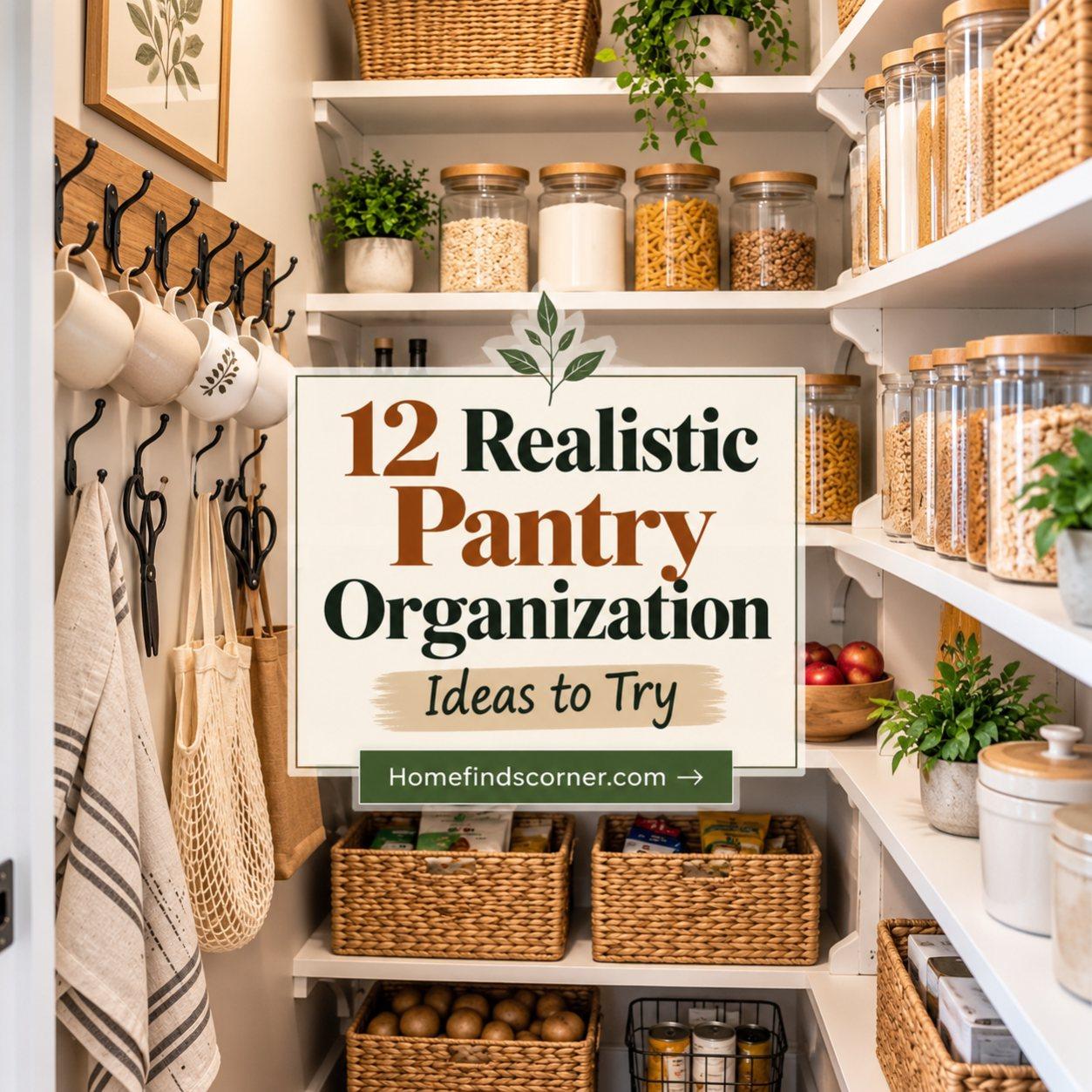
These 12 realistic pantry organization ideas focus on everyday convenience. They’re simple enough for busy households, flexible enough for small kitchens, and affordable enough to try without a complete makeover.

Whether you have a narrow cabinet, a small closet pantry, or several shelves beside your refrigerator, these ideas can help you make better use of the space you already have.
1. Group Similar Foods Into Simple Categories
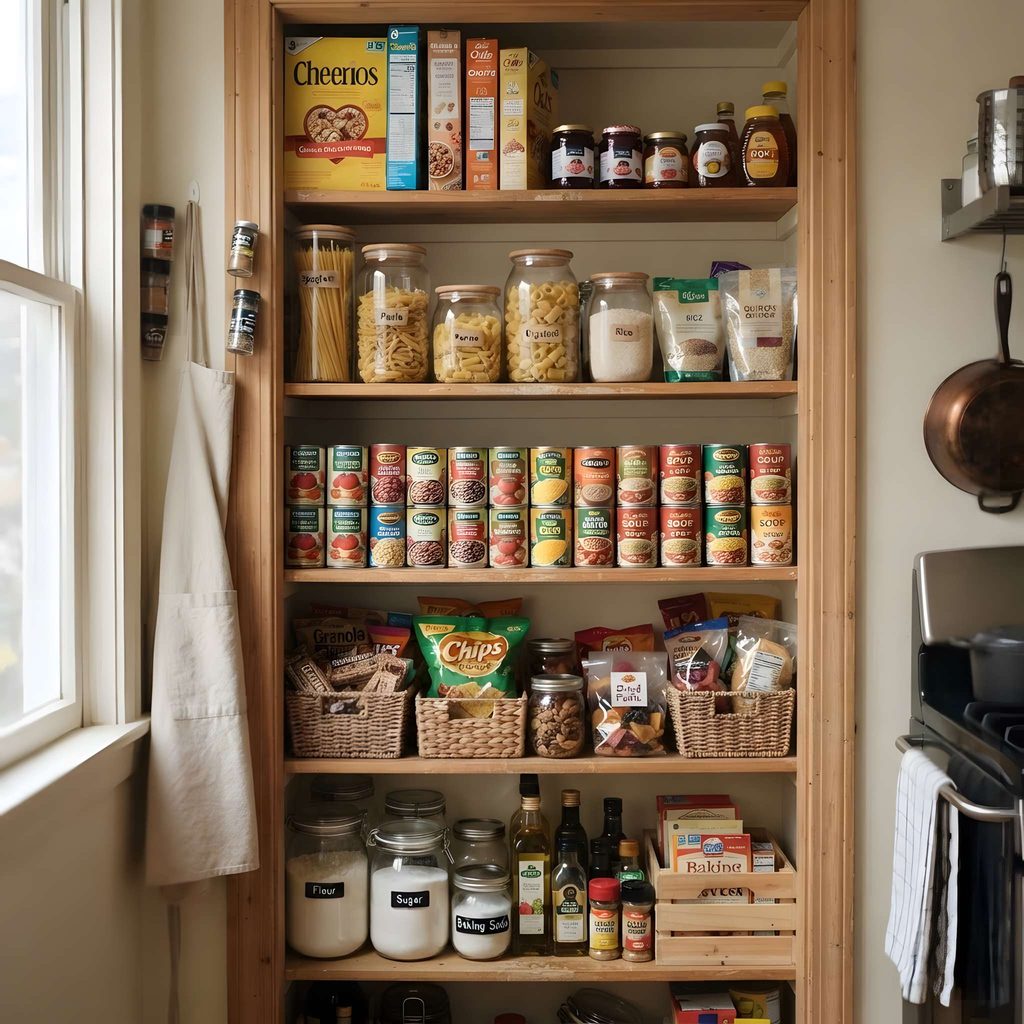
One of the easiest ways to organize a pantry is to group similar foods together. Instead of spreading pasta, canned vegetables, snacks, and breakfast items across different shelves, give each category a designated spot.
Start with categories that match how your household actually eats. You might have separate areas for breakfast foods, baking supplies, canned goods, snacks, and dinner ingredients.
Keep categories broad rather than creating a separate container for every product. This makes it easier for everyone to remember where things belong.
Try this: Use existing baskets or small bins to keep loose packets together. You don’t need labels immediately. Test your categories for a week before making them permanent.
2. Use Clear Bins for Snacks and Small Packages
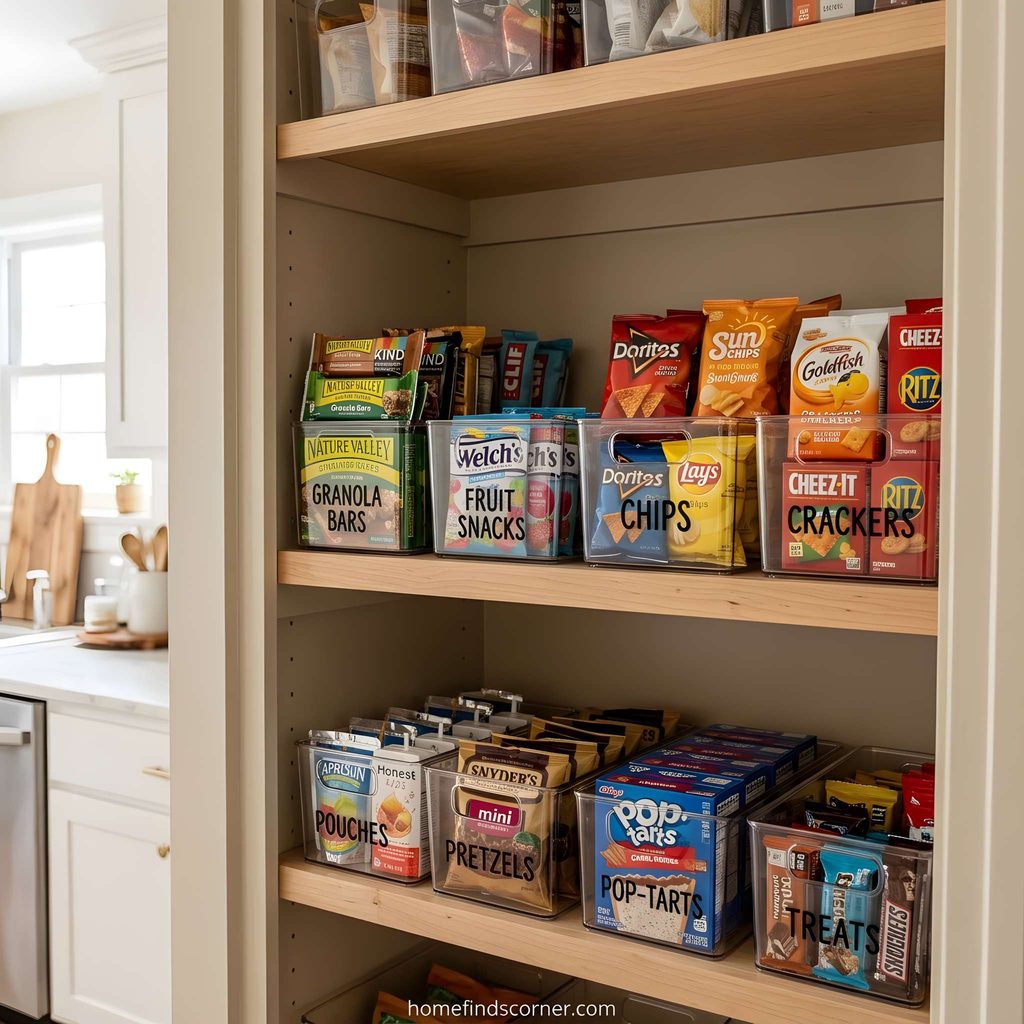
Snack packages are notorious for making pantry shelves look messy. Small bags fall over, granola bars disappear behind boxes, and open packages often get forgotten.
Clear bins can solve several of these problems without requiring you to remove food from its original packaging.
Choose bins that are easy to pull out and leave enough space for your hand to reach inside. A few medium-sized containers are often more useful than many tiny organizers.
You can create a snack bin for children, a breakfast bar bin, or a container for individually wrapped treats.
Practical tip: Avoid filling every inch of each bin. Leaving a little extra room makes it easier to put groceries away after shopping.
3. Keep Everyday Foods at Eye Level
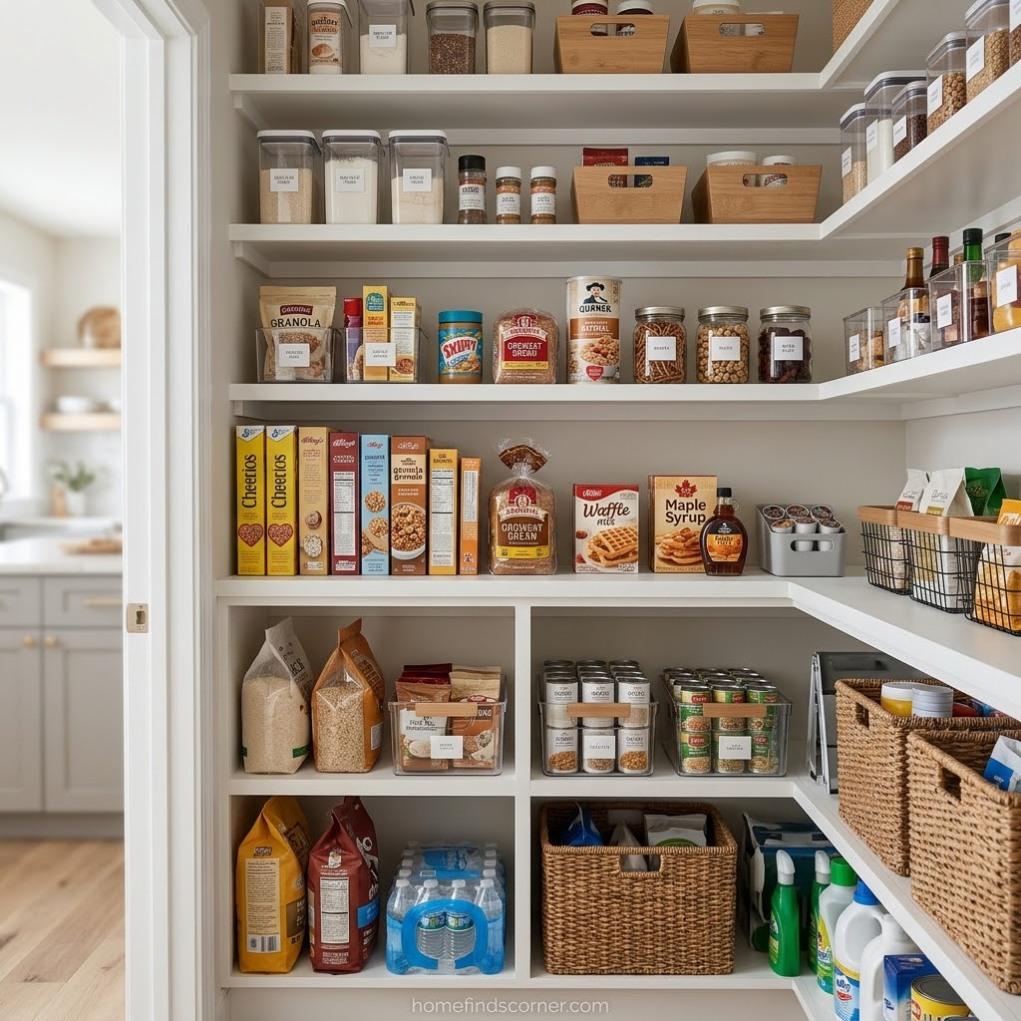
A pantry should be organized around how often you use things, not just how attractive they look.
Foods you reach for every day should be the easiest to access. This might include cereal, oatmeal, bread, peanut butter, coffee supplies, or lunchbox snacks.
Place occasional baking ingredients, extra condiments, and specialty foods on higher or less convenient shelves.
Heavy items are generally better stored on lower shelves, where they’re easier to lift safely.
Try this: Pay attention to what you reach for over three days. Move those items to the most convenient shelf instead of organizing everything by package size.
4. Add Shelf Risers for Canned Goods
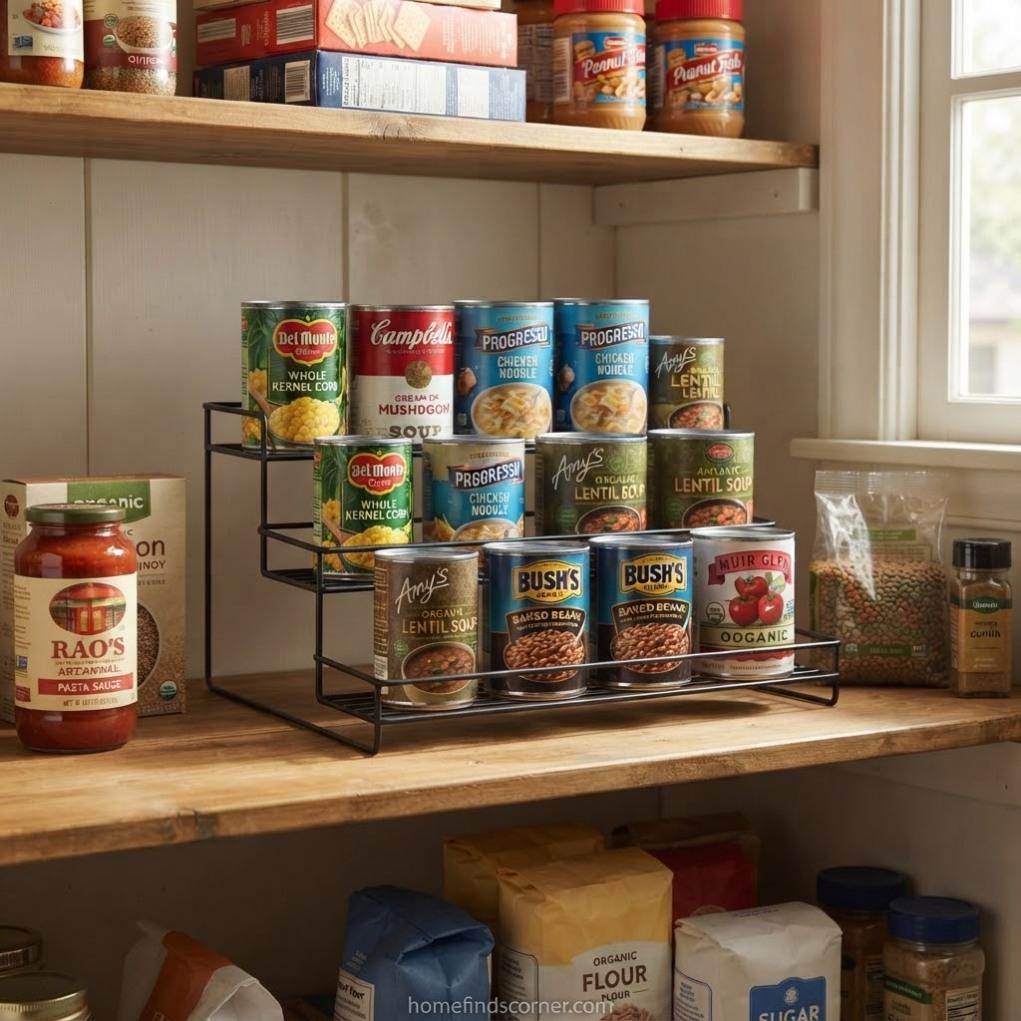
Canned foods can quickly become difficult to manage when they’re stacked in rows. Items at the back disappear, and it’s easy to buy duplicates because you can’t see what you already have.
A simple tiered shelf riser helps keep cans visible without requiring extra shelving.
Place taller cans toward the back and shorter ones near the front. If your shelves are deep, choose a riser that allows you to see the labels clearly.
For heavier cans, make sure the riser is sturdy and sits securely on the shelf.
Budget-friendly alternative: Organize cans in short, single rows with the labels facing forward. You can improve visibility without purchasing an organizer.
5. Use Baskets to Hide Awkward Packaging
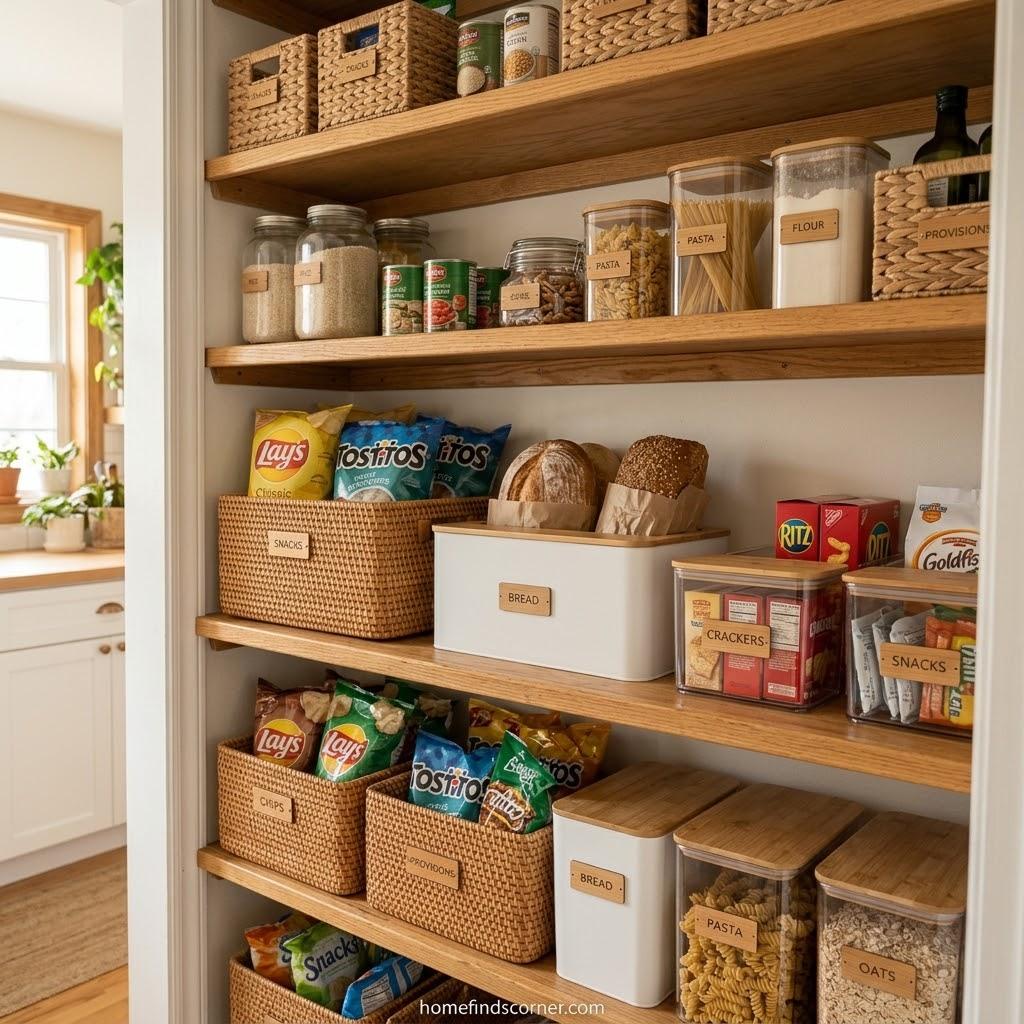
Not every pantry item fits neatly into a clear container. Large chip bags, bread packages, crackers, and oddly shaped snacks can make shelves look crowded even when everything is organized.
Baskets provide a flexible home for these items.
Unlike rigid containers with dividers, baskets can accommodate packages of different sizes. They’re particularly useful for foods that change from week to week.
Choose washable plastic baskets for spill-prone items or lightweight woven baskets for dry, packaged goods.
Realistic approach: Keep one basket for miscellaneous snacks or rotating grocery items. A little flexibility prevents the entire system from falling apart when you buy something new.
6. Create a Small Backstock Area
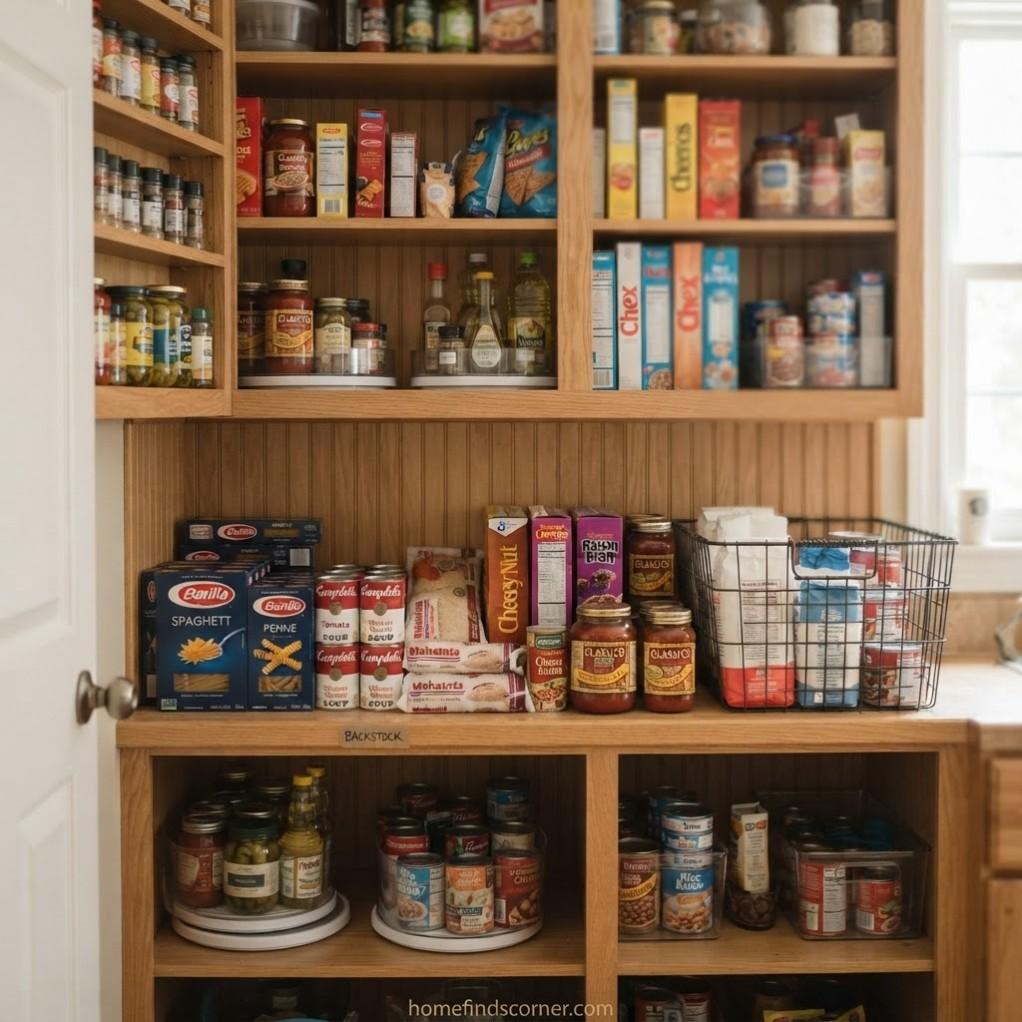
Buying a few extras of regularly used foods can be convenient, but keeping every backup package beside your everyday groceries often creates unnecessary clutter.
Instead, designate one shelf or bin for backstock.
This is where you can store unopened extra pasta, canned goods, cereal, cooking oil, or other shelf-stable staples.
When the everyday package runs out, replace it from your backstock before adding the item to your grocery list.
You don’t need a large stockpile. The goal is simply to keep extra groceries from taking over your most accessible shelves.
Try this: Limit backstock to the space you’ve assigned. When that area is full, use what you have before buying more.
7. Turn the Pantry Door Into Extra Storage
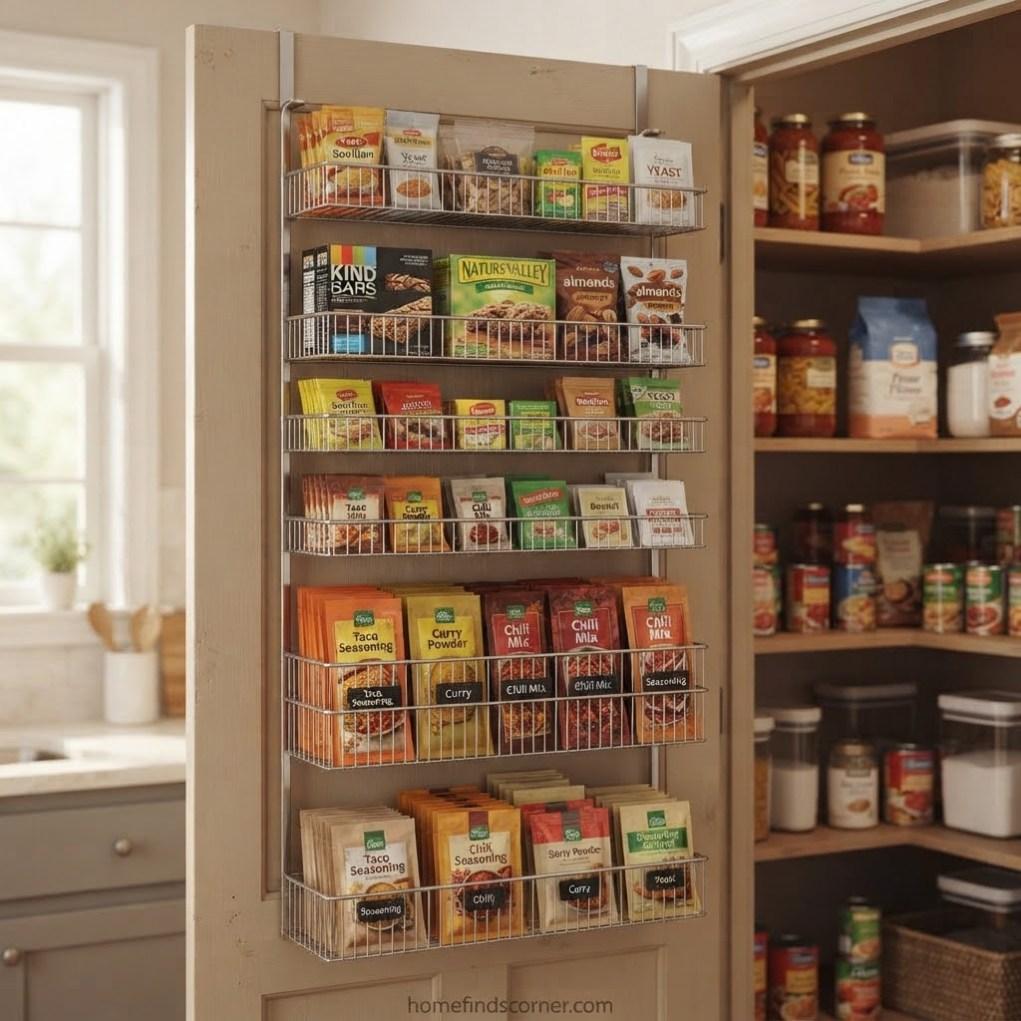
If your pantry has a hinged door, the back of it might be valuable unused storage space.
A shallow over-the-door organizer can hold lightweight items such as spice packets, snack bars, seasoning mixes, or small baking supplies.
This approach is especially helpful in narrow pantry closets where shelf space is limited.
Before purchasing an organizer, measure the door, check the available clearance, and make sure it won’t hit the shelves when closed.
Avoid loading door organizers with heavy jars or bottles unless the product and door hardware are designed to support them.
Best use: Store small, lightweight items that tend to get lost behind larger pantry products.
8. Keep Baking Supplies Together
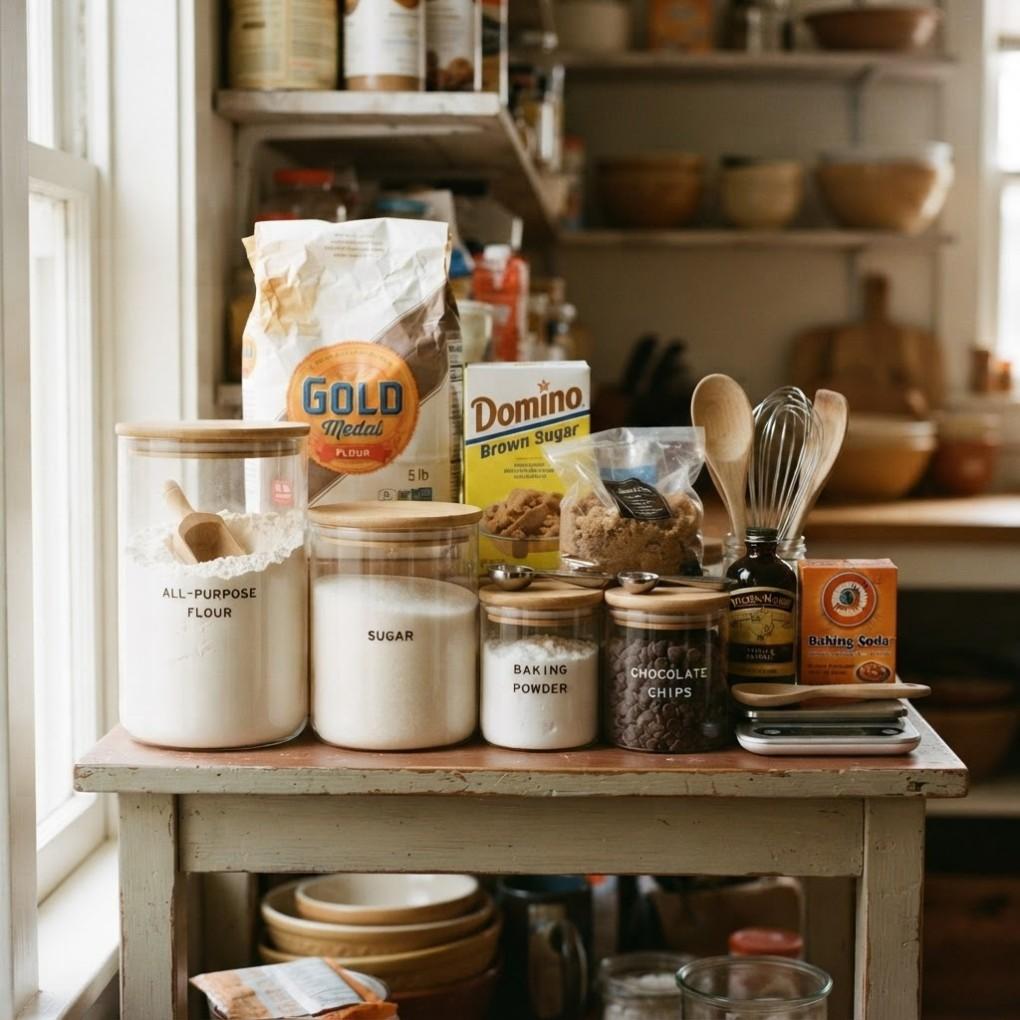
Baking ingredients often end up scattered throughout a pantry. Flour might be on one shelf, chocolate chips on another, and baking powder hidden behind the spices.
Keeping these ingredients together saves time when you’re ready to bake.
Use one shelf, a large bin, or a small group of containers for your most-used baking supplies.
Airtight, food-safe containers can be helpful for flour and sugar, particularly when their original bags are difficult to reseal. However, there’s no need to transfer every ingredient into a matching jar.
Keep original labels or clearly mark the ingredient name and any important storage information.
Simple upgrade: Place smaller baking items in a removable basket so you can bring everything to the counter at once.
9. Use Turntables for Bottles and Condiments
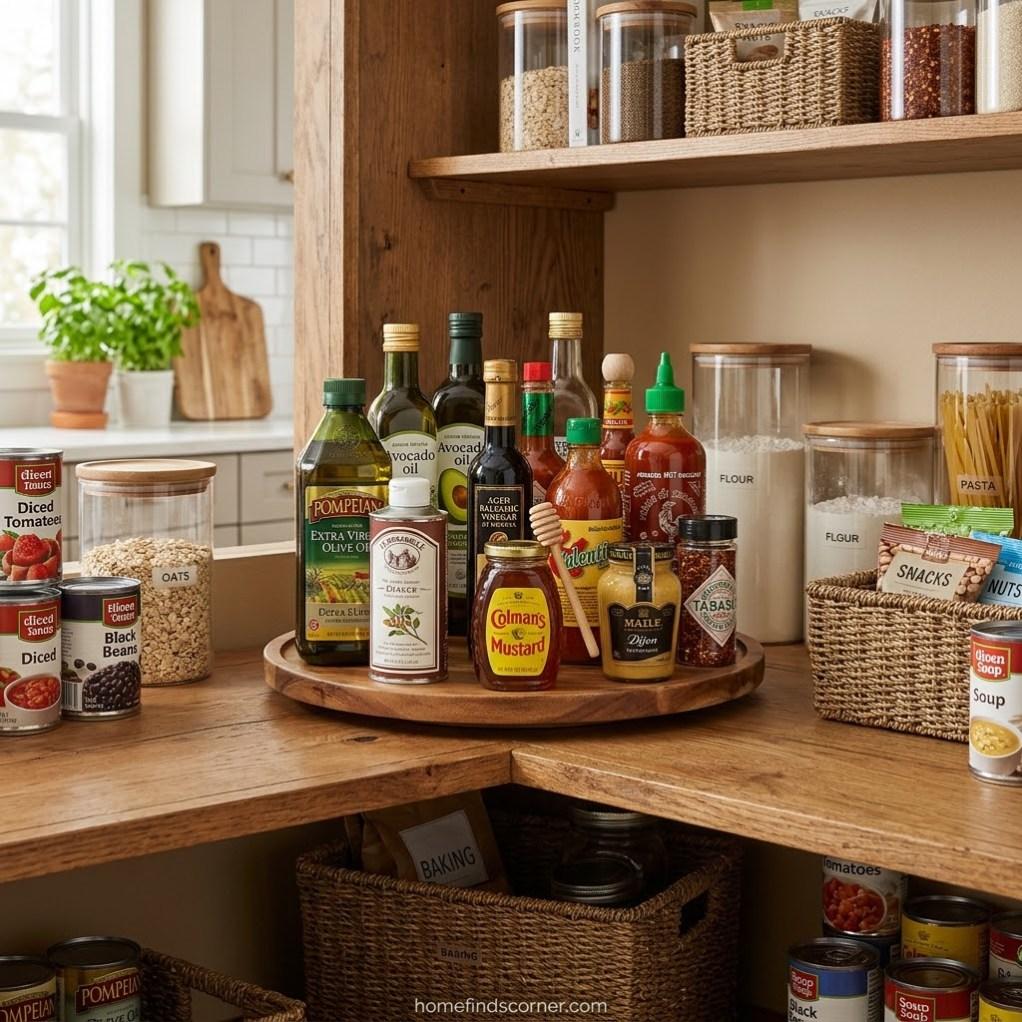
Deep pantry shelves can make bottles and jars frustrating to reach. Items near the back often get forgotten until they’ve passed their best quality.
A rotating turntable, sometimes called a lazy Susan, can make these products easier to access.
It’s especially useful for cooking oils, vinegar, sauces, honey, and small jars.
Choose a turntable with a raised edge if you’re storing bottles, and check that it rotates freely without hitting the shelf above.
Don’t overload it with heavy items or place it where bottles could easily fall.
Try this: Use one turntable for cooking essentials rather than several throughout the pantry. Focus on the area where it solves a genuine accessibility problem.
10. Store Heavy and Bulky Items on Lower Shelves
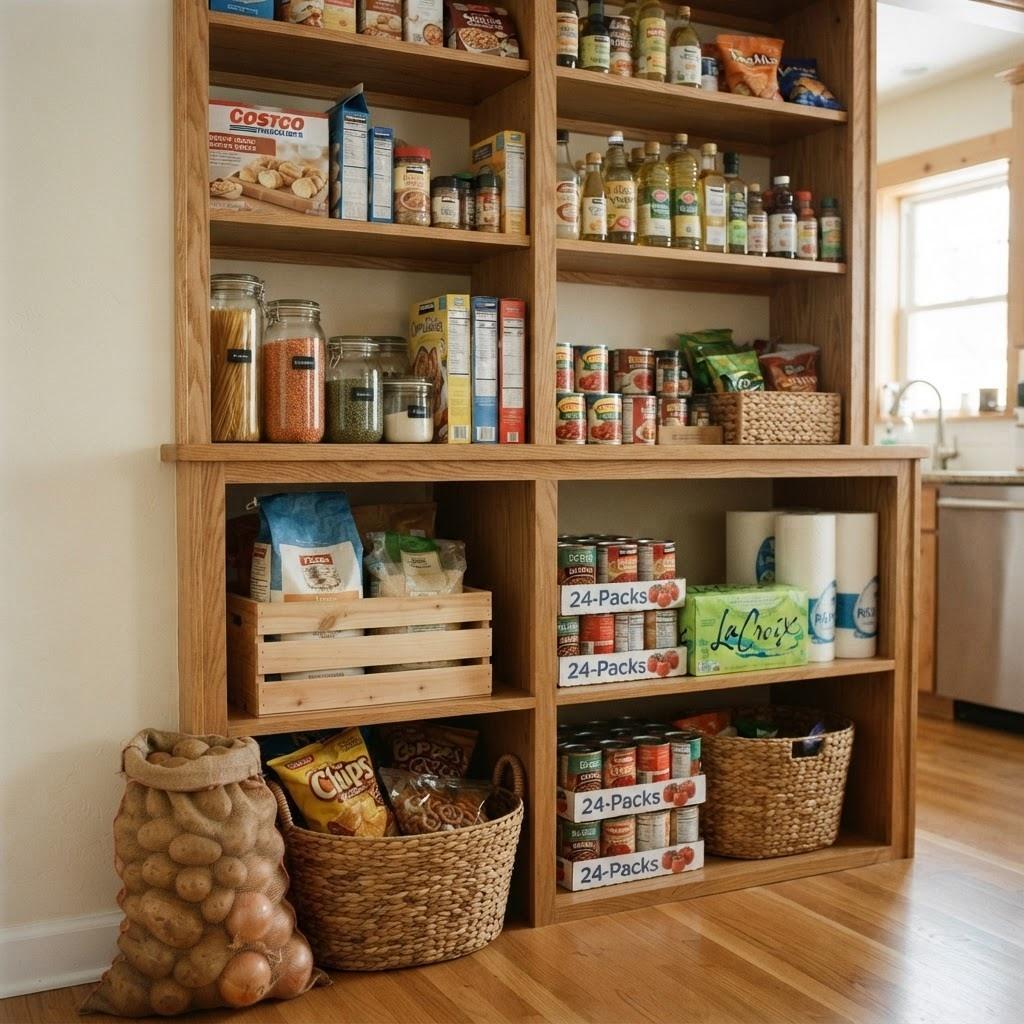
Large packages of rice, flour, bottled drinks, and bulk groceries can make upper pantry shelves difficult to use.
Moving these items lower creates a safer and more convenient arrangement.
Lower shelves are also useful for large pull-out baskets or sturdy bins that can hold heavier groceries.
If you’re storing dry foods in bulk, choose suitable food-safe containers and follow the storage instructions on the packaging.
Avoid placing food directly on a damp floor. If your pantry is prone to moisture, keep products elevated and address the moisture problem.
Realistic tip: Don’t buy oversized storage containers unless you regularly purchase enough food to fill them. Empty containers can waste valuable space.
11. Add Simple Labels Where They Actually Help
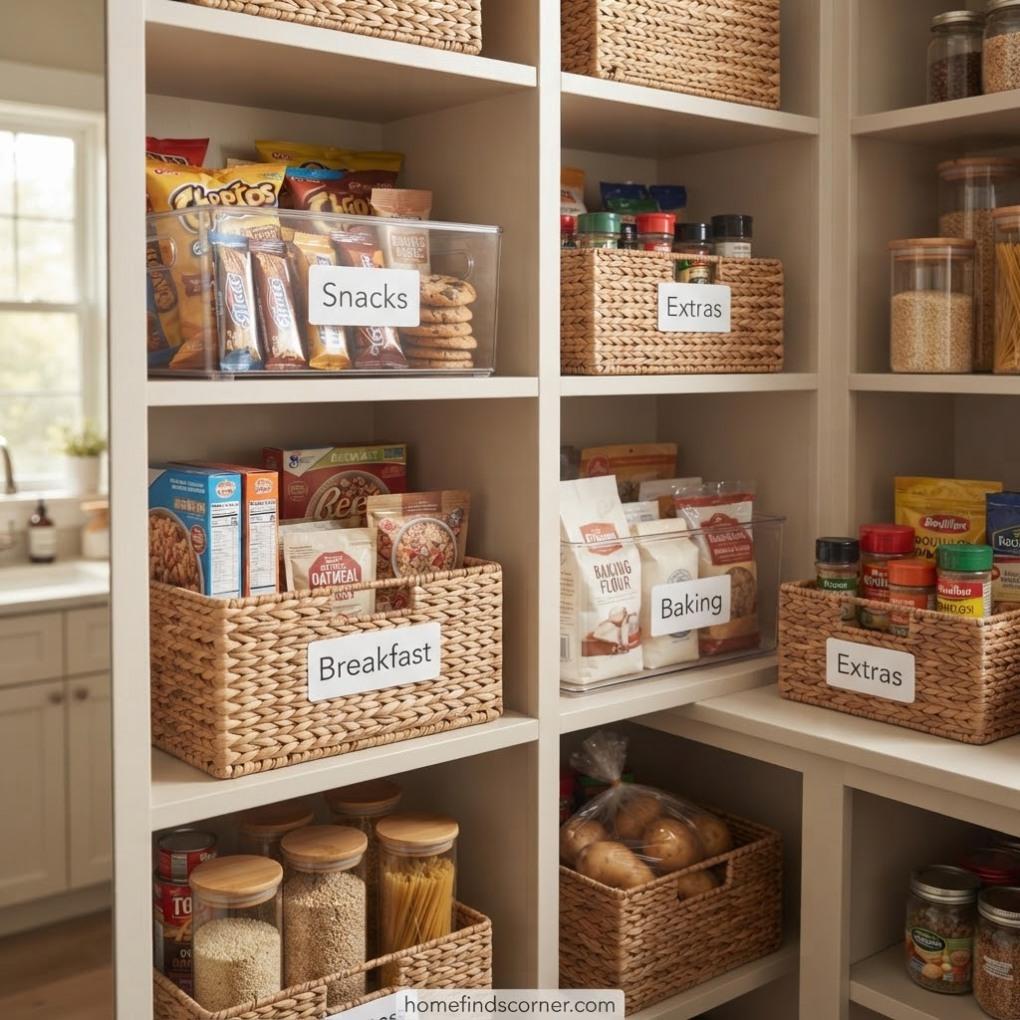
Labels can make a pantry easier to maintain, but labeling every single container isn’t always necessary.
Start with areas where items frequently get misplaced. Shared snack bins, baking ingredients, and backstock baskets are good candidates.
Use short, familiar words such as “Snacks,” “Breakfast,” “Baking,” or “Extras.”
If your household frequently changes the foods it buys, removable labels are more practical than permanent ones.
You can use inexpensive adhesive labels, masking tape, or a simple label maker.
Keep it realistic: Labels should make putting groceries away easier. If they create more work than they save, simplify the system.
12. Leave Some Empty Space for New Groceries
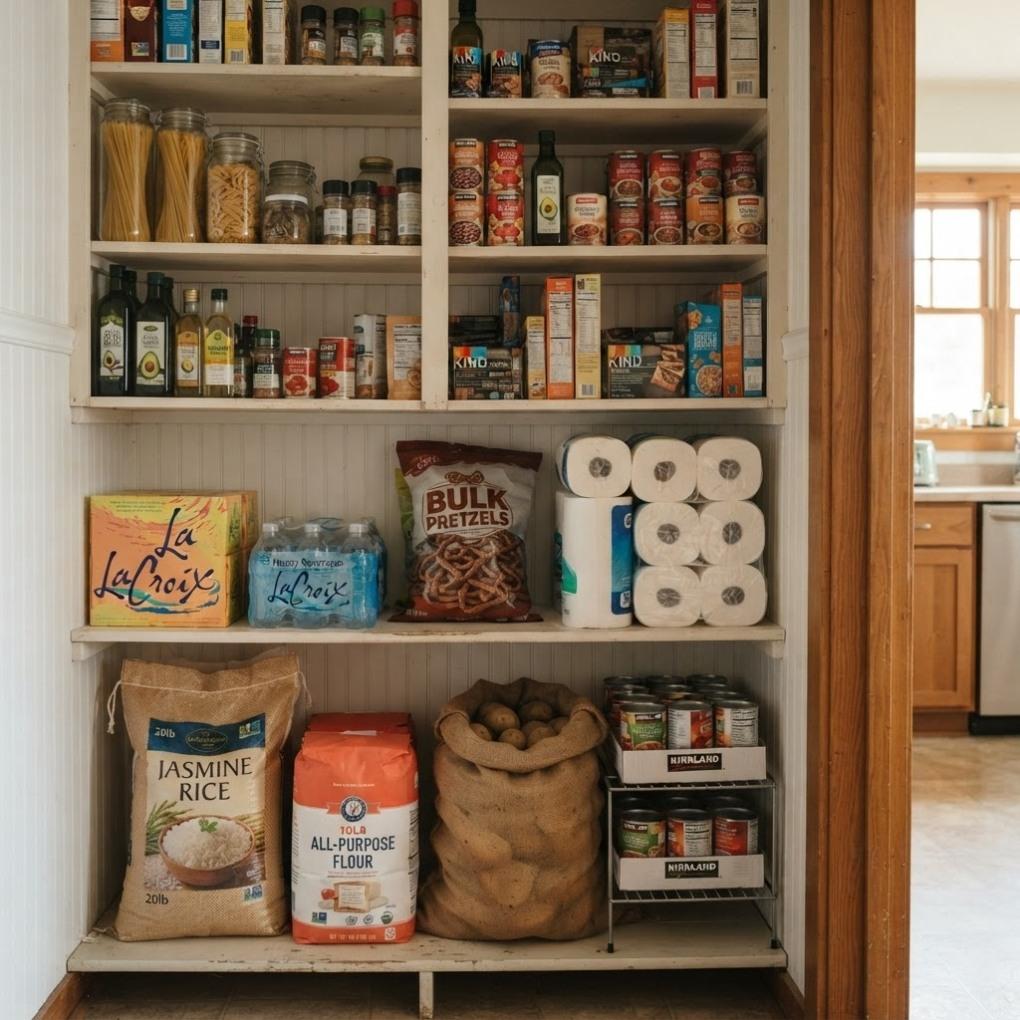
One of the most overlooked pantry organization ideas is leaving room for change.
A pantry packed tightly with containers may look impressive immediately after organizing, but it can become frustrating after the next grocery trip.
Your pantry needs room for new packages, changing food preferences, and occasional bulk purchases.
Try leaving part of one shelf or a flexible basket available for items that don’t have a permanent category.
This doesn’t mean wasting valuable space. It means creating a storage system that can adapt to real life.
Try this: After organizing, put away a normal grocery haul before deciding whether your system is finished. If everything only fits when the pantry is nearly empty, make adjustments.
How to Keep Your Pantry Organized Without Constant Work
The best pantry organization system is one you can maintain in a few minutes, not one that requires a complete reset every weekend.
Start by making sure everyone in the household knows where common foods belong. Broad categories and accessible storage make this easier.
Before grocery shopping, quickly check what you already have. Bring older items toward the front when appropriate, and use foods according to their labels and storage requirements.
Once a week, spend five minutes returning misplaced products to their designated areas. Wipe up spills promptly, check opened packages, and recycle empty boxes.
Every few months, review your categories. If you no longer buy certain foods or your household routines have changed, adjust the pantry accordingly.
Most importantly, resist the urge to buy more organizers every time clutter appears. Sometimes the better solution is simply reducing the number of items stored in one area.
A realistic pantry should support your routines instead of becoming another household project.
Final Thoughts
Creating an organized pantry doesn’t have to mean spending hundreds of dollars or maintaining picture-perfect shelves.
The most useful realistic pantry organization ideas are the ones that make everyday tasks easier. Grouping similar foods, keeping essentials accessible, using a few well-chosen bins, and leaving room for new groceries can make a noticeable difference.
Start with one shelf or one problem area rather than reorganizing everything at once. Over time, small changes can help you create a pantry that’s easier to shop for, cook from, and maintain.
Your pantry doesn’t need to look perfect. It just needs to work for your home.
Frequently Asked Questions
How do I organize my pantry on a budget?
Start by removing expired or unwanted products, grouping similar foods, and using baskets or containers you already own. Focus on accessibility before appearance. Inexpensive bins, removable labels, and simple shelf risers can help without requiring a major investment.
What is the best way to organize a small pantry?
Keep frequently used foods at eye level, store heavy products lower, and use vertical space carefully. Shallow bins, tiered risers, and door organizers can help maximize limited storage. Avoid oversized containers that take up more room than the original packaging.
Do pantry containers need to match?
No. Matching containers can create a coordinated appearance, but they aren’t necessary for an organized pantry. A mix of practical, appropriately sized containers often works better for households that buy different products regularly.
How do I organize deep pantry shelves?
Use pull-out bins, sturdy rotating trays, or tiered risers to make items at the back easier to reach. Store less frequently used products behind everyday essentials, and avoid stacking packages so deeply that you forget what you have.
Should I take food out of its original packaging?
Only when it improves storage or convenience. Airtight, food-safe containers can be useful for flour, sugar, and other dry goods, but packaged snacks and canned foods usually work well in their original packaging. Preserve important product information, including expiration dates and preparation instructions.
How often should I reorganize my pantry?
A quick weekly tidy and a more thorough review every few months are usually sufficient. The exact schedule depends on your household size and shopping habits. If the pantry becomes messy frequently, consider simplifying your categories instead of reorganizing more often.
What should I avoid when organizing a pantry?
Avoid buying organizers before measuring, creating too many categories, placing heavy items on high shelves, and filling every available space. It’s also helpful to avoid storage systems that require transferring every grocery item into a separate container.
For more practical inspiration, see our useful home gadgets and open concept kitchen and living room layouts articles.