

How to Choose Christmas Decor Ideas for Living Rooms That Work Best
Christmas decorating gets tricky when the tree takes the reading chair’s spot and every table disappears under ornaments. The room still needs to work for movie nights, visiting family, and an ordinary cup of coffee.
The easiest way to decorate a living room for Christmas is to choose one main focal point, repeat a small color palette, and add greenery, soft textiles, and warm lighting around existing furniture. Keep walking routes clear and leave useful surfaces open so the room feels festive and comfortable.

These Christmas decor ideas for living rooms work as individual updates or a coordinated plan. Choose the ones that suit your space; you don’t need all fifteen.
1. Give the Christmas Tree a Comfortable Corner
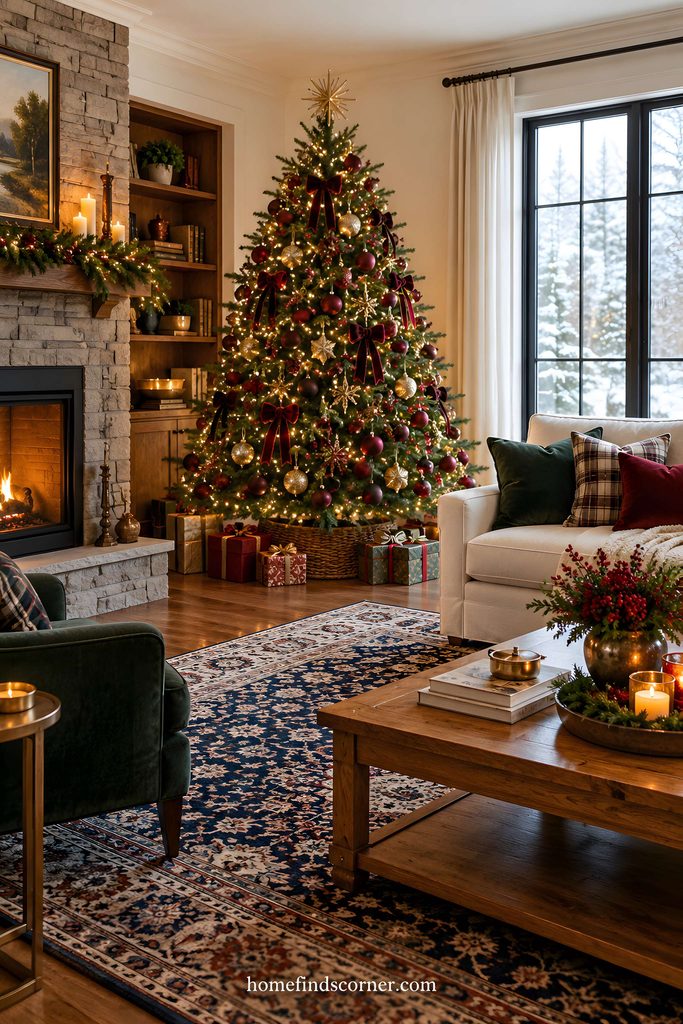
Before unpacking ornaments, decide where the tree can stand without pushing furniture into a walkway. Measure the available width as well as the ceiling height. The widest lower branches often cause more trouble than the top.
In a compact room, temporarily move a side table and try a slim tree beside the sofa. For a larger room, place the tree where it can be enjoyed from the main seats. Check the stand’s footprint before buying a decorative collar.
NFPA recommends keeping Christmas trees at least three feet from heat sources and making sure they do not block an exit. Water a real tree daily and switch tree lights off before leaving home or going to bed. See the linked NFPA guidance in the sources.
2. Repeat One Holiday Accent Color
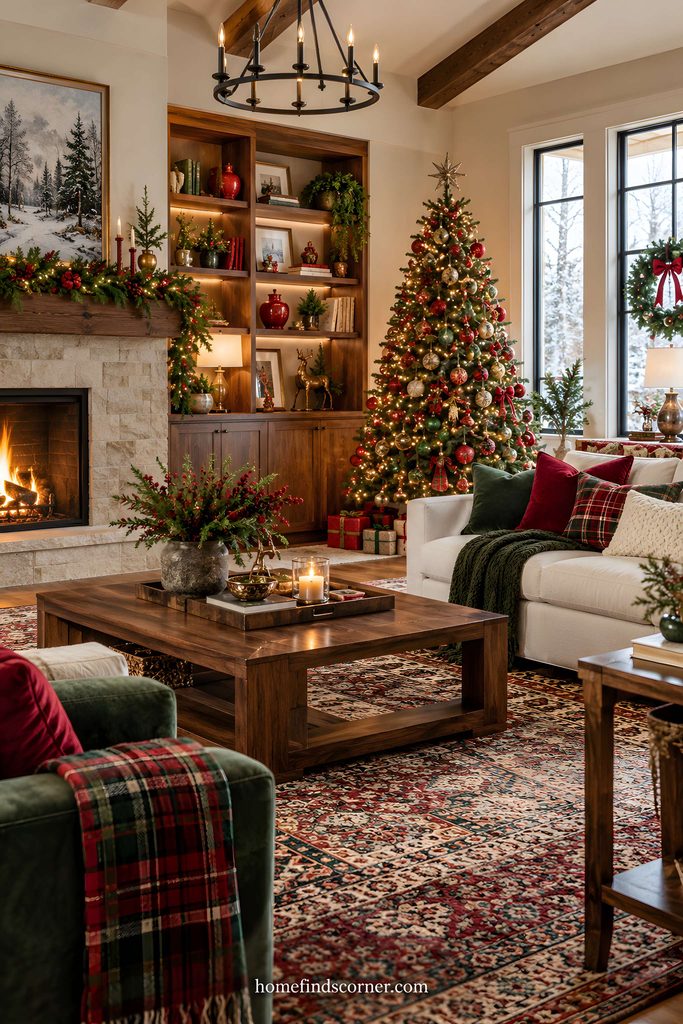
Start with a color your room already contains. A sage sofa can sit comfortably beside dark green ornaments, while warm wood furniture pairs nicely with burgundy ribbon and cream textiles.
Repeat your chosen accent in three separated places: the tree, a pillow, and a small shelf display, for example. This gives the room a visual connection without requiring matching sets.
If you own a mixed collection of decorations, group similar colors together. Keep the rest for another room or rotate them next year. Editing the collection can be more useful than buying replacements.
3. Add Warm Light at Different Heights
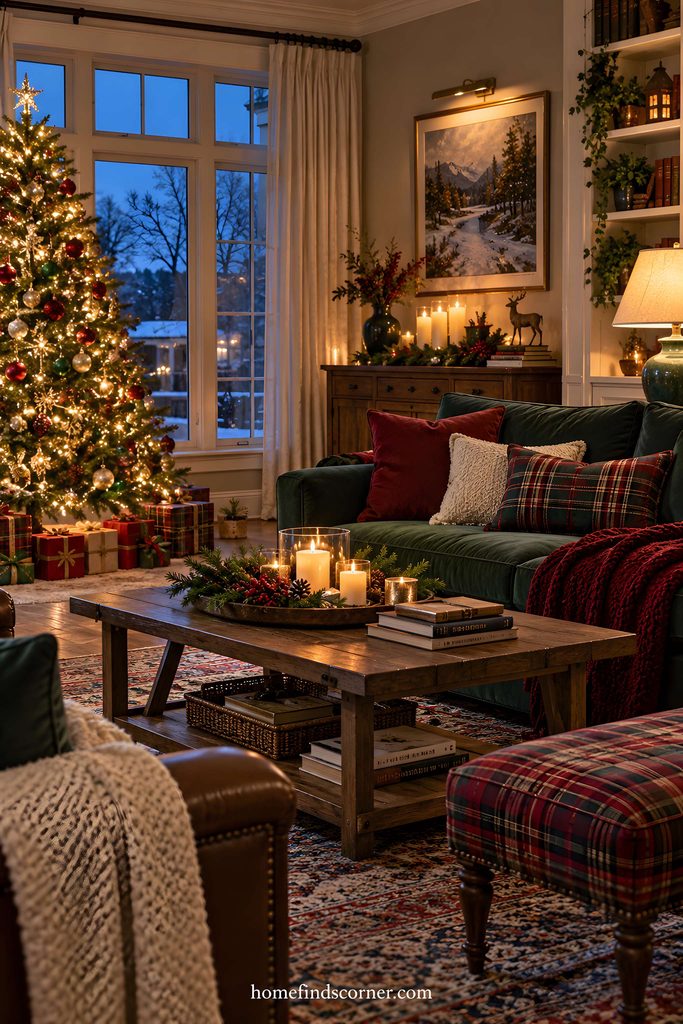
A glowing tree looks lovely, but the opposite side of the room can feel bare after dark. Balance it with a table lamp near an armchair and a few battery-operated candles on a console.
Choose lights with a similar warm tone when you want a coordinated look. Compare new lights with your existing ones before winding them through greenery.
Use indoor-rated light strings according to their instructions, and arrange cords away from walking routes. Keep battery packs accessible so switching everything off doesn’t require dismantling a display. Flameless candles are a practical choice beside ribbon, paper, and foliage.
4. Dress the Sofa with Seasonal Pillow Covers
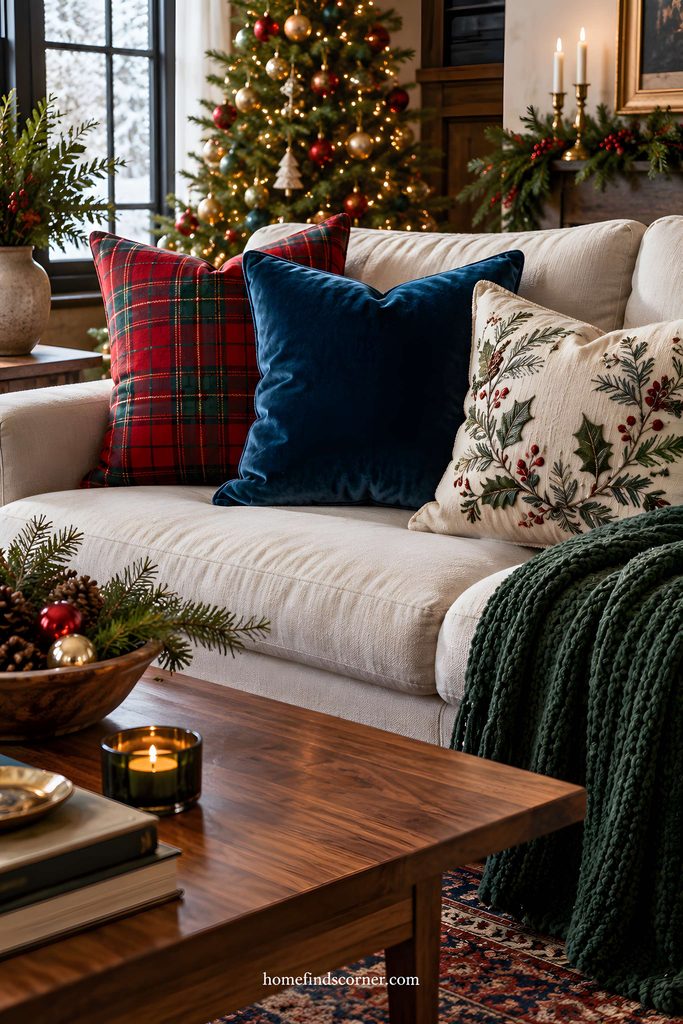
Pillow covers are easy to store after the holidays and let you reuse inserts you already own. Try a plaid cover, a solid velvet cover, and one with a quiet embroidered detail.
Keep the sofa’s size in mind. If pillows take up the seats people need, reduce the number. On a small loveseat, one patterned cushion and a textured throw may be enough.
Choose a color that appears elsewhere in the room. A red stripe can pick up tree ribbon; an ivory knit can echo stockings. The fabrics can feel different while still belonging together.
5. Make a Holiday Reading Corner
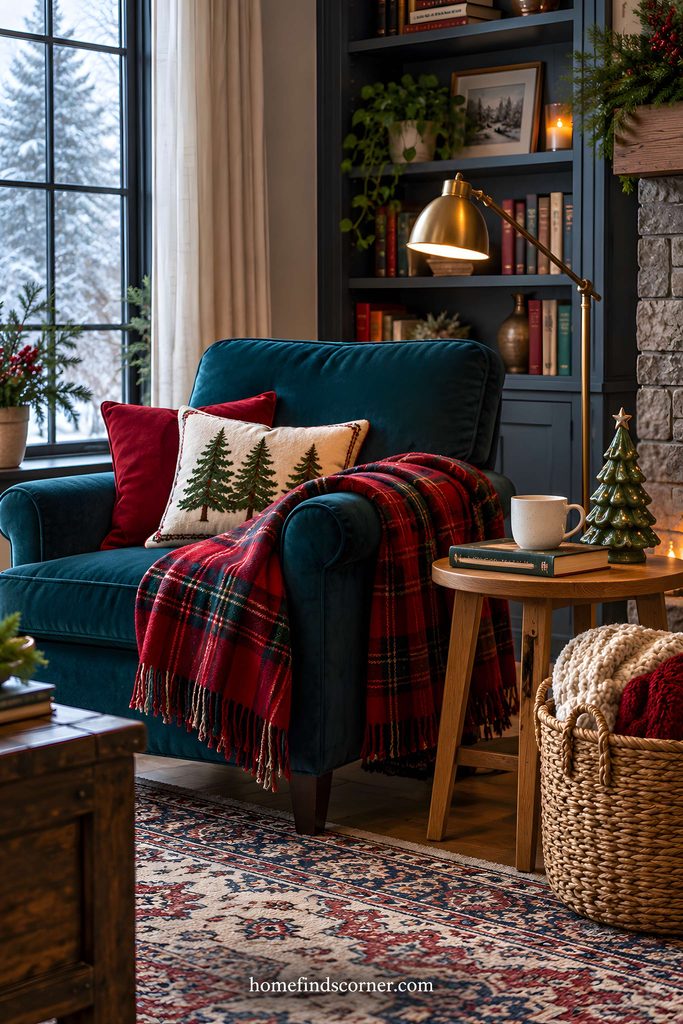
Give an existing armchair a seasonal update with a blanket over one arm and a small decoration on the nearby table. A ceramic tree or a bowl holding a few large ornaments is plenty.
Keep space for a mug and book. If the table is tiny, let the blanket carry the holiday color and leave the surface alone.
This idea is especially useful when the main Christmas tree sits across the room. The corner gets its own seasonal detail without needing another substantial display. A basket beneath the table can hold extra throws if it fits without crowding your feet.
6. Build a Coffee Table Display on a Tray
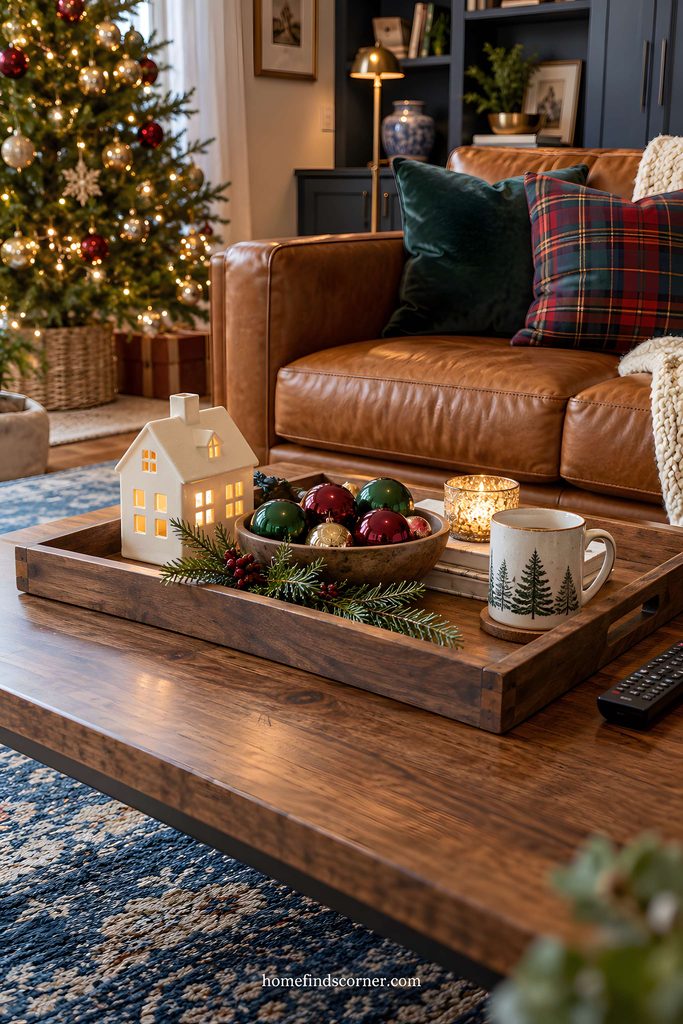
Use a tray to give small decorations a clear boundary. Place a low bowl of ornaments beside a ceramic house and a short piece of faux greenery. Keep the arrangement below the line of conversation across the sofa.
Pick a tray that leaves room for drinks and the remote. A narrow rectangular tray suits a long table, while a round one can soften a square surface.
The useful part is portability: move the entire arrangement when guests need room for snacks. If small children use the table, choose sturdy, nonbreakable pieces rather than loose glass ornaments.
7. Hang Wreaths in the Windows
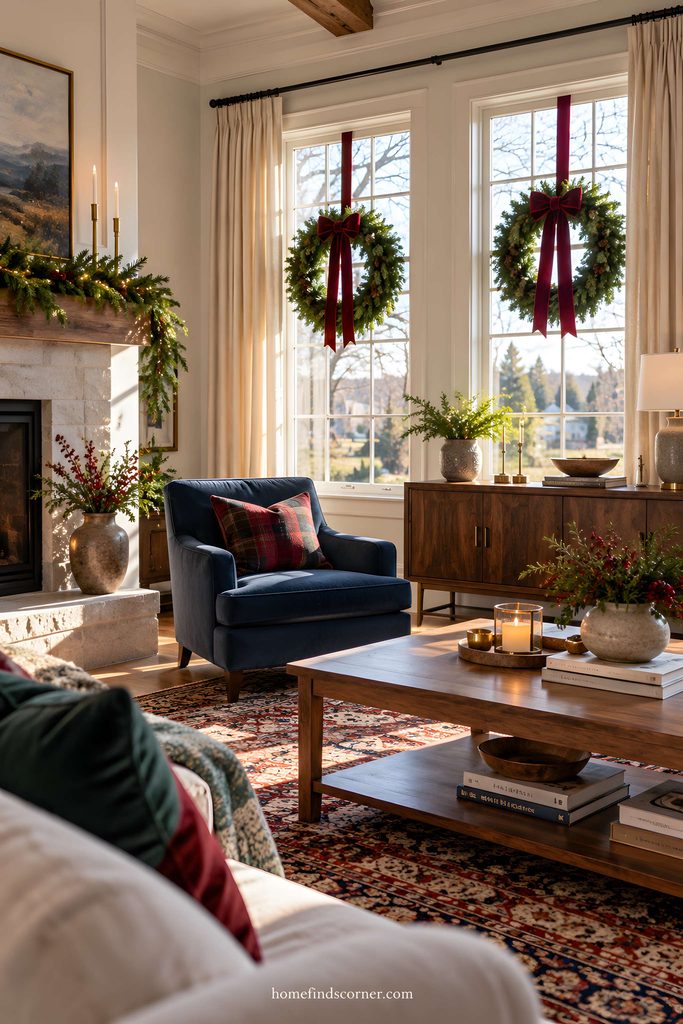
Window wreaths add decoration without taking floor space. Try one simple wreath in a single window or a matching pair across two windows. Ribbon can bring in the same accent color as your tree.
Check how the wreath looks with curtains both open and closed. Leave access to handles, blinds, and any window used for emergency escape.
Choose fixings rated for the wreath’s weight and suitable for the surface, following the manufacturer’s instructions. In a rental, test removable products in an inconspicuous spot first. A lightweight wreath is easier to position than a heavy, heavily ornamented design.
8. Give a Console the Fireplace Treatment
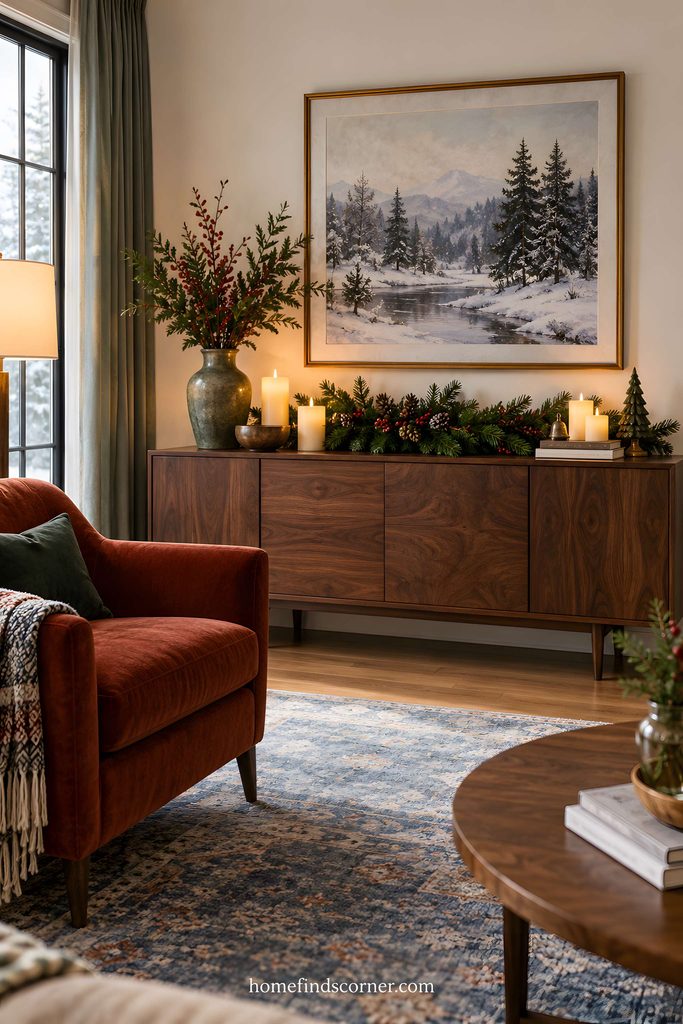
A living room without a fireplace can still have a Christmas focal point. Use a console or sideboard for a short garland, two flameless candles, and a framed seasonal print.
Keep the display within the furniture’s footprint so trailing greenery doesn’t catch on people passing. If the console sits under a television, leave the screen, ventilation openings, and controls unobstructed.
For a balanced arrangement, place the tallest decoration to one side and a smaller group on the other. Leave some bare surface between them. You can create a finished scene without covering the entire cabinet.
9. Weave Christmas into Existing Bookshelves
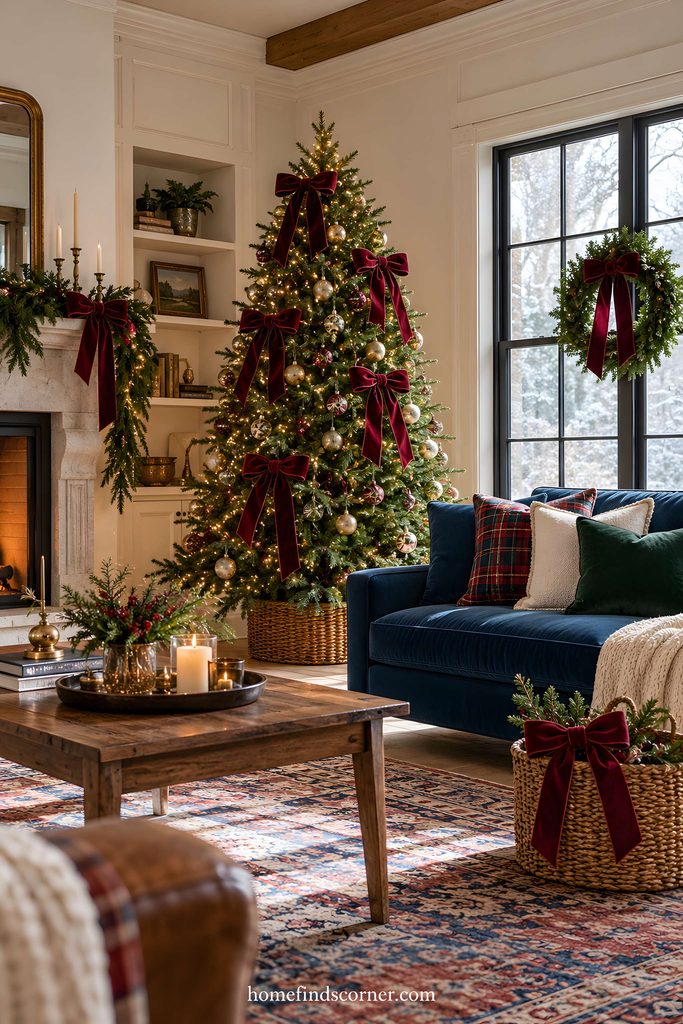
Remove a few everyday accessories before adding holiday pieces. That small edit makes room for a miniature tree, a wooden house, or a bowl of ornaments without overcrowding the shelves.
Let books remain part of the arrangement. Place a small decoration beside a vertical row or on a stable stack, then leave the neighboring shelf quieter.
Repeat one material, such as wood or white ceramic, across a few shelves. Avoid placing a tiny seasonal object in every opening. A handful of clear groups is easier to appreciate from the sofa than lots of scattered details.
10. Use Ribbon to Connect the Room
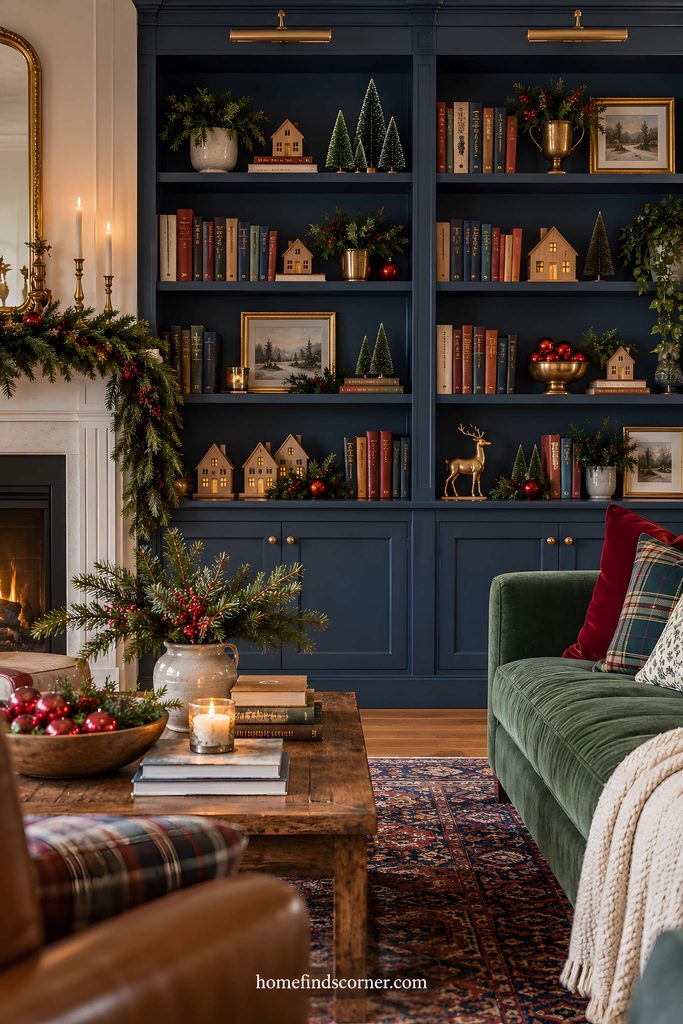
A roll of ribbon can update decorations you already have. Tie bows on a wreath and the tree, then repeat a smaller bow on a decorative basket.
For a relaxed look, let the tails fall at slightly different lengths. For a more tailored room, use shorter tails and consistent bow sizes. Velvet adds a soft finish, while gingham or plaid works well with rustic ornaments.
Secure ribbon to decorative objects rather than electrical cords or working light fixtures. Keep it away from heat. One repeated ribbon usually gives enough continuity; several competing patterns can make the room look busy.
11. Create a Paper Star Display
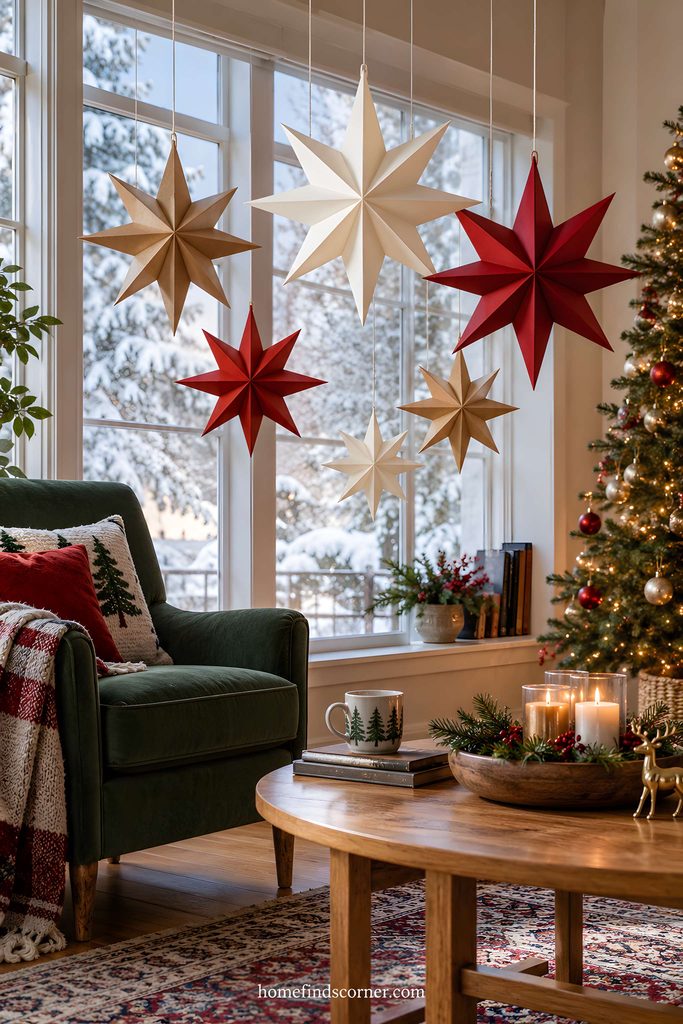
Paper stars bring shape and texture to a blank corner or window. Hang a small group at different heights, leaving enough space to see each outline clearly.
White and kraft paper suit a quiet palette. Deep red or green stars add color without another piece of furniture. Try the arrangement with paper templates before fixing the final decorations in place.
Use lightweight stars and suitable hanging hardware, and keep them clear of ceiling fans, heaters, and door swings. Unless a decoration is specifically designed for illumination, leave it unlit. The folded shape can provide enough interest on its own.
12. Style the Space Beneath the Tree

A tree skirt or collar helps finish the base, but fit comes first. Make sure the stand stays stable and that a real tree’s water reservoir remains accessible.
Wrap gifts in two coordinating papers and repeat your ribbon color. Mix plain kraft paper with a simple stripe, for example, instead of buying a different pattern for every box.
Keep presents close to the tree rather than spreading into the walkway. If curious pets or young children make wrapped gifts impractical, use the skirt alone until Christmas morning. The base can look intentional without a pile of packages.
13. Swap One Print for Seasonal Artwork
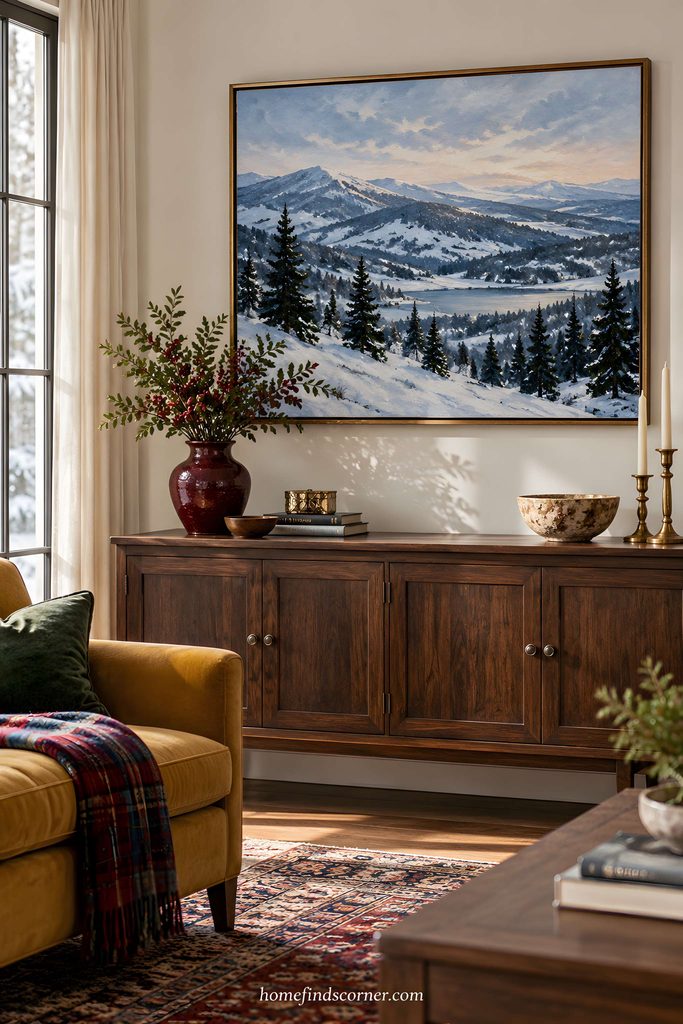
Use an existing frame for a winter landscape, botanical illustration, or Christmas print you have permission to reproduce. Keep the original artwork protected behind the seasonal insert if the frame allows it.
Choose a picture that shares a color with the rest of the room. A snowy landscape with dark trees can work with green ribbon and cream upholstery without needing holiday lettering.
One medium-sized print above a console often makes more sense than several extra signs scattered around the room. When January arrives, switching the artwork back gives you a quick reset without reorganizing the entire wall.
14. Put Meaningful Ornaments on Display
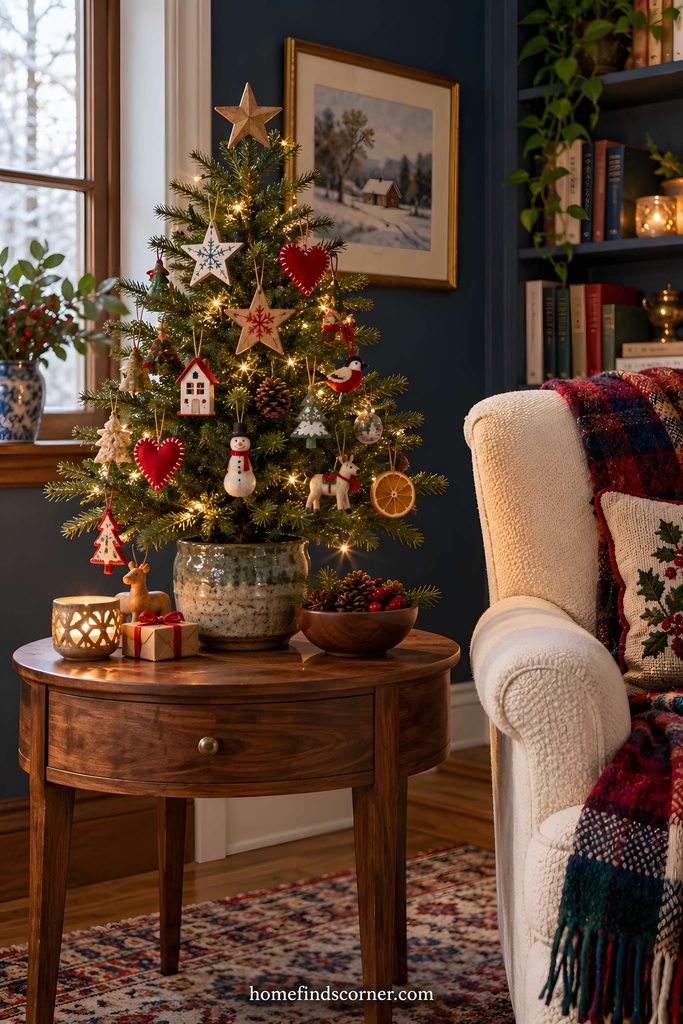
Family decorations don’t have to match a strict palette. Give a few favorite pieces their own place on a small tree or display stand where their details are easy to see.
Group handmade ornaments, inherited pieces, or decorations collected on trips. A small collection looks deliberate when it has a defined home rather than being spread across every surface.
Choose a stable display location away from busy edges. Fragile pieces can sit higher, while durable handmade decorations can be enjoyed closer to eye level. Leave a little space around each one so the collection feels personal rather than crowded.
15. Give an Ottoman a Festive Finish
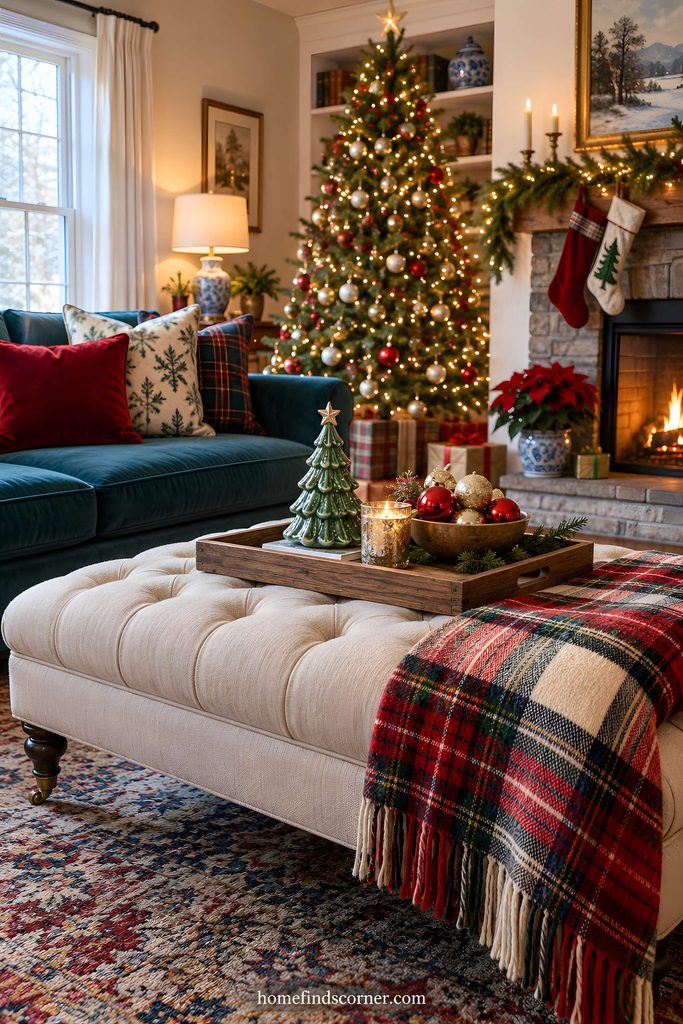
If your living room uses an ottoman instead of a coffee table, add a firm tray sized for the surface. A small bowl of ornaments and one low decorative tree can create a seasonal centerpiece.
Check that the tray sits securely and remove it before anyone uses the ottoman as seating or a footrest. If it feels unstable, put the decorations on a side table instead.
A folded plaid throw is another option when the ottoman is mainly decorative. Keep the styling easy to move. Furniture that works hard throughout December needs decorations that can adapt just as quickly.
Bring the Room Together
Start with the tree’s position, then choose two or three Christmas decor ideas for living rooms that fit how you use yours. A comfortable sofa, a clear coffee table, and one warmly lit display can be enough. Add more only where the room has space—and where you’ll enjoy seeing it every day.
For more inspiration, explore Christmas dining table decor and small living room layout ideas to bring these ideas into other spaces.
Frequently Asked Questions
How can I decorate a small living room for Christmas?
Choose a slim or tabletop tree, decorate windows or shelves, and concentrate accessories in a few places. Remove some everyday decor first. Keep doors, exits, and the route between seating areas clear rather than squeezing decorations into every available gap.
How do I decorate a living room without a fireplace?
Make a console, sideboard, or bookshelf the secondary focal point beside your tree. Add a short garland, a seasonal print, and flameless candles. A wreath above the furniture helps define the display without needing a mantel.
What Christmas colors work with a neutral living room?
Green and ivory give a neutral room a quiet seasonal palette. Burgundy adds richness beside beige upholstery and wood furniture; gold adds a brighter accent. Choose one direction and repeat it through textiles, ribbon, and ornaments.
How can I decorate for Christmas on a small budget?
Start with existing bowls, trays, baskets, and frames. Group ornaments you already own, reuse pillow inserts, and add ribbon to older decorations. Spend on a visible gap in the room rather than buying a complete matching collection.
How do I stop Christmas decorations from looking cluttered?
Remove everyday accessories before putting seasonal ones in their place. Keep displays inside trays or on selected shelves, and leave some surfaces bare. Sit in your usual seat to check whether decorations block views or make the room harder to use.
Can a living room look festive without a full-size tree?
Yes. Combine a tabletop tree or window wreath with warm lighting and seasonal textiles. Repeat one color across those elements. A clear focal point and a few connected details can give the room a Christmas feel without a large tree.