

ℹ️ Affiliate Disclosure: This article contains affiliate links. We may earn a commission if you make a purchase through these links, at no additional cost to you.
Effective shoe storage ideas for small entryways to organize your space
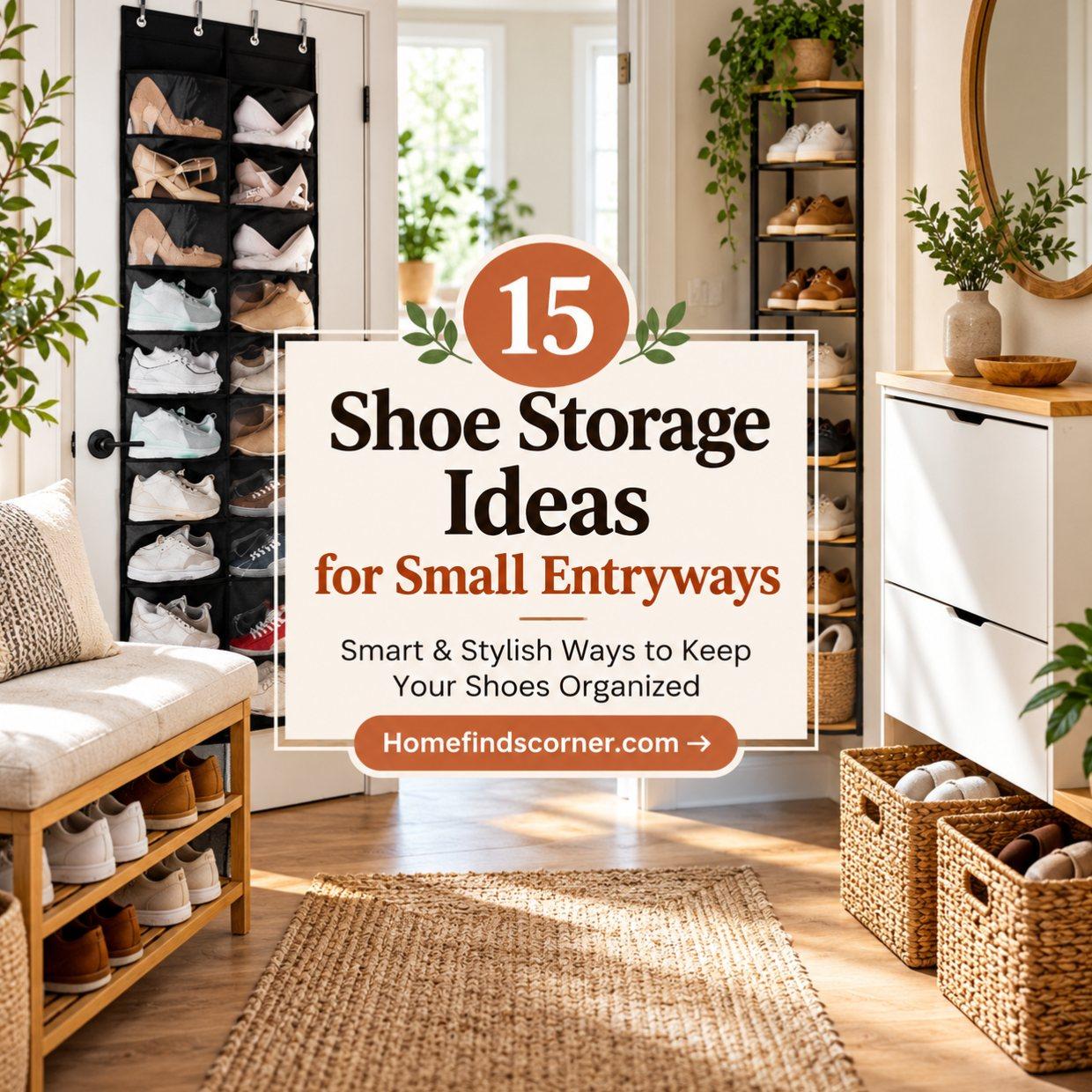
A small entryway can quickly become a dumping ground for sneakers, boots, slippers, and everyday shoes. When you don’t have a dedicated mudroom or spacious closet, even a few pairs scattered near the front door can make your home feel cluttered.
Fortunately, you don’t need a large renovation or expensive custom furniture to create an organized entrance.
The best shoe storage ideas for small entryways take advantage of vertical space, narrow corners, unused wall areas, and multifunctional furniture. From slim shoe cabinets to stackable organizers, there are plenty of affordable ways to keep footwear accessible without sacrificing valuable floor space.
Before choosing a product, measure the available wall width, depth, and door clearance. A compact organizer that fits your actual layout will be more useful than a larger unit that obstructs the entrance.

Here are 15 practical ideas, along with AliExpress shopping options, to help you create a tidy and welcoming entryway.
1. Choose a Slim Shoe Cabinet for a Clutter-Free Look
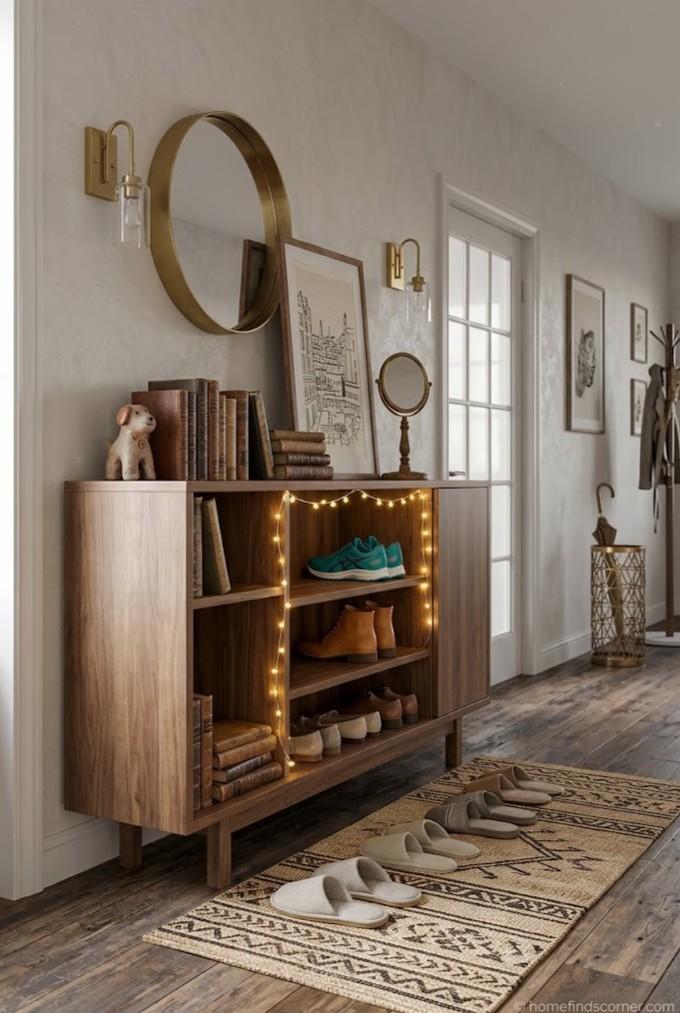
A slim shoe cabinet is one of the most attractive ways to hide footwear in a narrow entrance. Unlike traditional shelves, many cabinets feature tilt-out drawers that hold shoes at an angle, reducing the amount of floor depth required.
A closed cabinet also makes the entrance feel calmer because shoes are hidden behind clean, simple doors. Choose a white or light-wood finish for a modern aesthetic, or a darker cabinet for a sophisticated look.
Best for: Narrow hallways and minimalist interiors.
What to look for: Shallow depth, adjustable compartments, ventilation, and secure anti-tip hardware.

2. Maximize Vertical Space With a Tall Shoe Rack
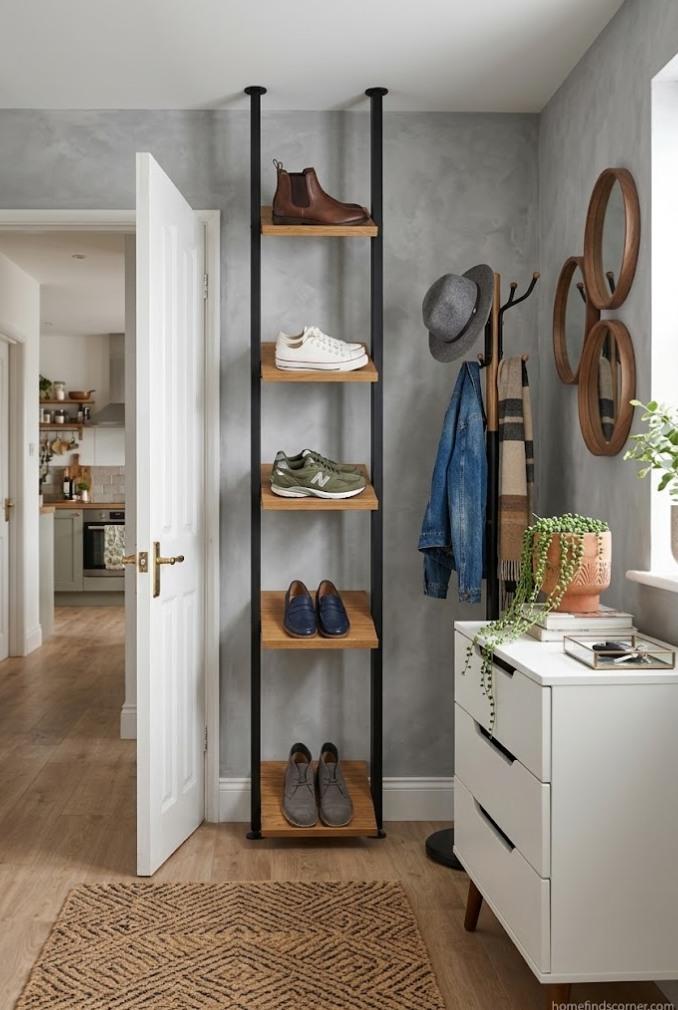
When floor space is limited, the easiest solution is often to build upward instead of outward. A tall, narrow shoe rack can store several pairs while occupying a relatively small footprint.
Vertical racks work especially well in unused corners or beside an entryway closet. Open shelves make it easy to grab everyday shoes and allow damp footwear to dry more readily than in an enclosed cabinet.
Choose a sturdy rack with adjustable shelf spacing if you need room for boots and high-top sneakers.
Best for: Small apartments with available wall height.
What to look for: Stable construction, adjustable tiers, and anchoring options.
3. Add a Shoe Storage Bench for Extra Functionality
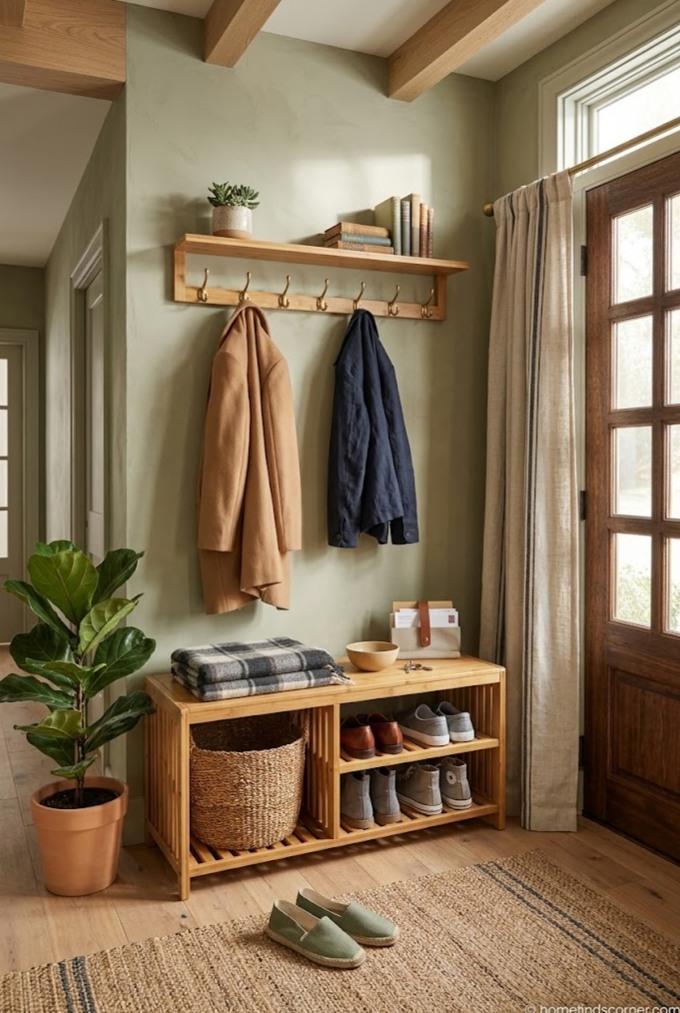
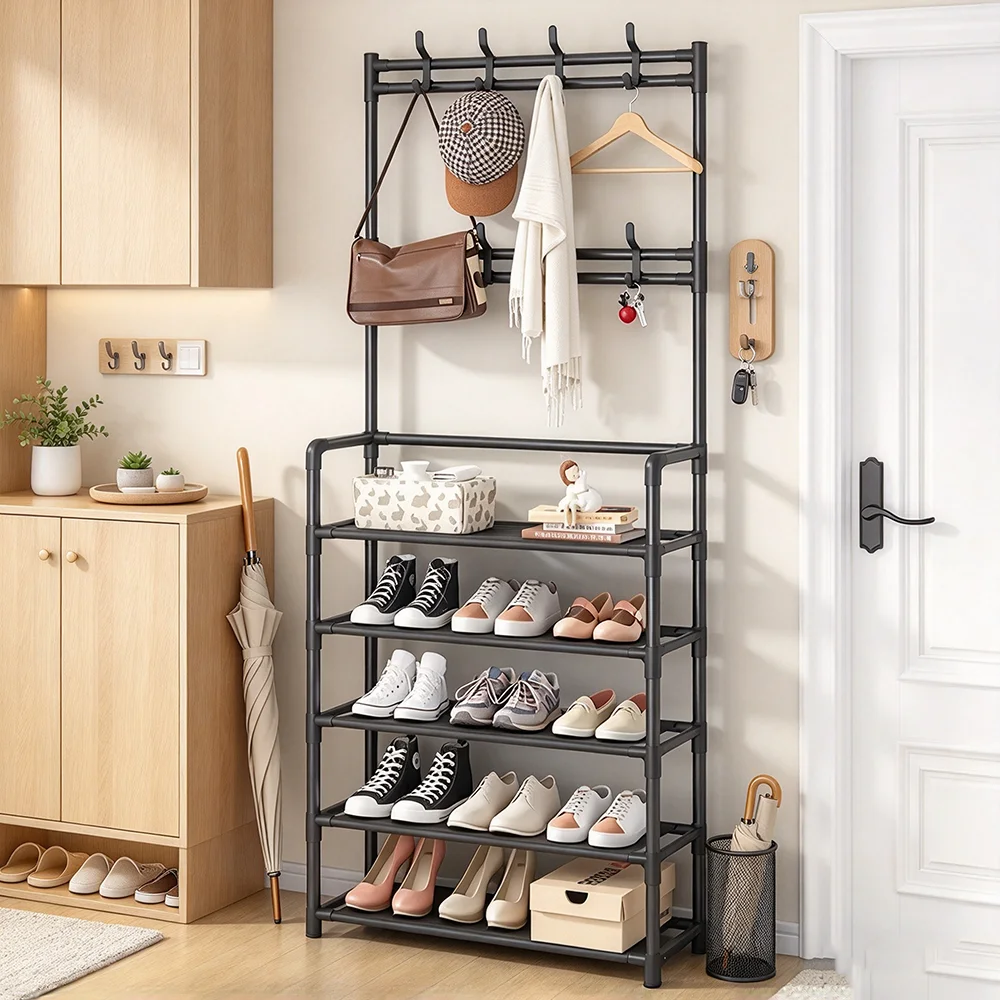
A shoe storage bench combines two essential entryway functions: comfortable seating and practical organization.
Instead of adding a separate chair, use a compact bench with open shelving underneath. You can sit while putting on shoes, then slide them neatly back onto the lower shelves.
Bamboo and wood-look designs are particularly appealing for Scandinavian, farmhouse, and warm minimalist interiors. Add a small cushion to make the seating area more inviting.
Best for: Families, everyday footwear, and entrances with room for seating.
What to look for: Verified seat weight capacity, easy-clean materials, and suitable dimensions.

4. Use an Over-the-Door Shoe Organizer
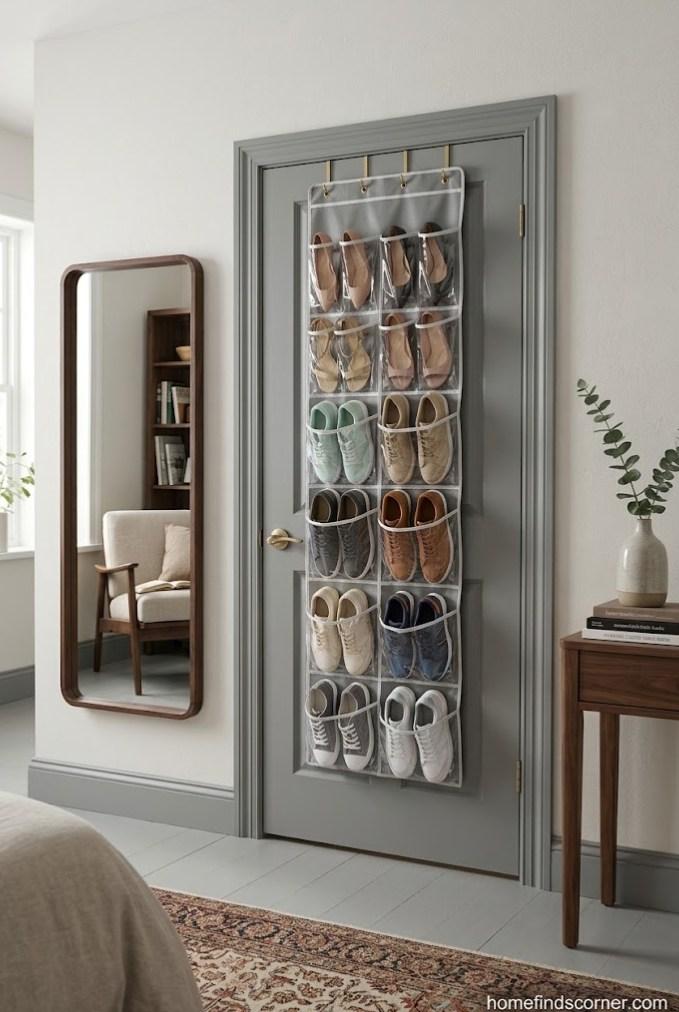
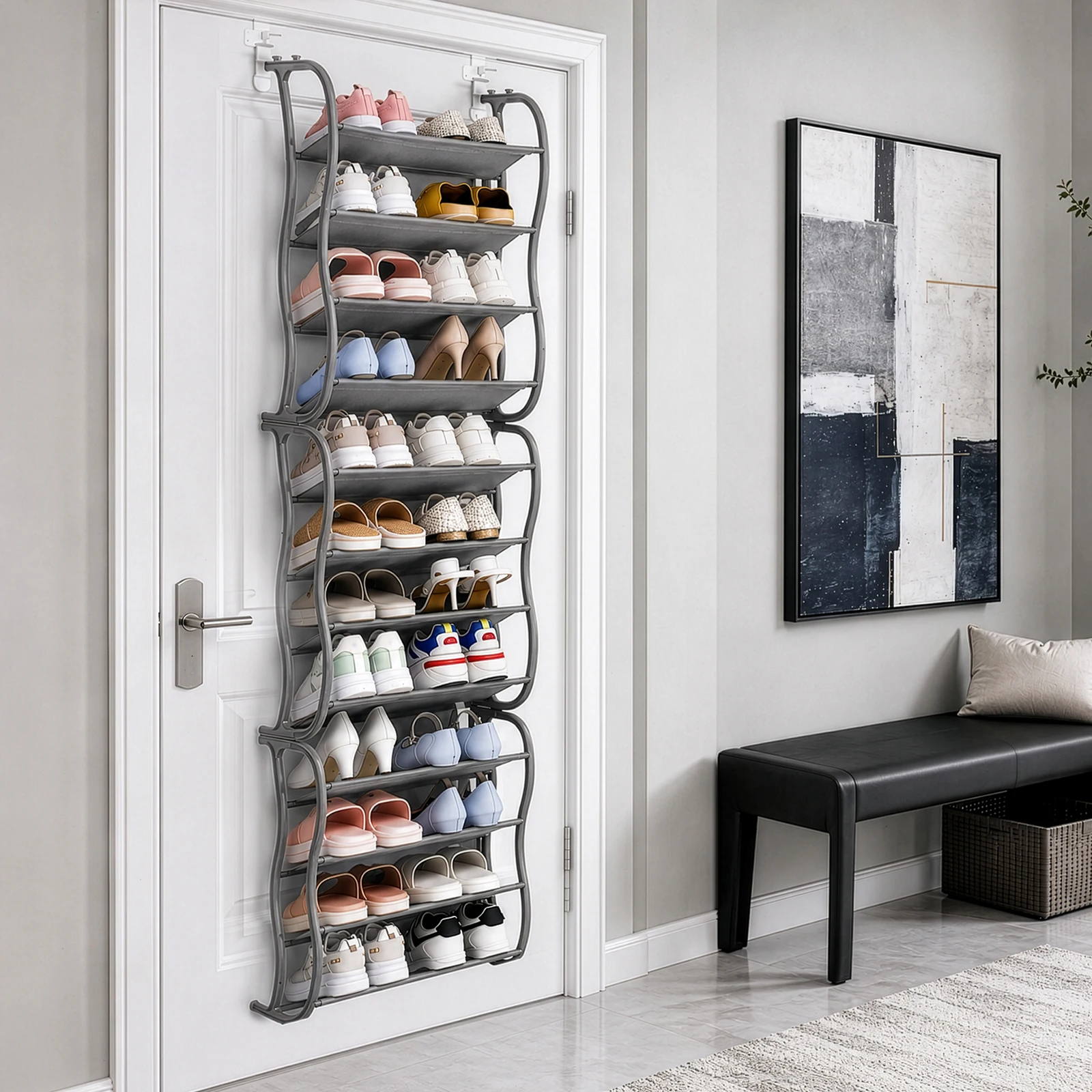
An over-the-door shoe organizer makes use of an area that often goes completely unused.
Fabric organizers with individual pockets are especially useful for lightweight shoes, slippers, sandals, and children’s footwear. They keep shoes off the floor without requiring an additional cabinet.
For a cleaner appearance, choose neutral-colored fabric rather than bright plastic. Make sure the hanging hooks are compatible with your door thickness and don’t interfere with closing.
Best for: Renters and entrances with almost no available floor space.
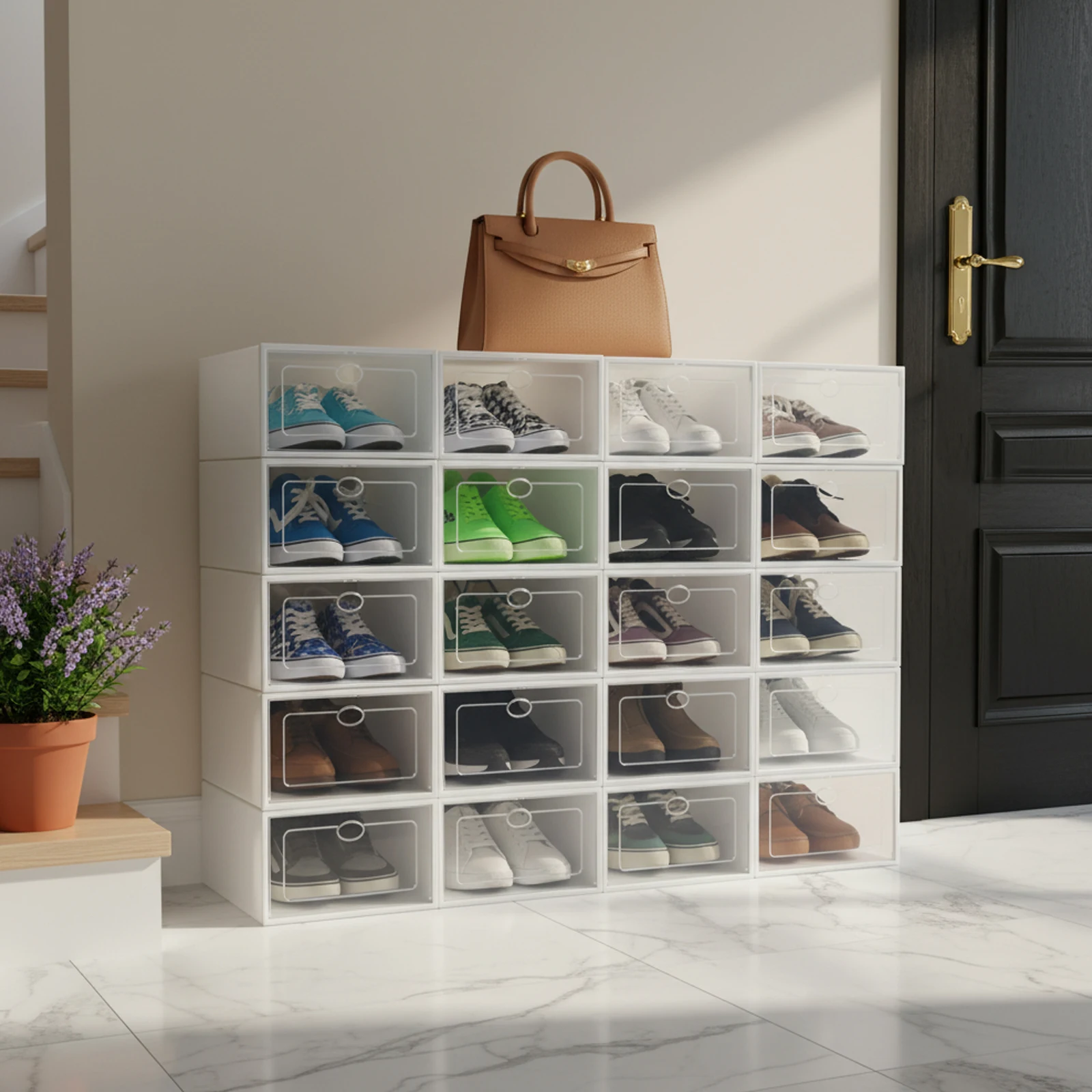
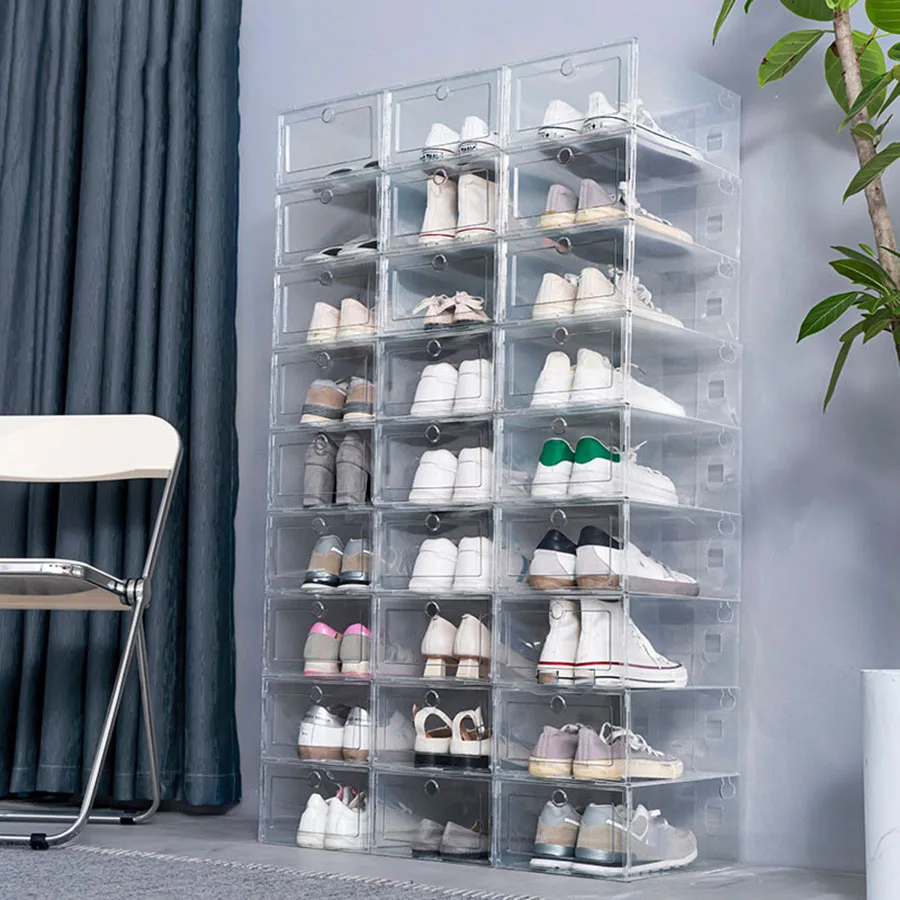
5. Try Stackable Clear Shoe Storage Boxes
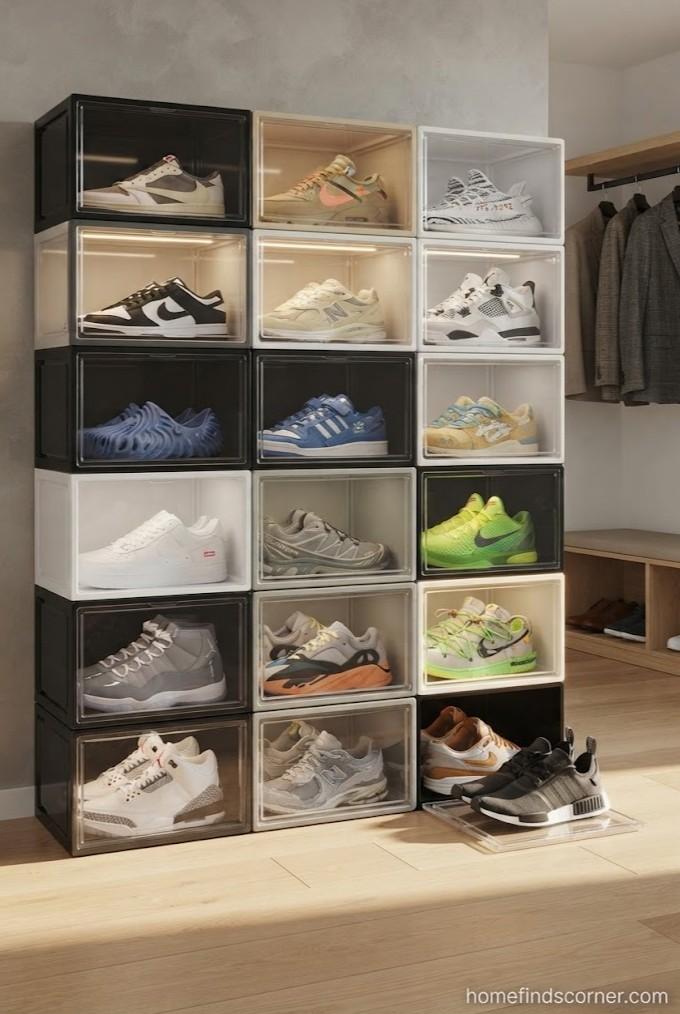
Stackable transparent shoe boxes create a tidy, modular storage system that can grow with your collection.
Their clear panels make it easy to identify shoes without opening multiple containers. Front-opening designs are especially convenient because you can access a lower pair without unstacking everything above it.
These boxes work best for clean, dry shoes. Look for ventilation openings and strong connecting mechanisms.
Best for: Sneaker collections and organized closets near the entryway.
6. Install Wall-Mounted Shoe Shelves
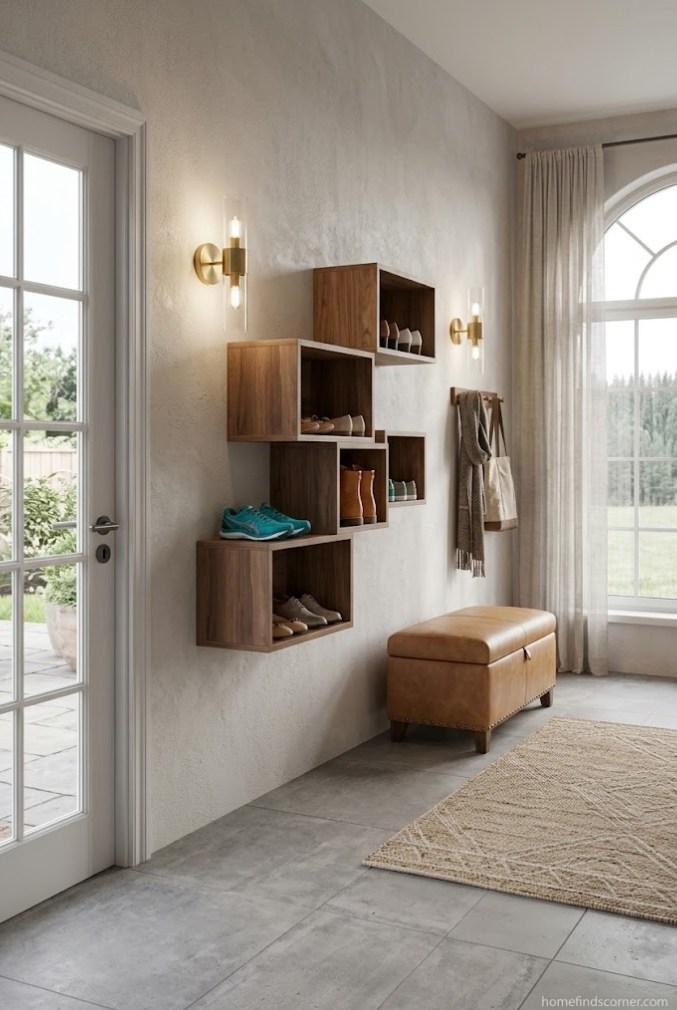
Wall-mounted shoe shelves free up the floor and give your entrance a streamlined appearance.
A few shallow shelves can hold everyday footwear while keeping the area underneath easy to clean. They are particularly useful when you have an awkward wall section that cannot accommodate freestanding furniture.
Choose shelves designed specifically for shoes, with a suitable lip or angled surface to prevent footwear from slipping.
Best for: Compact entryways with usable wall space.
Installation tip: Use wall fixings appropriate for your wall material and the manufacturer’s stated load rating.

7. Make Use of a Narrow Corner Shoe Rack
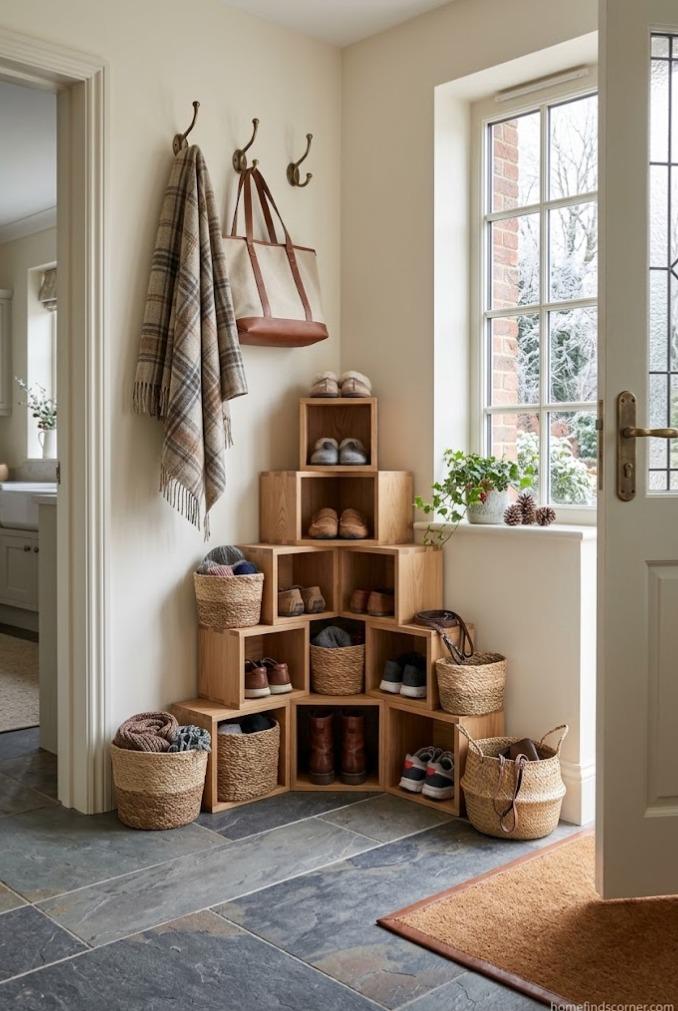
An unused corner can become a surprisingly useful storage area with the right organizer.
A compact corner shoe rack fits into awkward spaces where a standard rectangular shelf may be too wide. Depending on the design, it can hold everyday shoes, slippers, or accessories without extending far into the walkway.
Choose an open structure in a finish that complements nearby furniture. Keep the top shelf simple with a small decorative tray or basket.
Best for: Awkward corners and small apartment foyers.
8. Hide Shoes in a Compact Storage Ottoman
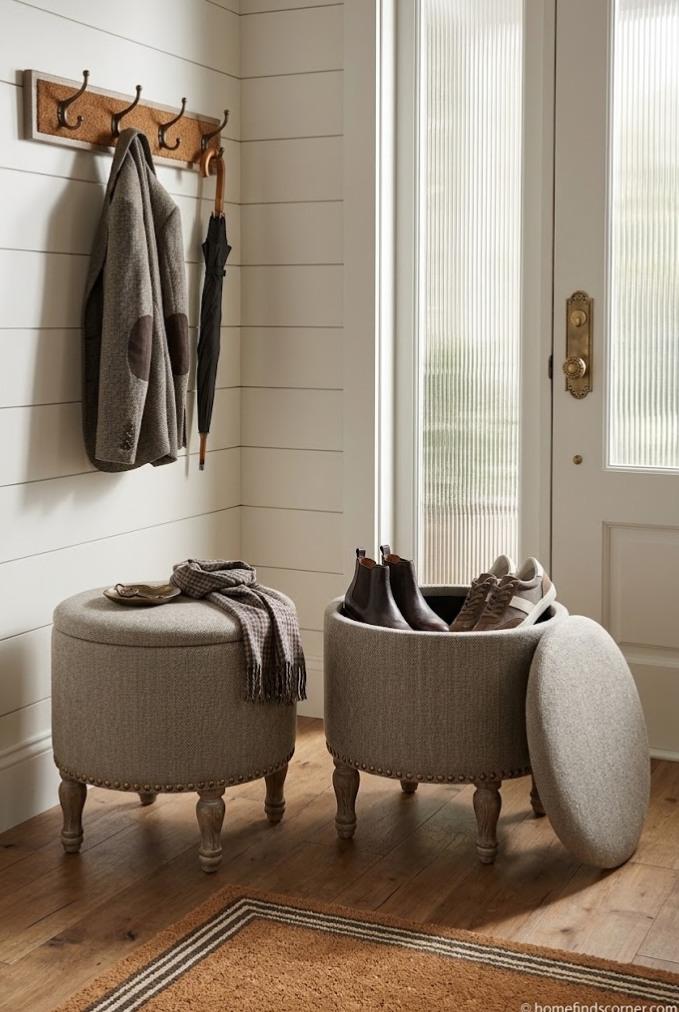
A compact storage ottoman is a stylish alternative to a traditional shoe rack.
The cushioned top provides a place to sit, while the hidden compartment keeps shoes out of sight. This is ideal for entrances that open directly into a living room, where visible footwear can disrupt the decor.
Choose a design with a removable or wipe-clean interior liner. Store only clean, dry shoes inside upholstered furniture to avoid trapping moisture and odors.
Best for: Studio apartments and multifunctional spaces.

9. Organize Shoes With a Slim Rolling Cart
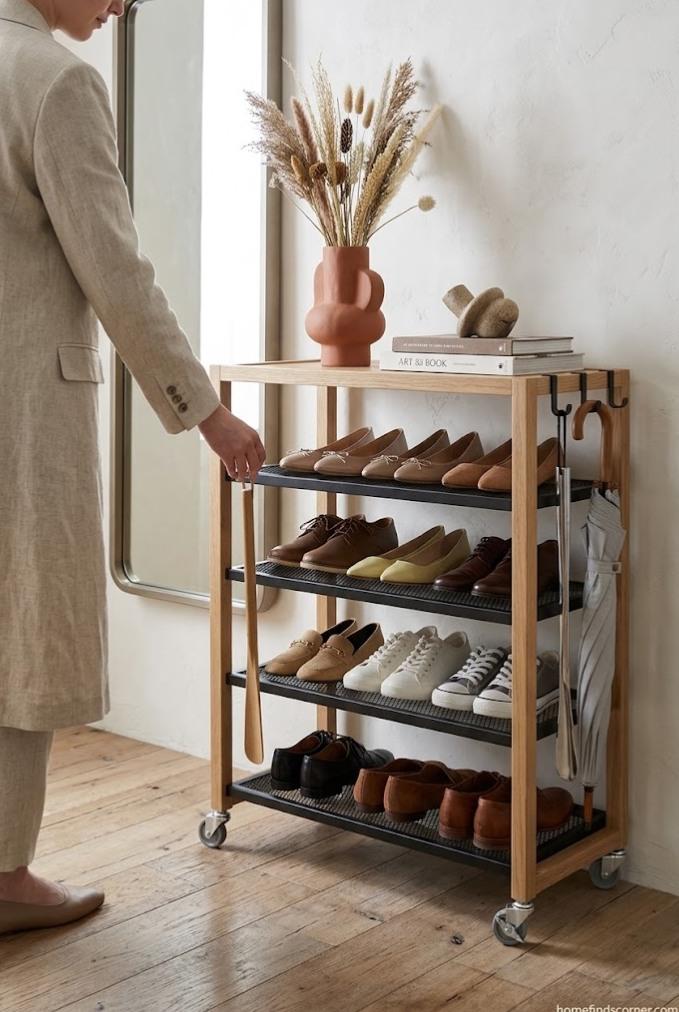
A slim rolling cart offers flexible storage for narrow entryways and small apartments.
Choose a cart with shallow shelves that can slide into an unused gap beside a cabinet or coat stand. Wheels make it easier to move the organizer when cleaning, and open shelves provide quick access to daily footwear.
Look for lockable wheels and a stable frame. Avoid overloading a tall, lightweight cart.
Best for: Renters and flexible storage layouts.
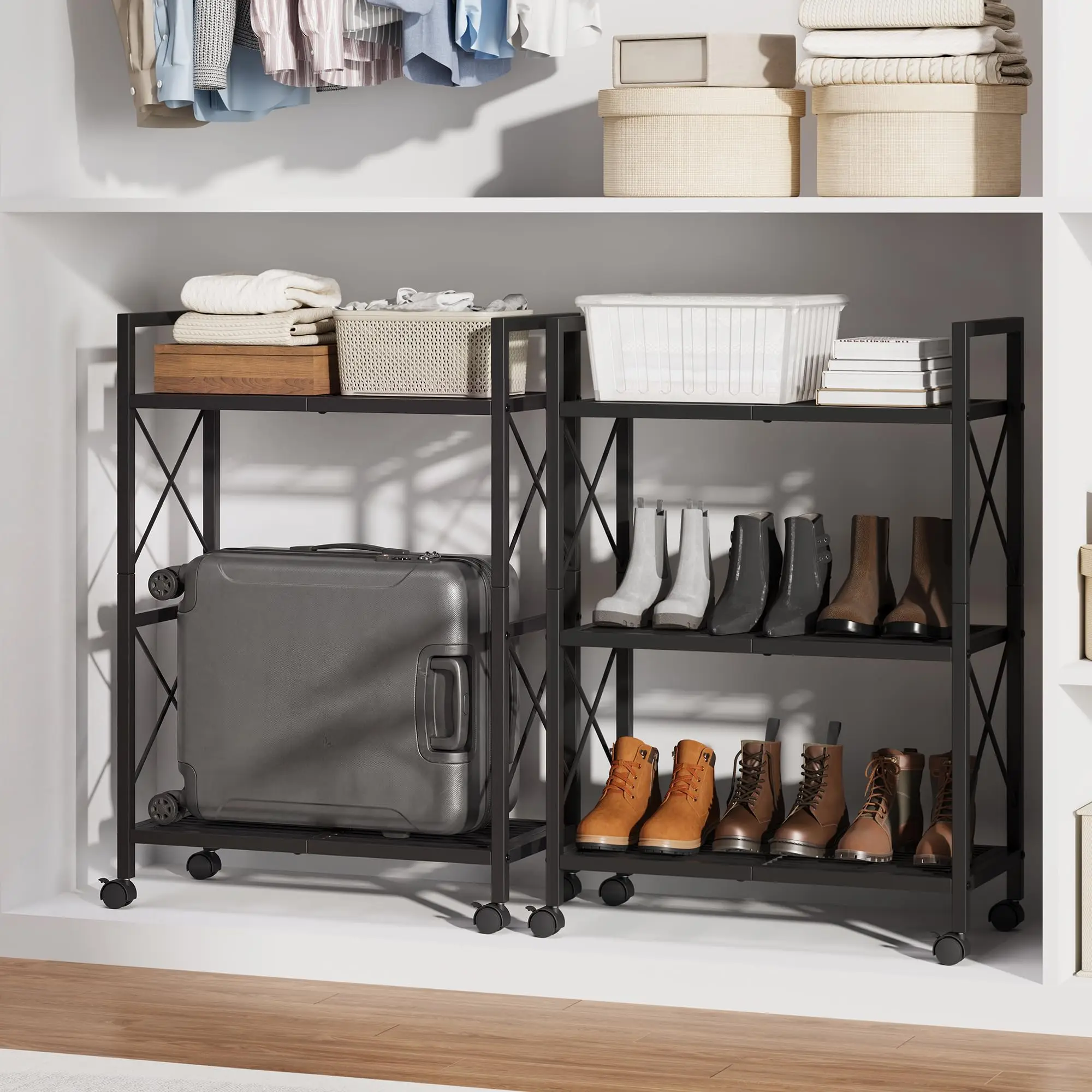
10. Use Adjustable Shoe Slot Organizers
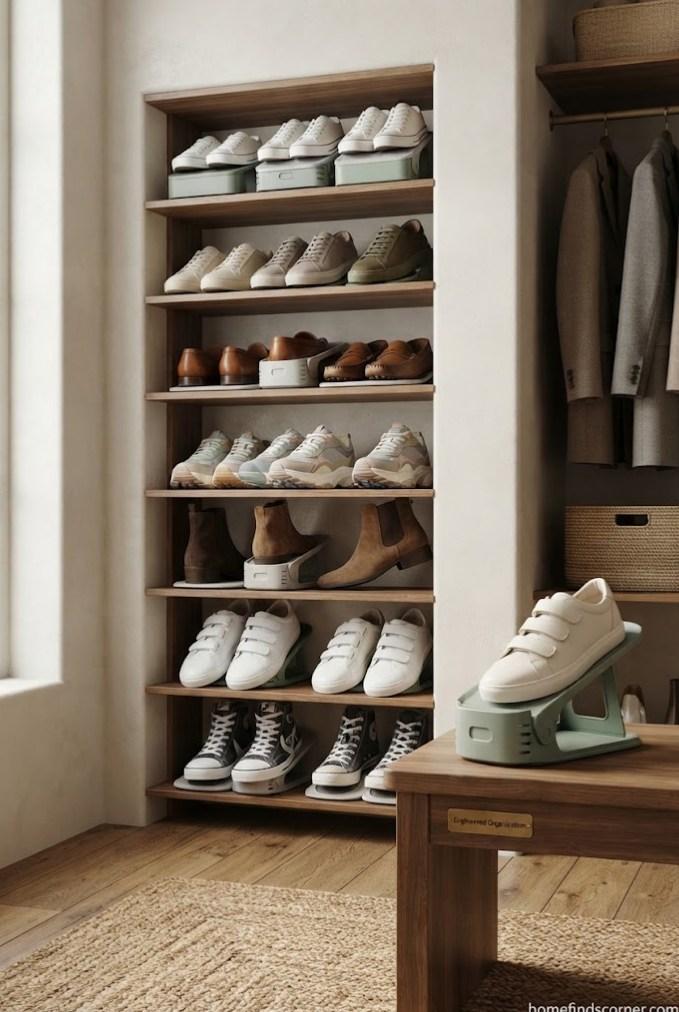
Adjustable shoe slots help you fit more pairs onto existing shelves without buying another large cabinet.
These compact accessories hold one shoe above the other, creating a two-level arrangement. They work particularly well for flats, low-profile sneakers, and sandals.
Place them inside an entryway cabinet or on a deep shelf to make better use of available space. Check the height clearance first, especially for bulky athletic shoes.
Best for: Maximizing existing cabinets and shelves.

11. Add a Bamboo Shoe Rack for a Natural Look
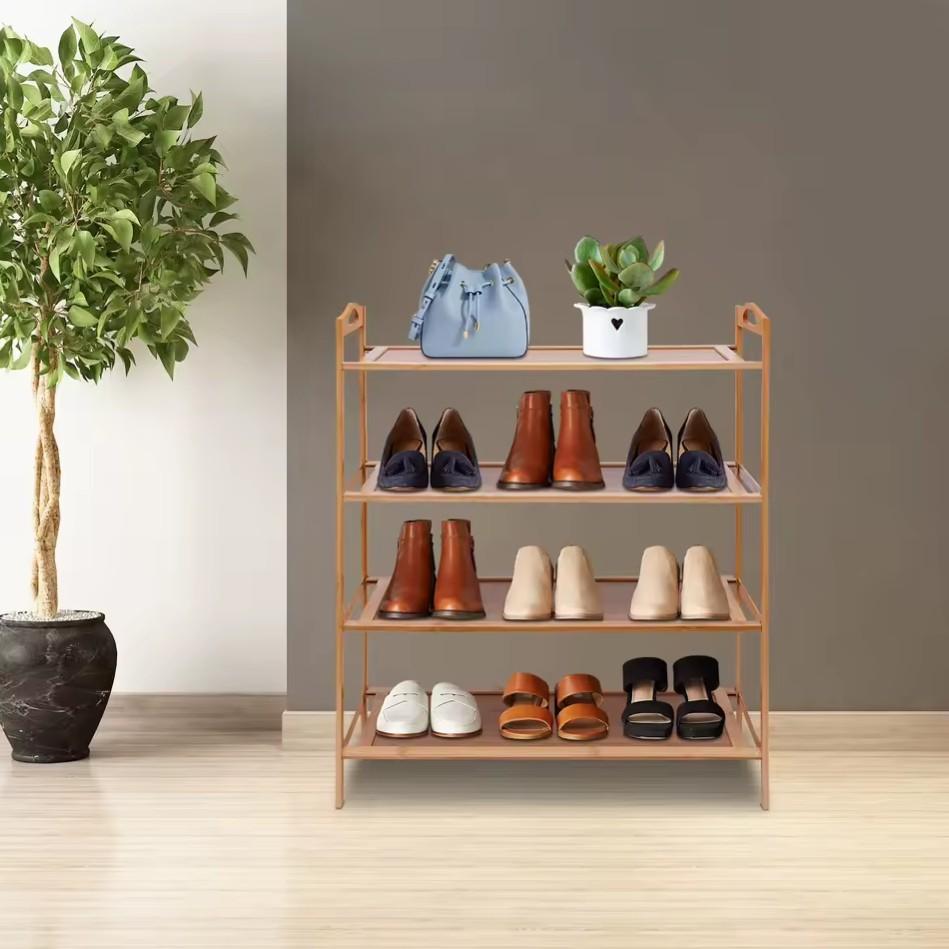
A bamboo shoe rack combines practical storage with a warm, organic appearance.
Its natural finish pairs beautifully with neutral walls, woven baskets, and wooden furniture. Open slatted shelves also make it easy to see your footwear and clean underneath.
A compact two- or three-tier model is often enough for the shoes you wear most frequently. Keep the remaining collection in a bedroom closet to prevent overcrowding.
Best for: Scandinavian, Japandi, and natural home decor.

12. Keep Everyday Shoes in Decorative Baskets
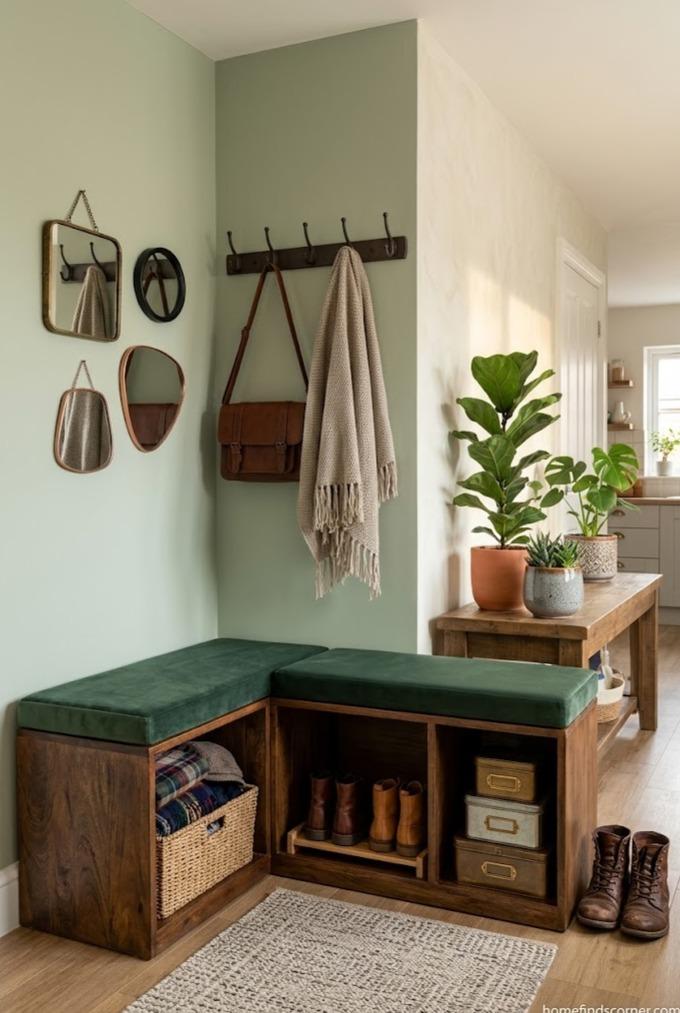
Not every shoe storage solution needs to be a traditional rack.
A sturdy woven-look basket can hold slippers, children’s shoes, or casual footwear near the entrance. Tuck it beneath an existing console table or bench for a softer, less utilitarian appearance.
For easier maintenance, choose washable fabric baskets or plastic-lined designs. Avoid placing wet or muddy shoes directly inside natural woven materials.
Best for: Family entrances and relaxed, cozy interiors.
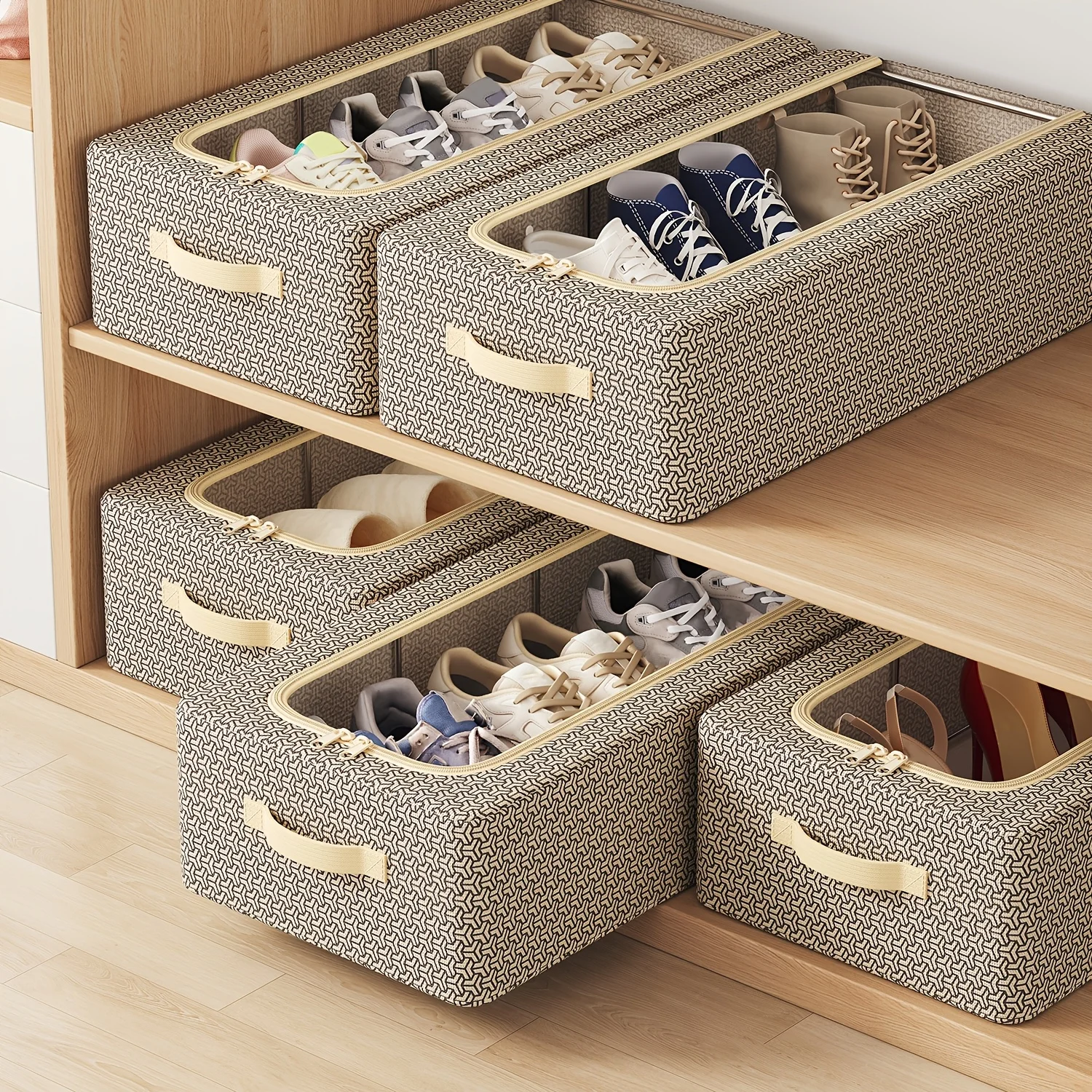
13. Install a Space-Saving Folding Shoe Rack
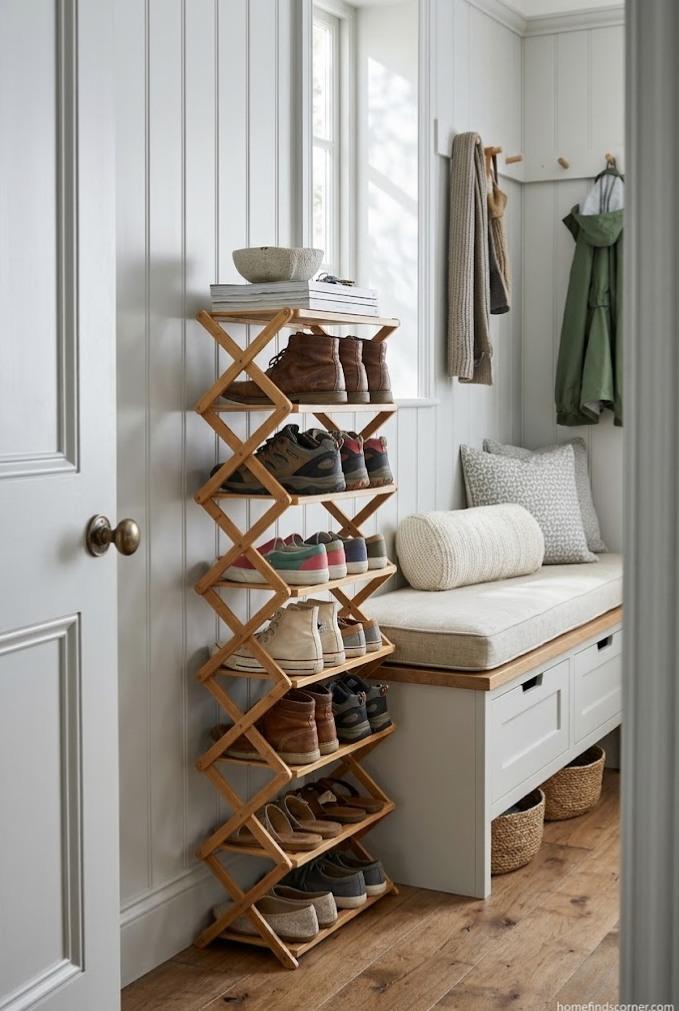
A folding shoe rack is useful when you need storage that can be put away or moved easily.
These organizers can work in temporary living spaces, guest rooms, or apartments where permanent storage is not practical. Some models fold flat, while others use collapsible tiers for easier transportation.
Choose a sturdy design that locks securely into position when assembled.
Best for: Temporary spaces, renters, and occasional storage.
14. Create a Hidden Shoe Storage Area Under a Console Table
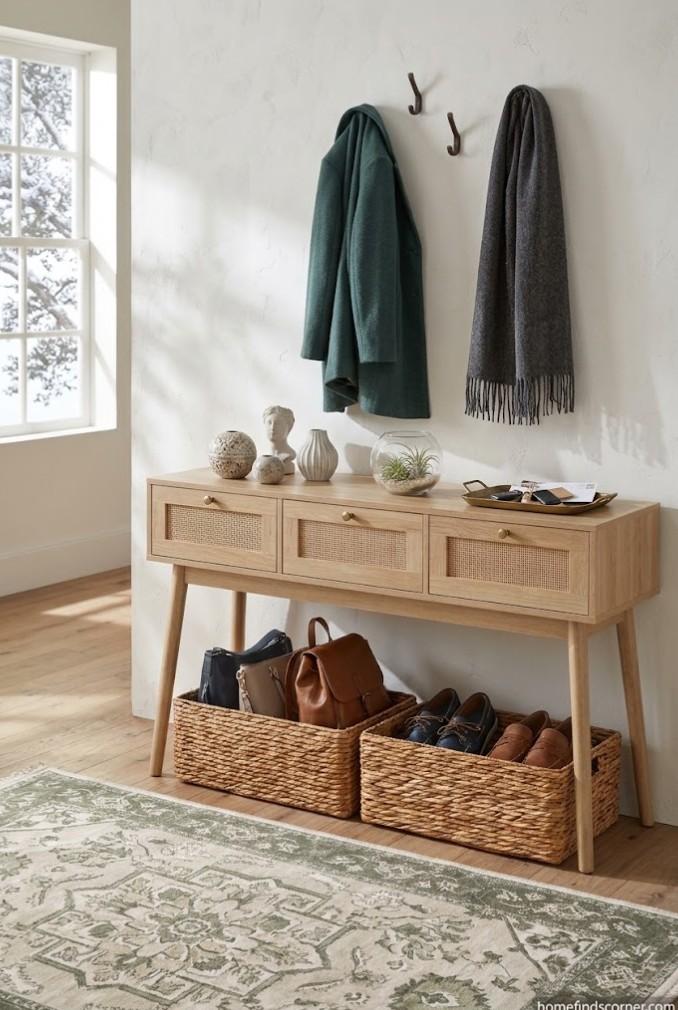
If your entryway already has a console table, use the space underneath instead of adding another piece of furniture.
Low-profile shoe trays, shallow storage bins, or small tiered organizers can slide beneath the table while keeping the entrance looking polished.
Match the storage containers to the console’s finish for a cohesive appearance. A pair of identical bins often looks more intentional than several mismatched containers.
Best for: Entryways with existing furniture and limited room for expansion.

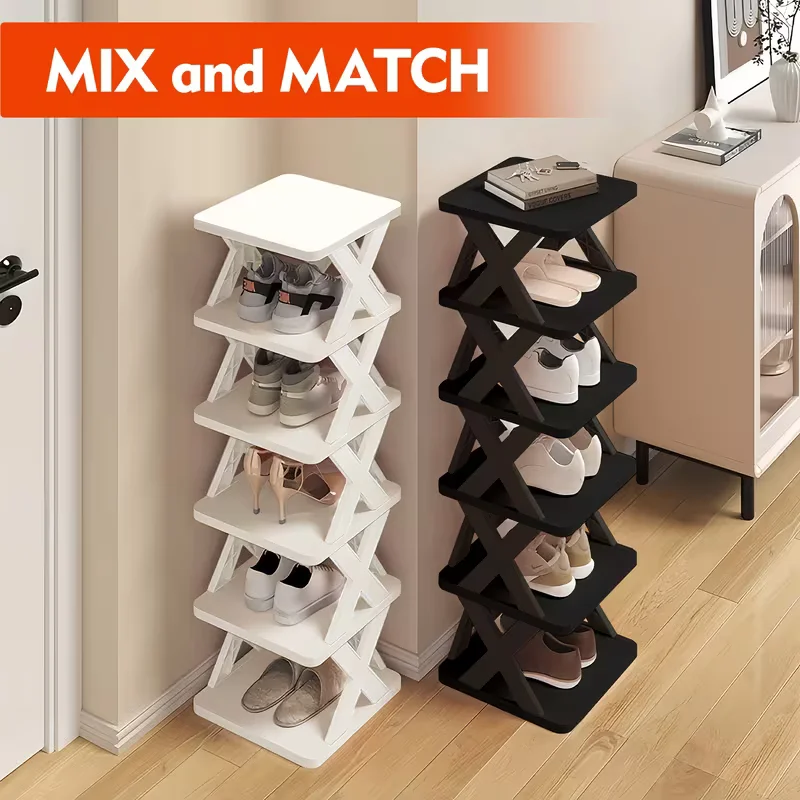
15. Use a Modular Shoe Rack That Grows With Your Needs
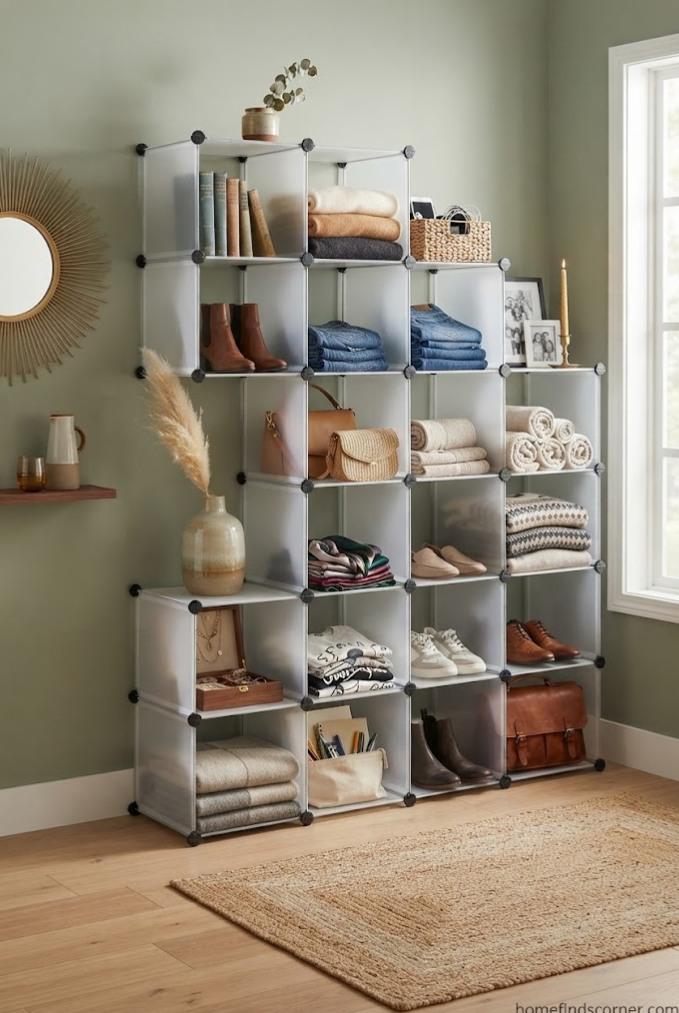
Modular shoe storage is a flexible solution for households whose needs change over time.
Interlocking plastic cubes or modular metal shelves can be configured vertically or horizontally, depending on the available space. Some designs allow individual compartments to be removed or rearranged.
Start with a compact arrangement and add sections only when necessary. Follow the manufacturer’s stacking limits, and secure tall assemblies against tipping.
Best for: Growing families and customizable storage.
Which Shoe Storage Solution Is Best for Your Entryway?
| Entryway situation | Recommended solution |
|---|---|
| Very narrow hallway | Slim tilt-out shoe cabinet |
| No available floor space | Over-the-door organizer |
| Tall, unused corner | Vertical shoe rack |
| Need seating | Shoe storage bench |
| Prefer hidden storage | Storage ottoman or cabinet |
| Renter-friendly setup | Freestanding folding rack |
| Existing cabinet is full | Adjustable shoe slots |
| Family with children | Low open shelves and baskets |
How to Keep a Small Entryway Organized
Even the best shoe rack won’t solve clutter if the entrance holds more footwear than it can comfortably accommodate.
Start by keeping only the shoes you wear regularly near the door. Move special-occasion and out-of-season pairs into a bedroom closet or another storage area.
Give each household member a designated shelf, basket, or compartment. This makes it easier to return shoes to the correct place and reduces the chance of footwear accumulating in the walkway.
Keep a waterproof tray near the door for wet shoes and muddy boots. Let footwear dry before placing it inside enclosed cabinets or upholstered storage furniture.
Finally, review your entryway storage occasionally. If shoes are constantly spilling onto the floor, consider whether the organizer is too small, inconvenient to access, or holding too many rarely worn pairs.
Final Thoughts
The best shoe storage ideas for small entryways combine compact dimensions, everyday convenience, and a design that works with your home’s layout.
A slim cabinet can hide clutter in a narrow hallway, while a vertical rack makes use of unused height. Shoe storage benches and ottomans provide extra functionality, and simple baskets or hanging organizers offer affordable alternatives.
You don’t need to store every pair of shoes beside the front door. By choosing the right organizer and keeping only your everyday footwear within reach, you can create a welcoming entrance that stays neat and easy to use.
Frequently Asked Questions
What is the best shoe storage for a very small entryway?
A slim shoe cabinet, narrow vertical rack, or over-the-door organizer is usually a good starting point. The best choice depends on your available depth, wall height, door swing, and number of shoes.
How do you store shoes in a narrow hallway?
Use shallow storage that sits against the wall and does not interfere with the walking path. Tilt-out cabinets, wall-mounted shelves, and compact vertical racks are useful options.
How can I organize shoes without a shoe rack?
Try baskets, storage benches, under-console bins, or hanging organizers. These alternatives can keep footwear contained without requiring a conventional shoe rack.
Are closed shoe cabinets better than open racks?
Closed cabinets hide visual clutter, while open racks provide easier access and better airflow around damp shoes. The better option depends on whether appearance, convenience, or drying is your priority.
How do I organize shoes in a small apartment without drilling?
Use freestanding shoe racks, storage ottomans, baskets, or compatible over-the-door organizers. Avoid tall, unstable furniture that requires anchoring for safe use.
Can shoe storage go behind the front door?
Yes, provided the organizer does not interfere with the door’s hinges, latch, clearance, or safe operation. Always test the door after installation.
How many pairs of shoes should I keep near the entrance?
A practical starting point is one or two frequently worn pairs per person. Store less-used shoes elsewhere to keep the entryway manageable.
How can I make inexpensive shoe storage look stylish?
Choose coordinated colors, avoid overfilling shelves, and use matching baskets or boxes. Natural finishes, black metal, and simple neutral designs can create a cohesive appearance.